In today's fast-paced market, connecting with customers requires more than just email. To truly capture attention and drive action, businesses must adopt a multi-channel approach that meets customers on their preferred platforms. This means moving beyond traditional methods and embracing a more dynamic, personalized, and automated set of customer communication strategies.
From the immediacy of SMS to the personal touch of voice and the non-intrusive impact of ringless voicemail, the tools available can change how you engage your audience. However, simply using these channels is not enough; success lies in a cohesive strategy that integrates them effectively.
This guide explores 10 actionable strategies that small to medium-sized businesses, healthcare providers, event organizers, and ecommerce brands can implement immediately. You will learn to scale your outreach, improve engagement, and measure results. We will cover practical applications, the consent rules for each channel (see consent rules by channel), and automation techniques that save time while delivering a better customer experience.
1. Multi-Channel Messaging Integration
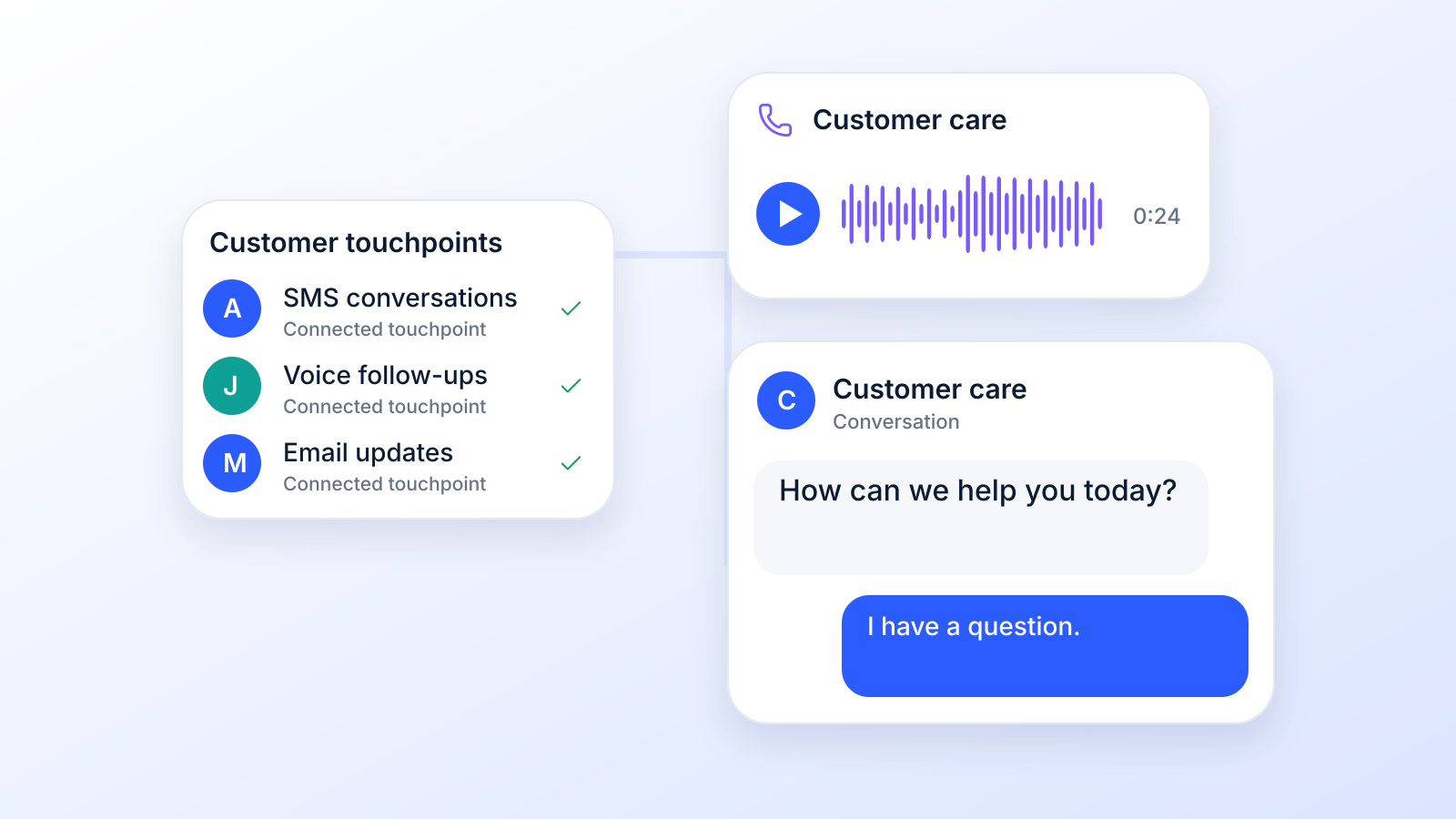
Effective customer communication strategies today must meet customers where they are. Multi-channel messaging integration achieves this by unifying SMS, voice calls, and ringless voicemail into a single, cohesive workflow. Instead of managing separate tools for each channel, this approach uses one platform to orchestrate campaigns, ensuring a consistent brand voice and a seamless customer journey. This method is fundamental because it allows a business to adapt its outreach to the situation and the customer's preference, significantly improving engagement rates.
How It Works in Practice
A truly integrated strategy goes beyond just using different channels; it sequences them intelligently. For instance, an ecommerce store could send an SMS with a flash sale promotion. For customers who don’t click the link within a few hours, a ringless voicemail could be automatically delivered, adding a personal touch to the reminder without being intrusive. This coordinated follow-up is impossible when your communication tools are siloed.
Healthcare providers can also use this for patient engagement. An automated SMS can remind a patient of an upcoming appointment. If the appointment is high-value, like a specialist consultation, a follow-up voice broadcast can provide pre-procedure instructions, ensuring the patient is fully prepared. HIPAA depends on how you send, not on the channel: HHS says appointment reminders are part of treatment but providers should limit the information in messages, and a vendor that handles patient data needs a business associate agreement.
Actionable Implementation Tips
To get started with a unified messaging approach, consider these steps:
- Start Small: Begin with two core channels, such as SMS and ringless voicemail, to build and test your sequences before adding more complexity.
- Segment Your Audience: Group contacts based on their channel preferences. Send text messages to those who prefer SMS and use voice drops for those who respond better to audio.
- Coordinate Timing: Stagger your messages across channels. Avoid sending an SMS, email, and ringless voicemail all at once, which can feel like spam and lead to message fatigue.
- Respect Each Channel's Opt-Out: A STOP reply to a text revokes consent for texts and calls from you under FCC rules, while email unsubscribes follow CAN-SPAM. Sync opt-outs across tools so one channel does not keep messaging someone who left another.
- Track Channel Performance: Monitor which channels generate the best response rates. Use this data to allocate your resources to the most effective methods for different campaigns. For a deeper look into building your own system, you can learn more about creating a multi-channel communication strategy.
2. Personalization and Dynamic Content
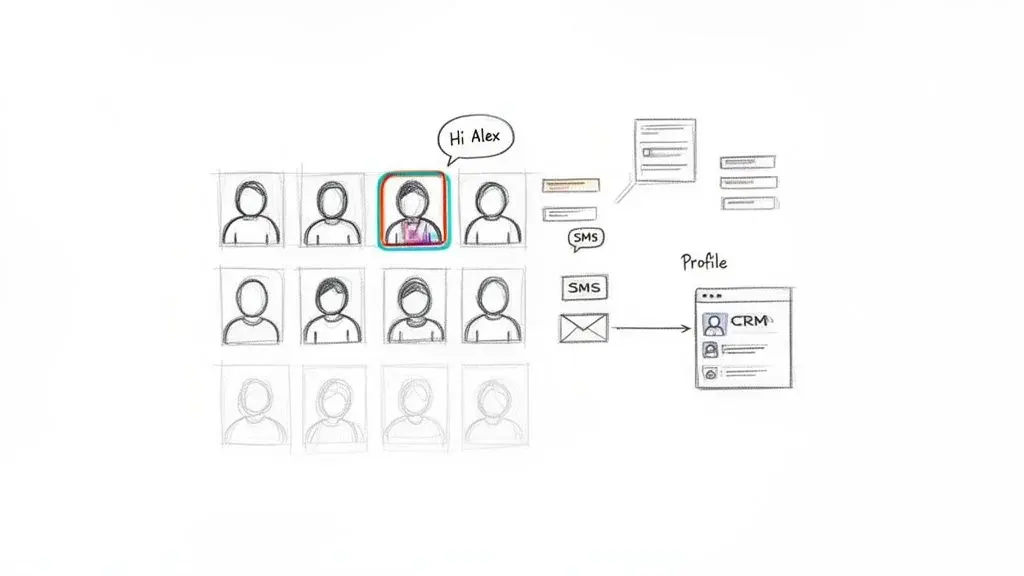
Moving beyond generic, one-size-fits-all messages is crucial for effective customer communication strategies. Personalization and dynamic content accomplish this by tailoring messages to individual customers using data-driven insights. This approach uses custom fields and merge tags to make each person feel individually recognized by addressing them by name, referencing specific interests, or citing their history with your business. The result is communication that feels relevant and personal, dramatically boosting engagement.
How It Works in Practice
Dynamic content pulls information directly from your customer database into your messages. For an ecommerce store, this could mean sending a text that reads, "Hi [FirstName], we noticed you looked at our [ProductCategory] collection. It's back in stock with a [DiscountPercent]% discount just for you." This level of detail shows you are paying attention to their individual journey.
This strategy is also highly effective in service-based businesses. A karate studio can automate class reminders with a personalized touch: "Hi [FirstName], a friendly reminder that your [DayOfWeek] class with [InstructorName] starts soon at [Time]." Similarly, healthcare providers can send appointment confirmations like, "Hi [PatientName], this confirms your appointment on [Date] at [Time]." Keep health details out of the text, as HHS advises limiting the information in patient messages. Each message feels like a one-to-one conversation, building trust and reducing no-shows.
Actionable Implementation Tips
To begin using personalization effectively in your customer outreach, follow these steps:
- Start Simple: Begin with basic personalization, such as using the customer's first name (
[FirstName]) and one other key identifier, like a product name or appointment time. - Maintain Clean Data: Regularly collect and refresh customer data through all touchpoints, such as sign-up forms and purchase history, to ensure accuracy. Outdated information can make your messages look sloppy.
- Segment for Relevance: Go beyond individual merge tags by segmenting your audience. Create sub-campaigns based on behavior or demographics to deliver truly relevant content.
- Test Before Sending: Always send a test message to yourself to ensure all dynamic fields populate correctly. A broken tag like "Hi
[FirstName]," immediately breaks the personal connection.
3. Automated Drip Campaigns and Sequences
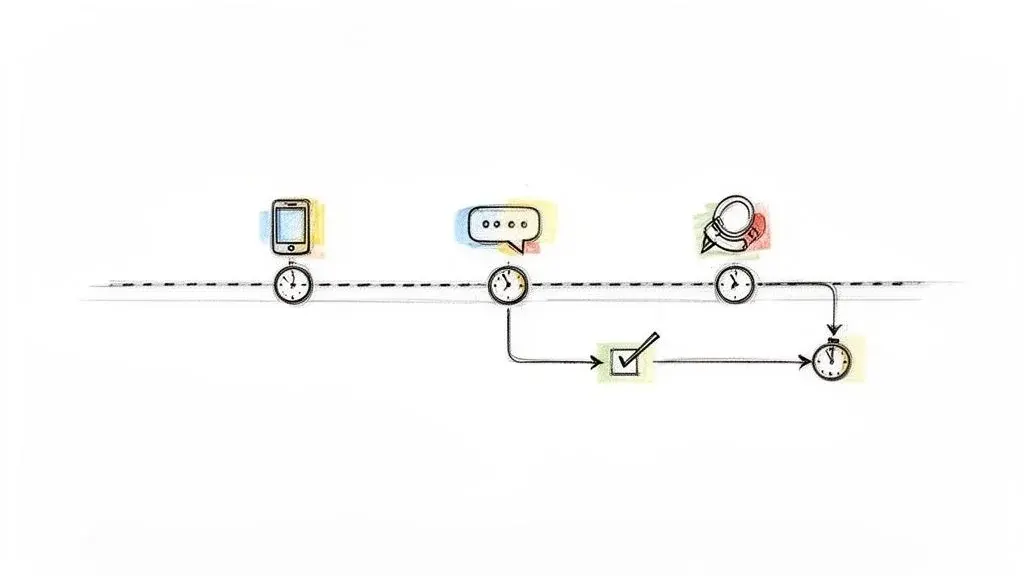
One of the most powerful customer communication strategies is automating a series of coordinated messages sent at specific intervals or triggered by customer actions. Drip campaigns nurture leads gradually, maintain engagement, and guide customers through predetermined journeys without manual intervention. This strategic approach automates SMS, voice, and ringless voicemail sequences with precise timing and logic-based triggers, ensuring consistent and timely follow-up.
How It Works in Practice
A well-designed drip campaign moves a contact from initial interest to conversion and beyond. For example, a real estate agent can set up a sequence that starts the moment a lead inquires about a property. An immediate SMS confirms the inquiry, followed by an automated voice call a day later to offer a personal connection. If unanswered, a ringless voicemail can be sent on day three, and a final SMS with new property listings arrives on day seven.
SaaS companies can apply this to user onboarding. A new user might receive a welcome SMS, a text on day two with a link to a tutorial, a personalized voice check-in on day five, and a ringless voicemail on day ten offering advanced tips. This keeps users engaged and helps them discover the product’s value.
Before adding voice calls or ringless voicemail to a sequence, check that the contact consented to them. Prerecorded calls and ringless voicemail to cell phones need consent under FCC rules, and marketing ones need prior express written consent.
Actionable Implementation Tips
To create effective automated sequences, follow these steps:
- Map the Journey: Before building anything, outline the entire customer journey from start to finish. Identify key touchpoints where communication can guide the next step.
- Include Pauses: Space out your messages to avoid overwhelming recipients. A well-timed pause is as important as the message itself, giving contacts time to act.
- Test with a Small Group: Always test a new sequence with a small, internal group or a select segment of your audience to identify and fix any issues before a full launch.
- Use Engagement Triggers: Adjust the sequence based on how a subscriber interacts with your messages. If they click a link, move them to a different path; if they don’t respond, try a different channel.
- Monitor Performance: Keep a close eye on unsubscribe and complaint rates for each stage of your sequence. High drop-off rates are a clear sign that a message or its timing needs adjustment. To see more detailed examples, explore best practices for creating successful drip campaigns.
4. Segmentation and Targeted Messaging
Blanket messaging rarely works because not all customers are the same. A data-driven approach to customer communication strategies involves segmentation, which divides your audience into distinct groups based on shared characteristics. By tailoring your messaging to each segment, you ensure that every communication is relevant, personal, and far more likely to get a response. This method moves beyond one-size-fits-all broadcasts to deliver value that resonates with specific customer needs, behaviors, and lifecycle stages.
How It Works in Practice
Effective segmentation means your messages feel like a one-to-one conversation. For example, a karate studio can create separate campaigns for different member types. "Trial students" might receive an SMS with a special sign-up offer, "active members" could get a ringless voicemail about an upcoming belt test, and "inactive members" might receive a "we miss you" text after 30 days of absence. Each message addresses a specific relationship with the business.
Similarly, an ecommerce brand could segment customers by purchase frequency. High-value, frequent buyers might get exclusive access to new products via text, while first-time buyers receive a follow-up SMS with a discount on their next purchase. This targeted approach makes customers feel understood and valued, which builds loyalty and drives repeat business.
Actionable Implementation Tips
To start using segmentation without getting overwhelmed, follow these steps:
- Start with 3-5 Key Segments: Begin by identifying your most important customer groups. Don't try to create dozens of segments at once; focus on broad categories like new customers, loyal customers, and inactive customers.
- Use Historical Data: Look at past customer behavior to find natural groupings. Analyze purchase history, engagement metrics, and demographics to create your initial segments.
- Create Clear Definitions: Define the criteria for each segment so your team can apply them consistently. For example, an "inactive" customer might be someone who hasn't purchased in over 90 days.
- Review and Refresh: Customer behavior changes. Review your segments quarterly to ensure they are still accurate and relevant to your business goals.
- Test Your Messaging: Validate your assumptions by A/B testing different messages for each segment. Monitor which offers, tones, and channels generate the best results.
5. SMS Text-to-Join and Keyword Marketing
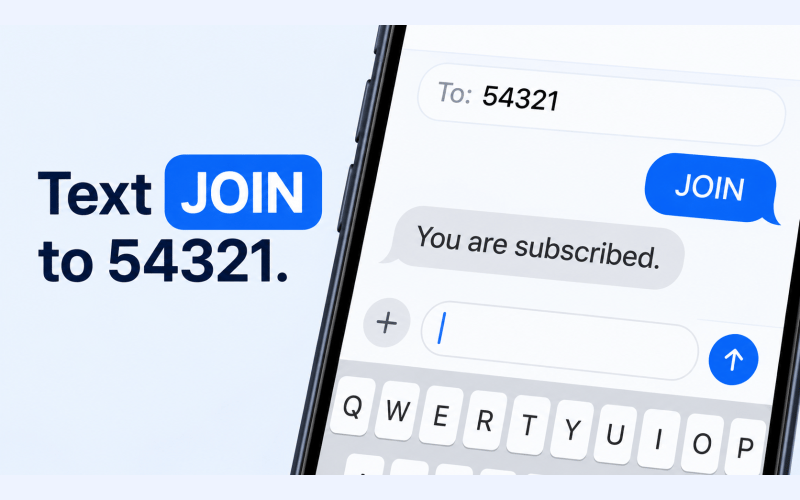
One of the most effective customer communication strategies is using SMS keywords to generate opt-ins and enable direct engagement. This method uses a specific word (the keyword) and a number (a short code or long code) to let customers initiate contact. When a customer texts a keyword like "DEAL" to your number, they are explicitly opting into your marketing list, creating a clear record of consent and a direct line for future communication. This approach is powerful because it's permission-based, customer-initiated, and simplifies compliance.
How It Works in Practice
Keyword marketing turns passive interest into active engagement. A fitness studio can place a sign at their front desk that says, "Text CLASS to 12345 for schedule updates and class reminders." Members who opt-in receive timely information, reducing no-shows and improving class attendance. Similarly, an ecommerce store could promote "Text VIP to 12345" across their website and social media to build an exclusive list for flash sales and special offers.
Healthcare providers can also use this for patient communication. A clinic could use the keyword "APPT" for appointment confirmations or "INFO" for patients to request office hours and location details. This automates routine inquiries, freeing up administrative staff while providing patients with instant answers. Each keyword can trigger a unique automated response, delivering relevant information immediately.
Actionable Implementation Tips
To get started with SMS keyword marketing, focus on a clear and simple execution:
- Choose Memorable Keywords: Select short, relevant keywords that are easy to remember and spell. "JOIN," "DEAL," or a brand-specific term works better than a long or complex word.
- Promote Everywhere: Display your keyword and number on all your marketing materials, including in-store signage, website banners, social media profiles, email signatures, and even on printed receipts.
- Set Up Contextual Auto-Replies: Create a specific welcome message for each keyword. If someone texts "EVENT," the auto-reply should confirm their registration and provide details, not a generic welcome.
- Provide Immediate Confirmation: The first message a user receives should confirm their successful opt-in and include the program name, message frequency, "Msg & data rates may apply", and how to get help and opt out (e.g., "Reply STOP to end"), as the CTIA Messaging Principles describe. See our guide to keyword text messaging for setup details.
- Track Keyword Performance: Monitor which keywords are driving the most opt-ins. This data reveals which offers or channels are most effective, allowing you to refine your strategy.
6. Ringless Voicemail for High-Impact Messaging
Ringless voicemail is a powerful communication strategy that delivers a pre-recorded audio message directly to a customer's voicemail inbox without their phone ever ringing. Recipients simply see a voicemail notification and can listen at their convenience, avoiding any disruption. This method effectively merges the personal touch of a voice message with the non-intrusive nature of a text, making it ideal for important announcements and follow-ups. It is a key part of modern customer communication strategies because it commands attention without being intrusive.
How It Works in Practice
This technique, also known as a ringless voicemail drop or direct-to-voicemail messaging, is especially useful when a message is too nuanced for SMS but doesn't require a live conversation. For example, a real estate agent can send a ringless voicemail to qualified leads announcing a new, high-demand listing. The agent's voice conveys excitement and urgency in a way that plain text cannot, prompting immediate interest.
Similarly, collections agencies use this tool to send professional account status updates in a discreet manner. The message is delivered without a confrontational live call, giving the recipient the space to process the information and respond according to the provided instructions. Sales teams also find it valuable for following up with high-value decision-makers, leaving a personal, no-pressure message that stands out from a crowded email inbox.
Actionable Implementation Tips
To get started with ringless voicemail for impactful messaging, consider these steps:
- Keep it Concise: Aim for a message duration of 30-60 seconds. Get straight to the point while maintaining a friendly, professional tone.
- Personalize the Message: Use the recipient's name in the recording. Personalized messages feel more important and are less likely to be ignored.
- Provide a Clear Call-to-Action: Tell the listener exactly what to do next, whether it’s to call a specific number, visit a website, or expect a follow-up text.
- Schedule Deliveries Thoughtfully: Send messages during appropriate hours, like standard business hours, to ensure they are received in a professional context.
- Combine with SMS: For maximum impact, send a ringless voicemail with the core information and follow up with an SMS containing a direct link or actionable next step.
7. Compliance and Double Opt-In Verification
A sound customer communication strategy is built on a foundation of trust and legal adherence. Prioritizing compliance means protecting your business from costly violations while respecting customer consent through transparent practices like double opt-in verification. This approach involves managing do-not-call (DNC) lists, documenting consent accurately, and following all relevant regulations to build strong, positive relationships with your audience.
How It Works in Practice
Rather than just collecting a phone number, a compliance-focused strategy confirms a contact's willingness to receive messages. For example, after a customer signs up for SMS updates on a website form (the first opt-in), they receive an automated text asking them to reply "YES" to confirm their subscription. This second confirmation, or double opt-in, creates a clear, time-stamped record of consent.
Healthcare providers can use the same flow for appointment reminders. A patient might verbally agree to receive reminders; a confirmation text with a "YES" reply helps document that consent, though it does not by itself create the signed written agreement that FCC rules call prior express written consent (needed for marketing). Similarly, a marketing agency must ensure its clients' campaigns meet TCPA requirements, using clear opt-in records to validate every contact before sending promotional SMS or ringless voicemail drops.
Actionable Implementation Tips
To integrate compliance into your communication workflows, follow these steps:
- Implement Double Opt-In: Make double opt-in your standard procedure for new SMS subscribers. It is a best practice rather than a legal requirement (CTIA calls it optional), but it gives you a cleaner consent record.
- Maintain DNC Lists: Scrub telemarketing lists against the National Do Not Call Registry using a copy no more than 31 days old, and against your internal do-not-call list, to avoid contacting people who opted out (47 CFR 64.1200(c)).
- Document Everything: Keep detailed and time-stamped records of all opt-ins, opt-outs, and the specific communications sent. This documentation is critical if your consent practices are ever questioned.
- Provide Clear Opt-Outs: Every message should include a simple way for contacts to unsubscribe, such as "Reply STOP to cancel." Under FCC rules, STOP and similar replies revoke consent and must be honored within 10 business days; the FCC revised parts of these rules on September 30, 2026, so check the current rule. For a more detailed guide on this topic, read about opt-in text messages and how to apply them.
8. Real-Time Analytics and Performance Tracking
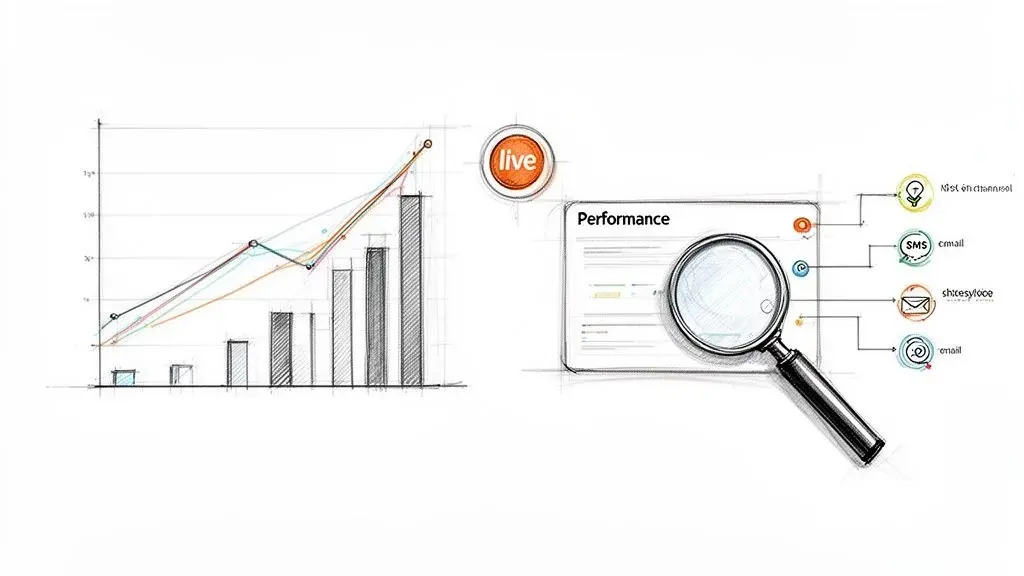
A data-driven approach is essential for modern customer communication strategies. Real-time analytics and performance tracking provide the insights needed to measure campaign effectiveness, understand customer engagement, and refine your outreach. Instead of guessing what works, this strategy uses concrete data on delivery rates, engagement metrics, and ROI to make informed decisions and optimize campaigns quickly.
How It Works in Practice
Tracking performance in real-time allows businesses to react and adapt instantly. An ecommerce store can monitor the revenue generated per SMS campaign, identifying which promotional offers resonate most with specific customer segments. If a campaign underperforms, the team can immediately pause it and reallocate the budget to a proven winner.
For event organizers, analytics reveal which reminder channel drives the highest attendance. They might find, for example, that a ringless voicemail drop 24 hours before an event brings more attendees than an email sent at the same time, or the other way around. This data provides a clear path for maximizing future event turnouts. Sales teams can track click-through and conversion rates from their SMS follow-up sequences to pinpoint the most effective messaging and timing.
Actionable Implementation Tips
To build a data-centric communication workflow, apply these practical steps:
- Define Success Metrics First: Before launching any campaign, clearly define what success looks like. Is it appointment confirmations, link clicks, or direct sales?
- Use A/B Testing: Test variations of your messages, timing, and channels to validate which approaches perform best. For example, test a direct SMS against a ringless voicemail to see which generates more callbacks.
- Track Both Short and Long-Term Value: Monitor immediate engagement metrics like open rates, but also track the long-term customer value generated from different campaigns to understand their full impact.
- Review Analytics Weekly: Make it a habit to review performance data at least once a week. This regular check-in helps you spot trends, address issues, and identify opportunities before they are missed.
- Document Learnings: Keep a record of what works and what doesn't. This knowledge base becomes an invaluable resource for training new team members and scaling successful campaigns.
9. CRM Integration and Workflow Automation
Powerful customer communication strategies depend on connecting your messaging tools with your core business systems. CRM integration and workflow automation achieve this by linking SMS, voice, and ringless voicemail platforms directly to your Customer Relationship Management (CRM) software. This connection enables automated communication sequences that trigger based on specific customer actions or data updates, eliminating manual tasks and ensuring every interaction is timely and relevant. This approach is essential for scaling personalized outreach and maintaining a single source of truth for all customer data.
How It Works in Practice
A well-integrated system makes your CRM the command center for customer communication. For example, a real estate agent using a CRM can have a new lead entry automatically trigger a welcome SMS message. If the lead doesn't respond within a day, the system could send a follow-up ringless voicemail from the assigned agent, adding a personal touch without interrupting the prospect's day.
This automation is also perfect for ecommerce. A customer who abandons their cart in a Shopify store can be automatically added to a multi-step SMS reminder sequence. The first message might offer a simple reminder, while a second message sent 24 hours later could include a small discount code to encourage them to complete their purchase. Each step is logged back to the CRM, giving the support team full context.
Actionable Implementation Tips
To get started with integrating your communication and CRM platforms, consider these steps:
- Start with One Key Workflow: Instead of trying to automate everything at once, select a single high-impact process. A great starting point is a new lead follow-up or an appointment reminder sequence.
- Audit Your Data: Before integrating, ensure your CRM data is clean and organized. Inaccurate or incomplete data will lead to failed automations and a poor customer experience.
- Test Extensively: Run every automated sequence through rigorous testing before going live. Create test contacts and trigger the workflows to confirm that messages are sent correctly and data is mapped properly.
- Document Everything: Create clear documentation for your data mapping and workflow logic. This record is invaluable for troubleshooting issues and training new team members on how the system operates.
- Set Up Monitoring: Implement alerts that notify your team of any integration failures or missed triggers. This proactive monitoring ensures you can quickly address problems before they affect customer communication.
10. Voice Broadcasting and Interactive IVR Campaigns
Voice broadcasting is a powerful customer communication strategy that delivers pre-recorded audio messages to large contact lists, offering speed and scale. By incorporating an Interactive Voice Response (IVR) system, this one-way broadcast becomes a dynamic, two-way conversation. This combination allows businesses to not only inform but also to gather feedback, qualify leads, and route customers by enabling them to respond using their phone’s keypad. It is a critical tool for high-priority messages where you need to capture immediate attention and prompt a direct action.
How It Works in Practice
Voice broadcasting with IVR automates outbound calling and response handling. For example, a financial institution can send an automated voice call to a customer about a suspicious transaction. The message can instruct them to "press 1 to confirm this was you, or press 2 to speak with our fraud department immediately," providing instant resolution and security. This is far more immediate than an email that might go unread for hours.
Similarly, a political campaign can broadcast a get-out-the-vote message and ask recipients to press 1 if they plan to vote, press 2 if they need a ride to the polls, or press 3 to be removed from the list. This interaction gathers valuable data and segments the audience for targeted follow-up, all from a single automated call. Note that political calls are not exempt everywhere: prerecorded calls to cell phones still need the recipient's prior express consent under 47 CFR 64.1200(a)(1).
Actionable Implementation Tips
To effectively launch a voice broadcast and IVR campaign, follow these guidelines:
- Prioritize and Segment: Reserve voice broadcasts for urgent notifications or highly engaged audience segments to avoid message fatigue. Not every message warrants a phone call.
- Keep It Brief: Design your recorded message to be clear, concise, and under 60 seconds. A long, rambling message will lead to high drop-off rates before the call-to-action is even heard.
- Simplify IVR Options: Create a simple keypad menu with clear choices. A "press 1 for yes, press 2 for no" structure is much more effective than a complex, multi-level phone tree.
- Rigorously Test Paths: Before launching, call your broadcast number and test every single IVR path. Ensure that pressing 1, 2, or any other key routes the call exactly as intended.
- Adhere to Compliance: Get the consent each call type needs, state your business name at the start of the message and give a callback number, scrub telemarketing lists against the National Do Not Call Registry, honor all opt-out requests promptly, and place telephone solicitations only between 8 a.m. and 9 p.m. in the recipient's local time (47 CFR 64.1200(b), (c)).
10-Point Comparison: Customer Communication Strategies
| Feature | Implementation complexity | Resource requirements | Expected outcomes | Ideal use cases | Key advantages |
|---|---|---|---|---|---|
| Multi-Channel Messaging Integration | Medium–High: requires cross-channel integration and orchestration | Unified platform, channel connectors, analytics, training | Broader reach, consistent branding, better attribution | Cross-touchpoint campaigns, healthcare, events, sales follow-ups | Unified inbox, coordinated campaigns, single customer view |
| Personalization and Dynamic Content | Medium: CRM mapping and template logic needed | High-quality customer data, merge tags, segmentation tools | More relevant messages and better engagement | Personalized offers, appointment reminders, product recommendations | Increased relevance and engagement, improved ROI |
| Automated Drip Campaigns and Sequences | Medium: workflow design and testing required | Automation engine, timed triggers, content library, monitoring | Consistent nurturing, improved conversions, scalable follow-up | Onboarding, lead nurturing, abandoned cart recovery | Scalable automation, reduces manual follow-up, predictable journeys |
| Segmentation and Targeted Messaging | Medium: requires data analysis and rule definition | Customer data, analytics, segment rules, testing resources | Improved relevance, higher conversion, lower unsubscribe rates | VIP offers, win-back campaigns, lifecycle-specific messaging | Focused targeting, better resource allocation, tailored messaging |
| SMS Text-to-Join and Keyword Marketing | Low–Medium: setup of short/long codes and keywords | Short/long codes or shortcodes, keyword routing, promotion channels | Permission-based list growth, high-intent leads, clear consent | Event sign-ups, class registration, retail promotions | Explicit, customer-initiated opt-ins, two-way interactive engagement |
| Ringless Voicemail for High-Impact Messaging | Low–Medium: recording and delivery setup | Voice recordings or TTS, delivery platform, per-drop pricing | Personal tone, listened to when convenient (consent required, FCC 22-85) | Urgent reminders, VIP notifications, high-value follow-ups | No ringing phone, personal voice, pairs well with a follow-up text |
| Compliance and Double Opt-In Verification | Medium–High: legal and operational controls required | Opt-in flows, DNC checks, audit logs, training, validation tools | Reduced legal risk, better deliverability, documented consent | Healthcare, telemarketing, regulated industries, multi-state campaigns | Legal protection, documented consent, improved sender reputation |
| Real-Time Analytics and Performance Tracking | Medium: instrumentation and dashboarding needed | Tracking tools, dashboards, analysts, attribution setup | Faster optimization, clearer ROI, data-driven decisions | Performance marketing, multi-channel optimization, A/B testing | Real-time insights, channel attribution, iterative improvement |
| CRM Integration and Workflow Automation | High: API mapping and ongoing maintenance | CRM access, API/integration engineering, monitoring, testing | Real-time triggers, reduced manual entry, consistent records | Sales outreach, appointment automation, post-purchase flows | Single source of truth, automated workflows, faster response |
| Voice Broadcasting and Interactive IVR Campaigns | High: IVR design and strict compliance requirements | IVR platform, recordings or TTS (AI voices count as artificial voice), consent and DNC checks | Interactive engagement, lead qualification, detailed call data | Political outreach, fraud alerts, debt collection, press‑1 routing | Scalable voice interaction, immediate transfer capability, rich response data |
Complexity and outcomes in this table are general guidance, not measured results; test each strategy with your own audience.
Consent Rules by Channel (US)
Every strategy above depends on permission. These are the main US federal rules per channel as of October 2026. This is general information, not legal advice; state laws can add stricter rules, so check with counsel for your case.
| Channel | What the rule requires | Source |
|---|---|---|
| Marketing texts and prerecorded marketing calls to cell phones | Prior express written consent: a signed agreement (e-signatures count) naming the number | 47 CFR 64.1200(a)(2), (f)(9) |
| Non-marketing prerecorded calls or autodialed texts to cell phones | Prior express consent (emergencies excepted) | 47 CFR 64.1200(a)(1) |
| Ringless voicemail | Treated as a call: same consent rules as prerecorded calls | FCC 22-85 (Nov 2022) |
| Telephone solicitations | Only 8 a.m. to 9 p.m. local time; scrub against the National DNC Registry (copy no more than 31 days old) | 47 CFR 64.1200(c), donotcall.gov |
| Prerecorded voice messages | Identify the business at the start and give a callback number | 47 CFR 64.1200(b) |
| Opt-outs for calls and texts | STOP and similar replies revoke consent; honor within 10 business days (rules revised Sept 30, 2026) | 47 CFR 64.1200(a)(10), FCC release |
| Business texts (carrier guidance) | Express written consent for promotional texts; one opt-in confirmation; double opt-in optional | CTIA Messaging Principles |
| Commercial email | No prior consent needed, but include a valid postal address and honor opt-outs within 10 business days | FTC CAN-SPAM guide |
| Patient messages (HIPAA) | Reminders are allowed; keep health details minimal; vendors handling PHI need a BAA | HHS FAQ 198, HHS business associates |
For a deeper walkthrough, see our TCPA compliance guide and SMS compliance checklist.
Customer Communication Strategies FAQ
What are 5 effective customer communication strategies?
There is no official list of five. If you need to start with five, pick the ones that build on each other: segmentation, personalization, permission-based list growth (text-to-join keywords), automated sequences, and performance tracking. They are strategies 2, 3, 4, 5 and 8 in this guide.
What are the 7 communication strategies or the 5 C's of customer service?
Lists such as "the 7 communication strategies", "the 5 C's of customer service" or "11 communication strategies" vary by author; no standards body defines them. Most of them share the same ideas: be clear, be consistent, be personal, respond quickly and respect the customer's preferences. The 10 strategies in this guide put those ideas into practice across text, voice and voicemail.
How do I sequence outreach so customers don't get overwhelmed?
Use one channel at a time, add pauses between steps, and stop the sequence as soon as the customer replies, clicks or books. Cap how many messages one person can get per week across all campaigns, and send at reasonable local hours. See strategy 3 and our guide to drip campaign best practices.
How do I keep outreach personal when it is automated?
Use merge fields beyond the first name (last purchase, appointment time, class day), segment by behavior, write in a real person's voice, and route replies to a human. Test every template so a broken field never reaches a customer.
Do I need separate consent for texts, calls and email?
Often yes. Consent to receive emails does not cover marketing texts or prerecorded calls, which need prior express written consent under FCC rules. Commercial email needs no prior consent under CAN-SPAM but must honor opt-outs. See the consent rules by channel table above.
Start Building Your High-Impact Communication Strategy Today
We've explored a powerful set of ten distinct customer communication strategies, moving from high-level concepts to practical, on-the-ground implementation. The journey from a generic "blast" approach to a finely tuned, multi-channel dialogue is not about adopting every single tactic at once. Instead, it’s about making deliberate, incremental improvements that compound over time to build stronger, more profitable customer relationships.
The core lesson is that effective communication is a system, not an isolated event. It begins with understanding your audience through segmentation, respects their inbox with proper compliance and opt-in verification, and engages them on their preferred terms using a mix of SMS, voice, and even ringless voicemail. Each message, whether a simple appointment reminder or part of a complex automated sequence, is a reflection of your brand.
Key Takeaways for Immediate Action
To turn these ideas into results, focus on these central themes. These are the cornerstones of modern customer communication strategies that deliver tangible outcomes.
- Integration is Non-Negotiable: Your channels must talk to each other. A customer who responds to an SMS should not receive a redundant voice call moments later. Integrating your messaging platform with your CRM is the first step toward creating a single, coherent customer view and automating workflows that save time and prevent errors.
- Personalization Drives Engagement: Moving beyond
[First Name]is critical. Use dynamic content based on purchase history, appointment dates, or membership status. This level of detail shows you see your customers as individuals, not just entries in a database, dramatically improving response rates. - Compliance Builds Trust: Adhering to regulations like HIPAA and DNC list requirements isn't just about avoiding fines; it's about demonstrating respect for your customers' privacy. A clear, double opt-in process and easy-to-use opt-out commands are fundamental to building long-term trust and brand loyalty.
- Measurement Guides Improvement: You cannot improve what you don't measure. Pay close attention to KPIs like delivery rates, click-through rates, response rates, and conversion rates for each channel. This data provides the objective feedback needed to refine your message timing, content, and channel selection.
Your First Steps Toward Better Communication
Feeling overwhelmed by the options? Don't be. The most successful businesses start small and build momentum. Here is a simple, actionable path forward:
- Pick One High-Impact Use Case: Don't try to boil the ocean. Is your biggest pain point appointment no-shows? Start with an automated SMS reminder sequence. Struggling with event attendance? Implement a campaign combining SMS alerts with a high-impact ringless voicemail drop 24 hours before the event.
- Establish Your Baseline: Before you begin, know your current numbers. What is your current no-show rate or webinar attendance rate? This baseline will allow you to accurately measure the impact of your new communication strategy.
- Deploy and Monitor: Launch your chosen campaign. Use a platform that provides clear, real-time analytics to track performance from day one. Watch how your audience responds and be prepared to make small adjustments.
Mastering these customer communication strategies is what separates businesses that merely exist from those that grow and thrive. It's about creating a system that works for you, automating the routine tasks so you can focus on building genuine connections. Each text, call, and voicemail is an opportunity to strengthen that bond. By choosing the right tools and applying these proven methods, you can build a communication engine that not only reaches your audience but truly resonates with them, turning one-time buyers into lifelong advocates.
Ready to put these strategies into action? Broadcast provides the all-in-one platform to seamlessly manage your SMS, voice, and ringless voicemail campaigns. Start your free trial today and see how easy it is to automate, personalize, and measure your customer communications.