SMS marketing for ecommerce is a direct line to your customers, letting you send promotional deals and important updates right to their phones, as long as they’ve opted in, of course.
It’s an incredibly high-impact strategy because it cuts through all the digital noise, reaching people on the one device they check constantly. For online stores, this means a powerful way to boost sales, bring back shoppers who abandoned their carts, and build some serious brand loyalty.
Why SMS Marketing Is an Ecommerce Superpower
Ever tried to have a meaningful conversation in a packed, noisy shopping mall? That's what most ecommerce brands face when they rely only on email and social media. Your message is just one shout among thousands, easily tuned out or completely lost in an endless feed.
Now, imagine you had a private, direct line to every single customer. Your message arrives instantly, and you know they're almost certain to read it. That's the magic of SMS marketing for ecommerce.
This isn't just another channel to bolt onto your marketing plan; it's a completely different way to connect and build relationships. While email inboxes are overflowing and social media feeds are controlled by mysterious algorithms, SMS gives you an immediate and personal touchpoint.
SMS Marketing vs. Email Marketing At a Glance
To really grasp the power of SMS, it helps to see it side-by-side with its older cousin, email. While both have their place, their performance metrics tell a powerful story about where customer attention is today.
| Metric | SMS Marketing | Email Marketing |
|---|---|---|
| Spam/Junk Rate | Very Low | High |
| Opt-In Requirement | Strict (Express Consent) | Standard (Opt-out focused) |
As you can see, the difference is clear. When you need to get a message seen and acted on fast, nothing beats SMS.
Unmatched Engagement and Immediacy
The raw power of SMS is all in its reach. CTIA counted nearly 2.2 trillion SMS and MMS messages in the US in 2024, according to the CTIA 2025 Annual Survey. Texts land on the one device people check all day, so most messages get seen soon after they hit the phone.
Compare that to email marketing, where a modest open rate is often considered a success. And the speed? Texts are usually read within minutes of being delivered. It’s the fastest way to get your message in front of your customers, period.
This direct line creates a sense of urgency and exclusivity that other channels just can't replicate.
Expanding Beyond Simple Texts
But a truly smart strategy doesn't stop with a simple text message. Modern platforms now let you create a much richer, multi-layered experience to keep your customers hooked.
For example, many brands are now adding ringless voicemail drops to their campaigns. This cool technique delivers a pre-recorded audio message straight to a customer's voicemail inbox, usually without making their phone ring.
Think of it as leaving a personal note from your brand. A ringless voicemail can be a special thank-you from the founder, a unique offer for your VIPs, or a gentle follow-up that just feels warmer and more human because of the voice.
By combining text and voice, you create a more dynamic and personal journey for your customers. Sticking to sound SMS marketing best practices ensures every touchpoint (whether it's a text or a voicemail) is compliant, effective, and gets you the results you're after. You’re no longer just making announcements; you're starting a real conversation.
Mapping Your SMS Customer Journey
Great SMS marketing for ecommerce isn’t about just blasting out promo codes. It's a conversation. It’s about guiding someone from being a curious browser to a loyal fan who buys from you again and again.
Think of it like a roadmap. You wouldn't say the same thing to a first-time visitor as you would to someone who’s bought from you ten times, right? Your texts need to be just as smart, adapting to where each customer is in their relationship with you.
When you map this out, you start sending the right message at exactly the right time. Your texts feel helpful and relevant, not annoying. This turns your SMS list from a simple broadcast channel into a powerful, automated engine for growth.
The infographic below shows just how direct this channel is. A message sent is almost always a message read.
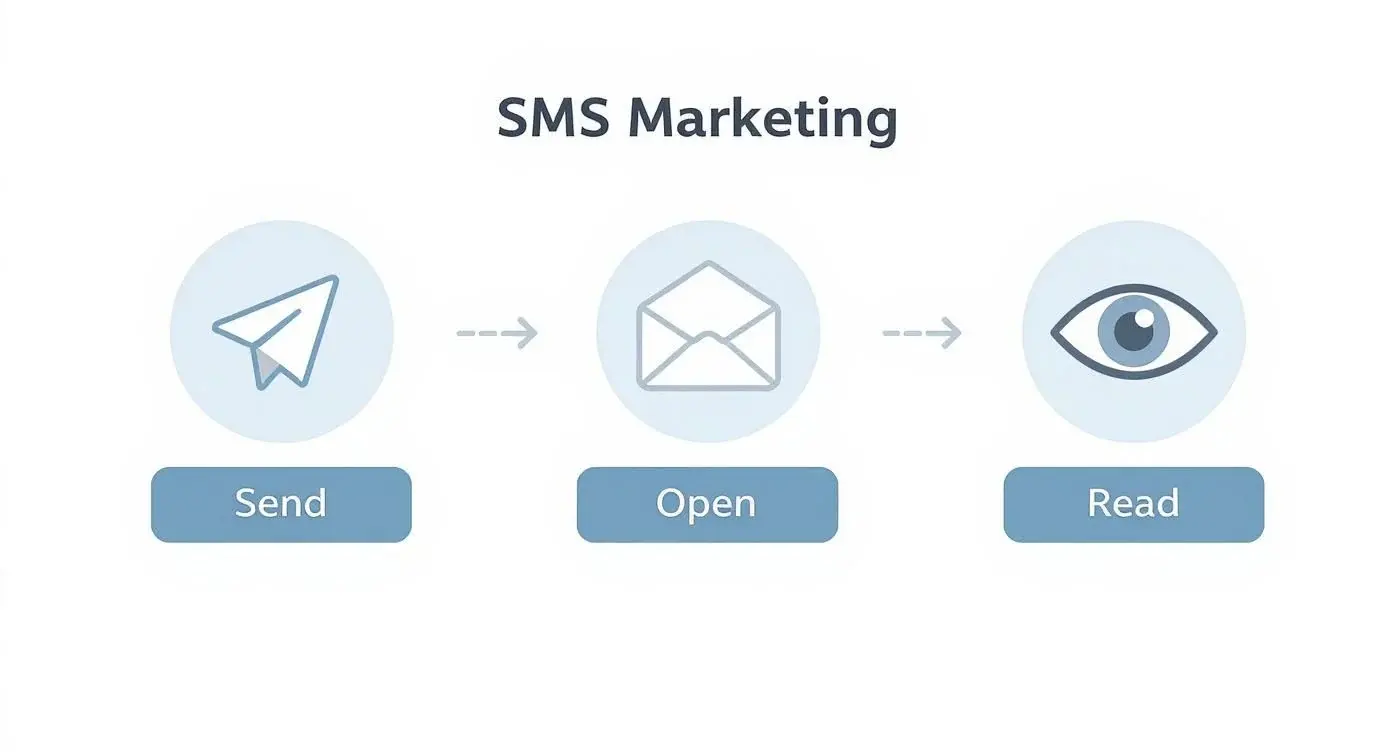
That’s the core advantage of SMS: a direct line to your customer, delivering open rates other channels can only dream of.
The Awareness Stage: Building Your List
The journey starts before you even send the first text. This is where you grab people's attention and, most importantly, earn their permission to message them. Building your list the right way is the foundation of a profitable SMS program.
This means you must get explicit consent. Forget the shortcuts. Trust is your most valuable asset here.
Here’s how to grow your SMS list and keep it compliant:
- Website Pop-ups: Offer a clear incentive with a well-timed pop-up. A simple "15% discount on your first order" in exchange for a phone number works wonders.
- Checkout Opt-ins: Add a simple, unchecked box at checkout. Let customers easily sign up for deals and order updates.
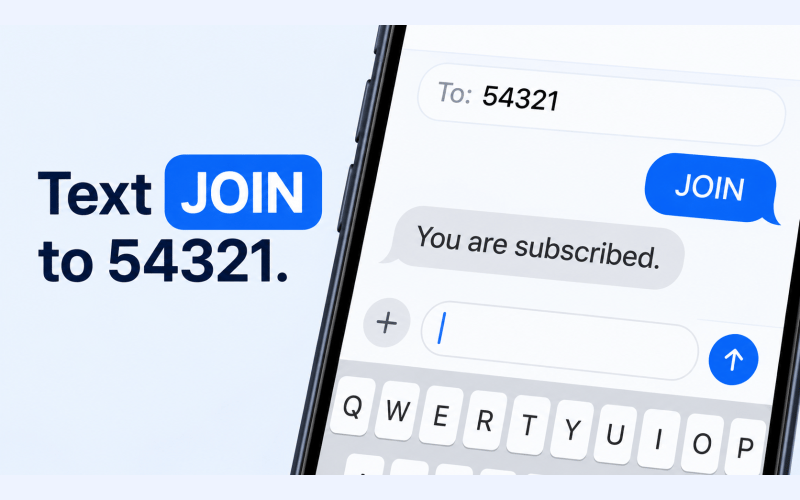
- Keywords and Short Codes: Promote a unique keyword, like "Text SAVE to 55555," on social media, in emails, or even on your packaging to get people to subscribe.
The Consideration Stage: Nurturing Leads
Okay, so someone's interested. They’ve signed up for your list or started browsing. Now it's time to turn that initial interest into a sale. This is where automation becomes your best friend.
Automated flows work 24/7 to re-engage shoppers who might have gotten distracted.
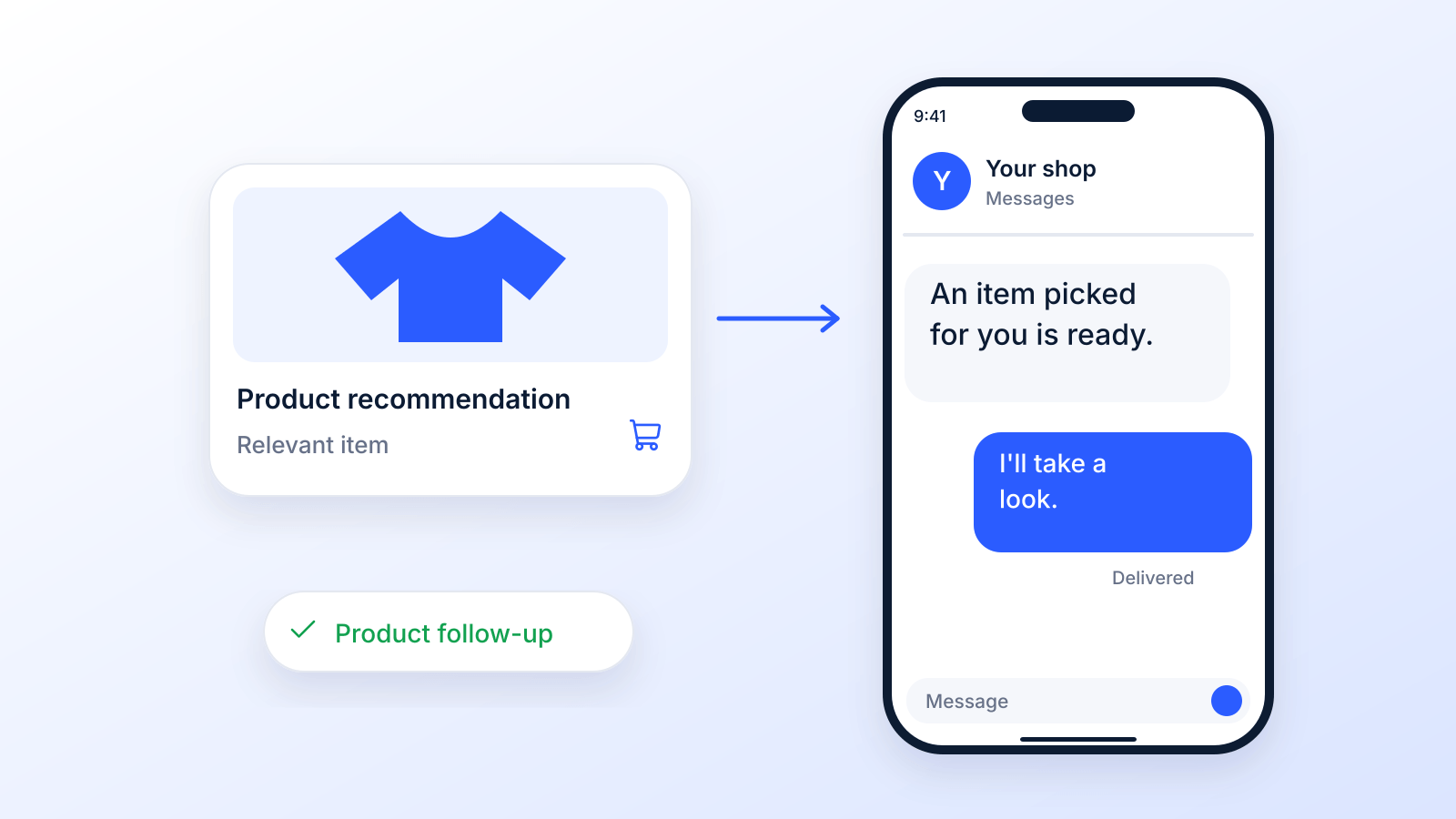
Think about it: a customer looks at a few products but doesn't add anything to their cart. A few hours later, a browse abandonment flow can send a helpful text, maybe highlighting a key feature or showing them a related item.
These little nudges are incredibly effective at bringing people back. The classic abandoned cart reminder is another must-have here. A text sent an hour after someone leaves items in their cart can recover a ton of otherwise lost revenue. If you want to dive deeper, you can learn more about building effective marketing automation workflows that turn passive browsers into buyers.
The Conversion Stage: Closing the Deal
This is where the magic happens. The conversion stage is all about giving customers that final nudge they need to click "buy." You've already built trust and interest, and now it's time to hit them with a compelling offer.
These campaigns are usually more direct and promotional, designed to create a little excitement and urgency.
- Promotional Campaigns: Send targeted offers to specific groups. For example, a "We miss you!" discount to customers who haven't purchased in 90 days.
- Flash Sales: Create a buzz with time-sensitive deals exclusive to your SMS subscribers. A message like, "Flash Sale! 25% off all graphic tees for the next 3 hours only!" gets people moving.
- New Product Announcements: Give your SMS list early access or an exclusive discount on new stuff. It makes them feel like valued insiders.
The Retention Stage: Creating Loyal Fans
The journey doesn't stop after the first purchase. In fact, the most profitable part is just getting started. The goal now is to turn one-time buyers into lifelong fans by delivering an amazing post-purchase experience. This is less about selling and more about building a solid relationship.
For a broader look at orchestrating the entire customer path, check out this guide on Mastering Customer Journey Optimization for E-Commerce.
Here’s how to keep them coming back:
- Order & Shipping Updates: Simple transactional texts that keep customers in the loop build a massive amount of trust and cut down on "Where's my order?" emails.
- Feedback Requests: A week after their order arrives, send a text asking for a review. It shows you care about their opinion and gives you powerful social proof.
- VIP & Loyalty Programs: Reward your best customers. Give them exclusive perks, early access, and special deals to encourage repeat business and make them feel truly connected to your brand.
Crafting High-Converting SMS Campaigns
Okay, we’ve mapped out the customer journey. Now it's time to build the engine that actually moves people along that path. A killer SMS marketing for ecommerce strategy isn't about firing off random texts; it’s a well-oiled machine of automated flows and promotional blasts working in harmony. They deliver the right message at the right moment.
Think of each campaign type as a specific tool in your workshop. A welcome series is your friendly handshake. An abandoned cart flow is your best salesperson, working tirelessly to close the deal. And a promotional blast? That's the megaphone you use for your biggest sales. Each has a job, but they all drive toward the same goal: building relationships and boosting sales.
Automated Campaigns: The Workhorses of SMS
Automated campaigns are the absolute foundation of any SMS strategy that can scale. These are your "set-it-and-forget-it" flows triggered by specific customer actions. They work 24/7 in the background, engaging shoppers and pulling back revenue you'd otherwise lose.
- Abandoned Cart Recovery: This is non-negotiable for any ecommerce store. A multi-step flow that reminds a customer about items they left behind can recapture a huge chunk of lost sales. Start with a gentle nudge an hour after they bounce, then maybe sweeten the deal with a small discount in a follow-up text 24 hours later if they still haven't checked out.
- Welcome Series: When someone first subscribes, their interest is at an all-time high. You have to capitalize on that. A simple 2-3 step welcome series does the trick. The first text should instantly deliver whatever discount you promised. The second can tell your brand's story, and the third could spotlight a few of your best-selling products.
- Browse Abandonment: This one is a bit more subtle, but it's incredibly powerful. It targets shoppers who looked at a specific product but never even added it to their cart. A quick text like, "Still thinking about the [Product Name]? It's one of our top sellers for a reason!" can be just enough to reignite their interest and pull them back to your site.
Promotional Campaigns: The Revenue Boosters
While your automations are handling the day-to-day work, promotional campaigns are your go-to for creating major sales events and driving immediate revenue. These are the one-time "blasts" you send out to your whole list (or specific segments) for holidays, flash sales, or new product drops.
Timing and clarity are everything here. The offer has to be a no-brainer, and your call-to-action (CTA) must be impossible to misunderstand. Tossing in a little urgency with phrases like "Ends tonight!" or "Limited stock!" is a proven way to get people to act now. Knowing how to properly send a mass text to your audience ensures your message hits with maximum impact every time.
The return on SMS marketing is just wild. For every $1 brands spend, they see an average return of $71. That's a mind-boggling 7000% ROI. It makes SMS one of the single most effective channels you can possibly use for your ecommerce business.
Transactional Messages: The Trust Builders
Transactional messages are so often overlooked as a marketing channel, but they're absolutely critical for building customer trust and real loyalty. I'm talking about the functional texts: order confirmations, shipping updates, and delivery notifications.
They don't need to be salesy, but you can still pack them with your brand's personality to create an amazing customer experience. A simple, friendly "Your order is on its way!" text with a tracking link goes a long way. It lowers customer anxiety and seriously cuts down on "Where's my order?" support tickets. This kind of consistent communication proves you're reliable and that you care about their experience even after you've made the sale, making them far more likely to come back for more.
Using Personalization to Boost Engagement
Sending the same generic text to every single person on your list? That's like shouting into a crowded room; most people will just tune you out. Really effective SMS marketing for ecommerce is about starting thousands of one-on-one conversations at once. This means you have to ditch the one-size-fits-all blast and start getting personal.
When you send a message that feels like it was written just for them, you immediately cut through all the other noise. It's a simple way to show you're actually paying attention, turning a list of phone numbers into a community of loyal fans who are excited to hear from you.
Smart Segmentation: The Foundation of Personalization
Before you can personalize anything, you need to know who you're talking to. That's where segmentation comes in. Think of your customer list not as one giant blob, but as a collection of smaller groups with different tastes, habits, and histories with your brand.
By grouping your subscribers based on what they have in common, you can send messages that are far more relevant and, frankly, way more effective.
Here are a few powerful ways to start slicing up your audience:
- Purchase History: This one's huge. You can create segments for your VIPs (the big spenders), brand-new customers, or people who only buy from a specific category, like "Men's Shoes."
- Browsing Behavior: See what people are clicking on. If someone keeps looking at the same pair of running shoes on your site, that's a massive signal. Send them a targeted offer for that category.
- Engagement Level: Some people click every link you send, while others have gone quiet. Create separate groups for your super-fans and those who might need a little nudge with a re-engagement campaign.
- Location: Got a pop-up shop or a special event in a certain city? Use geographic data to send promotions that are hyper-relevant to a customer's local area.
Leveraging Data for Dynamic Content
Once your segments are ready, you can start making your messages feel truly individual with dynamic content. This just means using "merge tags" to automatically pull customer-specific details right into the text.
It’s the difference between a text that says, "Hey, check out our new arrivals," and one that says, "Hey Sarah, we just got more of the Hazelwood Maxi Dress you were looking at! Grab it before it's gone." The second message is exponentially more powerful.
This level of detail makes your messages feel less like a marketing blast and more like a helpful tip from a friend who gets their style. And the data proves this works. As brands text more, personalization becomes the key to standing out; in fact, many consumers now respond to promotional texts. Even better, personalized SMS messages tend to see higher engagement than generic ones. You can explore more insights on the growth of ecommerce messaging to see just how big this trend is.
Going Beyond SMS with Ringless Voicemail
For your most valuable segments (think VIPs or customers celebrating their one-year anniversary with your brand), you can take personalization to a whole new level. Meet ringless voicemail. This cool tech lets you drop a pre-recorded audio message directly into someone's voicemail, usually without their phone ringing.
Imagine a loyal customer getting a personal thank-you message from your founder or a special birthday greeting. It creates a powerful, human connection that a simple text can't always match. Using a ringless voicemail drop for these key moments can dramatically boost loyalty and make your best customers feel seen and appreciated. It’s an unexpected, personal touch that really makes your brand stick in their minds.
Measuring and Optimizing Your SMS Strategy
Launching your SMS campaigns is a huge first step. But it's just that: a first step. To build a truly profitable SMS marketing for ecommerce program, you have to know what’s working, what isn’t, and most importantly, why.
Think of your first few campaigns as a well-educated guess. The real magic, and the real growth, happens when you start turning raw data into actionable insights. This is how you fine-tune your approach for maximum impact. It isn't about finding one perfect message and hitting repeat; it's a constant cycle of measuring, learning, and optimizing. When you get this right, you transform SMS from a simple communication tool into a powerful, data-driven revenue engine.
Key Performance Indicators You Must Track
So, how do you know if your campaigns are healthy? You need to keep a close eye on a handful of essential Key Performance Indicators (KPIs). These numbers tell a story, revealing how your audience is responding and where you can make improvements.
Here are the core metrics every ecommerce brand should be watching:
- List Growth Rate: This shows you how fast you're adding new, engaged subscribers. A steady growth rate is a clear sign your opt-in methods are hitting the mark.
- Click-Through Rate (CTR): This is the percentage of people who actually clicked a link in your message. A high CTR is gold: it means your copy and offer were compelling enough to spark immediate interest.
- Conversion Rate: This tracks the percentage of subscribers who completed a desired action (usually making a purchase) after clicking your link. This is the bottom line, the ultimate measure of your campaign's direct impact on sales.
- Unsubscribe Rate: This is the percentage of people who opt out after getting a message. A few unsubscribes are totally normal, but a sudden spike can be a red flag, signaling issues with message frequency, relevance, or value.
- Return on Investment (ROI): This is the metric your CFO cares about most. It calculates the total revenue generated from your campaigns divided by what you spent, telling you exactly how profitable your SMS efforts are.
Turning Data into Action with A/B Testing
Once you have a baseline for these KPIs, you can start making things better. The most effective way to do this is through methodical A/B testing, also known as split testing. It's simple: you send two slightly different versions of a message to small, separate segments of your audience to see which one performs better.
A/B testing removes the guesswork from your strategy. Instead of wondering if a different offer or send time would work better, you can prove it with real data, making small, incremental changes that lead to significant gains over time.
The key is to test just one variable at a time to get clean results. You could test your offer (15% off vs. free shipping), your copywriting style (using emojis vs. no emojis), or your send time (morning vs. evening).
By measuring which version drives a higher CTR or conversion rate, you can confidently apply the winning formula to future campaigns. For a broader look at improving overall marketing performance, it's worth exploring resources on general campaign optimization strategies. This disciplined approach ensures every text you send is smarter than the last.
Frequently Asked Questions
Got questions about getting started with SMS marketing for ecommerce? You're not alone. Here are a few common ones we hear from store owners just like you.
How Is Ringless Voicemail Different from SMS Marketing?
Think of it this way: SMS is for the quick, punchy update, while ringless voicemail is for making a more personal connection.
A ringless voicemail zips a pre-recorded audio message straight to someone's voicemail box, and their phone usually doesn't ring. It's a fantastic way to deliver a message with the warmth of a human voice, which feels way less intrusive than a cold call.
While SMS is king for instant alerts, promo codes, and shipping updates, a ringless voicemail drop really shines when you want to make an impact. Imagine your store's founder sending a personal thank-you message to your top VIP customers. That’s a memorable moment SMS can't quite replicate.
The real secret is that SMS and ringless voicemail aren't competitors; they're teammates. SMS gives you speed and convenience, while voice adds personality and builds a deeper relationship. Using them together is a powerful combo.
What Is the Best Time to Send Ecommerce SMS Campaigns?
There's no magic, one-size-fits-all answer here because it all boils down to your specific audience's daily routine.
That said, a good rule of thumb is to avoid super early mornings and late-night sends. Mid-day, around 10 AM - 1 PM, is often a sweet spot for general promotions, as you'll catch people taking a lunch or coffee break.
For those urgent flash sales or limited-time offers, evenings between 5 PM - 8 PM can be incredibly effective. People are usually unwinding from their day, scrolling through their phones, and are more receptive to a good deal. The best approach? Test, test, and test again. Watch your analytics to see when your customers are most engaged.
Can I Use My Personal Phone Number for SMS Marketing?
In a word: no. Please don't.
Using your personal number for business texts is unprofessional, impossible to scale, and a surefire way to get in hot water with carriers and violate TCPA regulations. You absolutely must use a dedicated platform that provides a compliant short code, toll-free number, or a 10-digit long code (10DLC).
These platforms do all the heavy lifting for you: managing consent, handling unsubscribes automatically, scheduling campaigns, and tracking performance. These aren't just nice-to-haves; they're essential for running a legal and successful SMS program.
Ready to add the power of SMS, voice, and ringless voicemail to your marketing? Broadcast provides all the tools you need to create high-impact, compliant outreach that drives real results for your ecommerce store. Start your free trial today