
Ever wished you could send a personal voice message to thousands of customers at once, without ever picking up the phone? That’s the magic of automatic voice messaging (AVM). It’s a simple but powerful way for businesses to broadcast a pre-recorded audio message to a huge list of contacts all at the same time.
What Is Automatic Voice Messaging
An automatic voice messaging system is software that sends a recorded or text-to-speech message to many contacts without an agent dialing each number one by one. In practice, businesses use it to deliver reminders, service alerts, promotional outreach, and follow-up messages at scale. The important distinction is that it is a delivery system, not just a voicemail tool: it can place a live outbound call, drop a message into voicemail, or trigger an interactive phone flow depending on the platform and campaign setup.
That distinction matters because several related tools get lumped together:
- Standard automated call: the phone rings, and if the person answers, they hear the message immediately. Best for urgent alerts, same-day schedule changes, and appointment confirmations.
- Ringless voicemail: the message is delivered to voicemail without ringing the phone. Best for lower-friction promotions, lead follow-up, and reactivation campaigns.
- IVR: the message asks the listener to press a key or respond, such as confirming an appointment or routing to support. Best when you need input, not just delivery.
- Basic voicemail: a one-to-one mailbox recording left manually or after an unanswered call. Useful for individual follow-up, but not a system for large-scale outreach.
I’d make this the first filter when choosing a platform: not “does it send voice messages?” but “how does it deliver them, and what happens next?” That answer changes compliance obligations, customer experience, and campaign results.
The systems businesses evaluate usually include the same core components: message creation, contact import, scheduling, delivery rules, opt-out handling, analytics, and integrations with CRM or contact-center software. Some teams care most about easy script-to-audio creation; others need voicemail detection, local caller ID, automated retries, and suppression lists that sync with their CRM. If you want a broader look at running outbound calling at scale, see this guide to improving call center efficiency. For a related look at how automated outreach supports billing, see this guide to bill payment reminders.
The channel has also matured under heavy pressure. In the United States, people received about 4.2 billion robocalls in April 2026 alone, according to the YouMail Robocall Index, while the National Do Not Call Registry passed 258 million numbers by the end of FY 2025, according to the FTC's biennial report to Congress. That’s why legitimate business use now hinges less on raw reach and more on consent, targeting, and clear use-case fit.
A Quick Word on Ringless Voicemail
You’ll often hear another term thrown around: ringless voicemail. It's a key part of this world. Unlike a standard automated call that makes someone's phone ring, ringless voicemail slips your pre-recorded message straight into their voicemail inbox. No ring, no interruption.
This quiet, non-intrusive approach is perfect for things like marketing outreach and sales follow-ups where you want to get your message across without disrupting someone's day.
Here’s why so many businesses are turning to this tech:
- It Feels Personal: Voice messages can feel more urgent and human than text, and a familiar voice gives a reminder or offer more weight.
- Scale and Speed: You can reach hundreds or even thousands of people in minutes. Try doing that manually; it’s impossible.
- It Saves Money: Automating your outreach slashes the labor costs tied to old-school manual calling campaigns.
Getting the difference between a standard voice broadcast (phone rings) and a ringless voicemail drop (goes straight to voicemail) is the first step. They both use a pre-recorded message, but how they land and when to use them are totally different. Nailing this distinction is what sets you up to pick the right tool for the job.
How We Evaluated Automatic Voice Messaging Systems
This guide compares systems and delivery methods using the criteria that matter most in real business rollouts: delivery options, consent controls, list management, scheduling flexibility, caller ID support, voicemail handling, analytics, and integration depth. It also weighs how easy it is to launch a small pilot without creating compliance risk.
A few things stand out when you compare platforms against these criteria. First, feature lists are often misleading. A platform can claim voice broadcasting, but if it lacks time-zone controls, suppression management, or usable reporting, it becomes risky the moment you move beyond a tiny list. Second, the best tool depends heavily on the workflow. A medical office sending confirmations needs different safeguards than a retail brand reactivating lapsed buyers.
We also compared delivery methods based on business fit rather than hype:
- Standard automated calls scored highest for urgency and confirmation workflows.
- Ringless voicemail scored better for low-disruption outreach and callback-driven campaigns.
- IVR scored best where the goal was to collect a response, route a caller, or qualify demand.
Compliance and reporting were weighted heavily because weak controls create expensive problems fast. The FTC received about 2.1 million Do Not Call complaints in FY 2024, when the Registry held more than 253 million active registrations (FTC Do Not Call Registry Data Book FY 2024), and more than 2.6 million complaints in FY 2025, when the Registry passed 258 million numbers (FTC biennial report, January 2026). My takeaway is simple: businesses should assume recipients are less tolerant, not more.
How Automatic Voice Messaging Actually Works
Ever wondered what's going on behind the scenes with automatic voice messaging? It’s surprisingly simple. The whole process is handled by a software platform, cutting out all the tedious manual dialing and letting you reach hundreds or thousands of people at once.
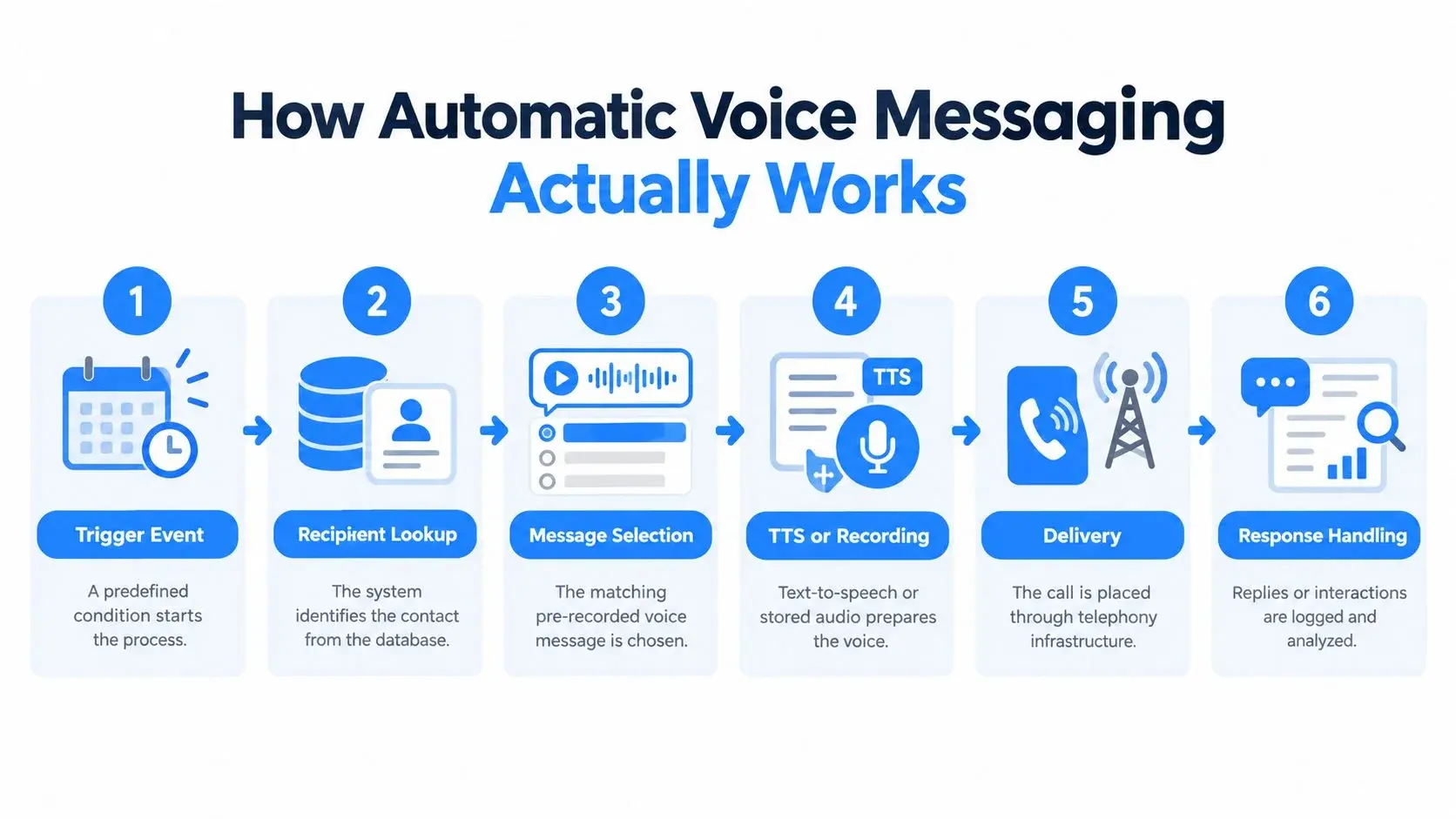
It all starts with your message. You've got two main options here: either record a high-quality audio clip in your own voice or use a slick text-to-speech voice generator that turns a written script into a natural-sounding message. This gives you the flexibility to nail the perfect tone for whatever campaign you’re running.
Once your message is good to go, you just need to upload your contact list. A quick heads-up: for your campaign to really fly, make sure this data is clean, formatted correctly, and follows all the rules.
This quick diagram breaks down the simple, three-step flow that powers every campaign.
As you can see, the whole thing is built for speed. You go from creating your message to broadcasting it out in just a few clicks.
Configuring and Launching Your Campaign
With your audio and contacts loaded up, the next part is tweaking the campaign settings, and you get to play director. You can schedule the broadcast for a specific date and time, set the caller ID people will see on their phones, and even create rules for what happens if a call goes unanswered, like setting up automatic redials.
The moment you hit "launch," the platform's engine roars to life. It uses Voice over Internet Protocol (VoIP) to place all the calls at the same time. If you're curious about the tech, learning about how VoIP works can give you a better sense of how these calls zip across the internet instead of old-school phone lines.
At its core, an automatic voice messaging system is a powerful automation tool. It handles the repetitive, time-consuming task of dialing so you can focus on crafting a message that connects with your audience.
Where teams usually go wrong is in the setup details, not the recording itself. A solid implementation starts with list hygiene: remove invalid numbers, deduplicate records, separate mobile from landline where relevant, and suppress anyone who has opted out or should not receive a given message type. Consent capture should be tied to the use case, so promotional lists are not mixed with informational reminders.
After that comes caller ID and schedule configuration. Use a recognizable number or business name where your provider supports it, and schedule by the recipient’s local time zone rather than your office time. For appointment reminders, many teams send a first attempt 24 hours ahead and a second reminder only to non-responders. For urgent alerts, speed matters more than spacing, so retries should be tighter and capped.
Voicemail detection is another practical setting buyers often overlook. Some systems can distinguish between a live answer and voicemail, then play a shorter recording, leave a voicemail version, or retry later. That can improve completion rates and reduce awkward customer experiences. It is one of the most valuable “unsexy” features in a voice platform because it determines whether the message lands cleanly.
Standard Calls vs. Ringless Voicemail Delivery
It's really important to know the two different ways a message can land, as they each have a specific job.
- Standard Automated Calls: This is the classic approach where the recipient's phone rings. If they pick up, they hear your message right away. If they don't, it gets left as a normal voicemail. This is your go-to for urgent alerts when you need to get someone's attention immediately.
- Ringless Voicemail: This method is a lot more subtle. It uses slick technology to connect directly with the carrier's voicemail server, dropping your message right into their inbox without the phone ever ringing. It's the perfect non-disruptive tool for marketing, promotions, or follow-ups where you want to get your point across without interrupting someone's day.
What Happens After Launch
Once a campaign is live, the work shifts from delivery to diagnosis. The metrics that matter depend on the purpose:
- Customer alerts: track connection rate, completion rate, and speed to delivery across the full list.
- Reminders and confirmations: watch confirmations, callback volume, and no-show reduction.
- Promotions: focus on callback rate, transferred calls, redemptions, or other downstream actions rather than raw listens.
- Feedback campaigns: measure survey completion, keypress response, and whether comments reveal repeat service issues.
Early warning signs of a poor setup are usually obvious within the first send: low completion rates from weak audio, spikes in opt-outs from broad targeting, high unanswered rates tied to bad timing, or callbacks from confused recipients because the script did not identify the business immediately. If you see those signals, pause and fix the setup before scaling.
Comparing Different Voice Messaging Methods
Not all automated voice messages are created equal. Picking the right tool for the job is absolutely critical, because your choice completely changes the customer experience. Are you sending an urgent, can't-miss alert or a friendly, low-key marketing follow-up?
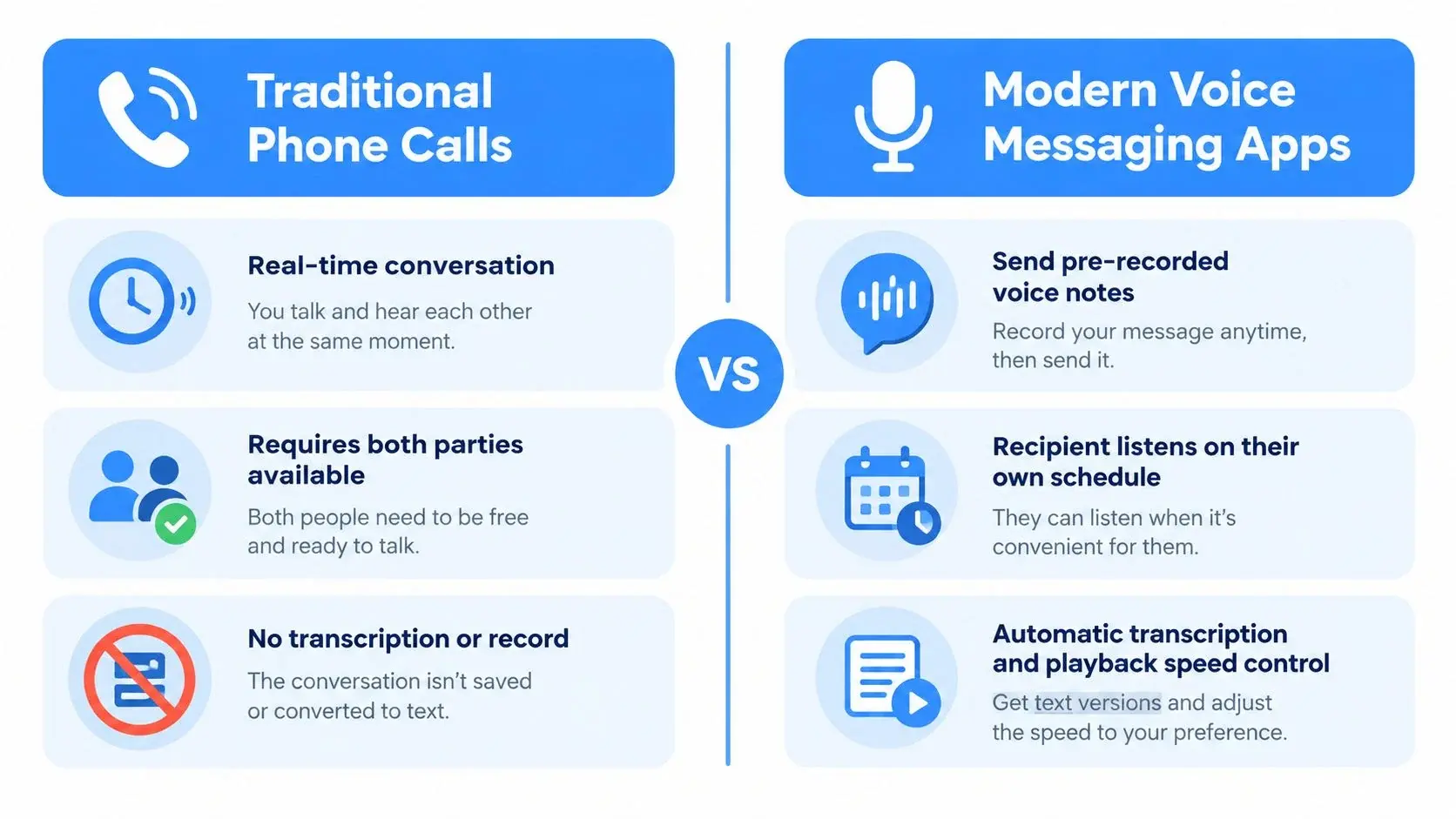
Let's break down the main technologies you'll come across so you can build a smarter outreach strategy.
We're going to look at three main approaches: standard automated calls, the subtle power of ringless voicemail, and the back-and-forth of Interactive Voice Response (IVR). Understanding how they work and where they shine is the first step to campaign success.
Standard Automated Calls
Think of this as the classic approach. The system physically dials a person’s phone number, making it ring just like any other call. If they pick up, your pre-recorded message plays instantly. If they don't, it gets left in their voicemail.
This method is built for speed and getting immediate attention.
- Best For: Time-sensitive information like emergency notifications, fraud alerts, or critical appointment reminders where you need them to notice.
- User Experience: It can definitely be disruptive; it’s a ringing phone, after all. But for urgent news, that interruption is exactly the point.
The Power of Ringless Voicemail
Now, things get interesting. Ringless voicemail is a much more subtle, non-intrusive technology. Instead of ringing the phone, it bypasses the call completely and delivers your audio message directly to the carrier's voicemail server.
The person just sees a voicemail notification pop up. No interruption, no missed call. This is sometimes called a voicemail drop or direct-to-voicemail messaging.
This makes it the perfect tool for sales and marketing outreach. It greatly improves lead follow-up because you can deliver a personal-sounding message without being pushy. You can learn more about how to use ringless voicemail for your business to connect with customers respectfully. Skipping the ring does not skip the rules: since November 2022 the FCC treats ringless voicemail to wireless phones as a call that needs consent (FCC 22-85; see this ringless voicemail compliance guide).
The real magic of ringless voicemail is that it respects the recipient's time. By skipping the disruptive ring, you make a much better first impression and start building a relationship instead of just broadcasting a message.
Interactive Voice Response (IVR)
Finally, we have Interactive Voice Response (IVR), which turns a one-way message into a two-way conversation. An IVR system plays a message and then asks the listener to do something, usually by pressing a key on their phone.
Think: "Press 1 for sales, Press 2 for support."
That interactive piece makes IVR fantastic for more complex jobs where you need to gather information or send callers to the right place. It’s the backbone of automated customer surveys, bill payments, and inbound call routing for support centers.
Automated Voice Messaging vs Ringless Voicemail vs IVR
To make the choice even clearer, let's put these three methods side-by-side. Each one has a distinct role to play depending on what you're trying to accomplish.
| Feature | Automated Voice Call | Ringless Voicemail | Interactive IVR |
|---|---|---|---|
| User Experience | Disruptive (phone rings) | Non-disruptive (no ring) | Interactive (needs input) |
| Primary Use Case | Urgent Alerts, Reminders | Marketing, Sales Follow-ups | Surveys, Call Routing |
| Communication Style | One-way broadcast | One-way message drop | Two-way interaction |
| Best for Engagement | Low (often ignored) | Medium (listened to later) | High (requires action) |
As you can see, the "best" method really depends on your goal. For high-priority alerts, a standard call makes sense. For respectful marketing, ringless voicemail is king. And for collecting feedback or routing calls, IVR is your go-to.
Powerful Use Cases for Your Business
The strongest business results usually come from matching the delivery method to a specific workflow, not from blasting the same recording to everyone. That means focusing on three categories: reminders and confirmations, promotions and reactivation, and support or feedback collection.
Customer Reminders and Confirmations
This is the most operational use case and often the easiest place to see ROI. Think medical offices, home services, auto shops, schools, and any business where missed appointments or schedule confusion create direct cost.
- Audience: existing customers with an upcoming appointment, delivery, reservation, or service window
- Sample objective: reduce no-shows or increase confirmed bookings
- Best delivery method: standard automated call for urgent or same-day outreach; IVR if you want “Press 1 to confirm, Press 2 to reschedule”
- KPI to watch: confirmation rate or no-show reduction
- Compliance caveat: keep reminder lists separate from promotional lists so an informational message does not drift into marketing territory
A practical example: a dental office sends a call the day before a cleaning appointment. If the patient presses 2 to reschedule, staff can prioritize only the exception cases instead of calling the full schedule manually. A voice reminder is worth testing alongside text reminders when the appointment is high value or easy to forget.
Promotions and Reactivation Campaigns
Promotional voice campaigns work best when the audience already knows the business. Cold outreach is where voice campaigns become both less effective and more legally risky.
- Audience: prior customers, opted-in subscribers, or recent leads who have consented to outreach
- Sample objective: drive callbacks, coupon use, event attendance, or repeat purchases
- Best delivery method: ringless voicemail for low-friction promotional follow-up; standard automated call only when urgency is part of the offer and consent is clear
- KPI to watch: callback rate, redemption rate, or booked appointments from the campaign
- Compliance caveat: promotional messages require the highest level of consent scrutiny and should always include a clear opt-out path
A local retailer, for example, might send a short voicemail to lapsed VIP customers about a weekend event or seasonal sale. The message should sound specific, not broadcast-heavy: mention the business, the offer, and one next step. In most cases, ringless voicemail is the better fit here because it lowers interruption while still creating a human touch.
Customer Service and Support
Voice outreach also helps when customers need updates, routing, or fast follow-up after an issue. That can include outage notices, delivery disruptions, queue callbacks, or simple self-service prompts that reduce pressure on live teams. AI voice agents are increasingly part of these workflows; if you use an AI-generated voice for outbound calls, the FCC treats it as an "artificial" voice that needs the same consent as a prerecorded message (FCC 24-17). The practical takeaway is simple: use automation to handle repetitive updates while giving customers a clear path to a human when needed.
- Audience: customers with open service issues, active support requests, or time-sensitive updates
- Sample objective: reduce inbound call load, speed up resolution, or route customers to the right queue
- Best delivery method: IVR when you need menu-based routing or account actions; standard automated call for urgent service changes; ringless voicemail for lower-urgency callback prompts
- KPI to watch: transfer-to-agent rate, call deflection, or resolution speed
- Compliance caveat: identify the business clearly and avoid using support messaging as a disguised promotion
Support, Feedback, and Customer Insight Collection
Voice campaigns are also useful after the sale. Businesses can use phone interactions to understand friction points, service quality, and recurring customer needs.
- Audience: recent support contacts, recently completed jobs, or customers affected by an issue
- Sample objective: collect satisfaction feedback, route unresolved concerns, or spot recurring service problems
- Best delivery method: IVR when you need keypresses or survey responses; standard call for outage notices or service updates; ringless voicemail for softer follow-up where a callback is acceptable
- KPI to watch: survey completion, transfer-to-agent rate, or issue-category trends from responses
- Compliance caveat: identify the business clearly and avoid turning a service follow-up into a disguised sales call
A home services company might send a post-job call asking customers to rate the visit from 1 to 5 and press 0 if they want a manager callback. That does more than collect a score: it surfaces which technicians, locations, or service types create problems. To me, this is one of the most underused voice workflows because it turns responses, callbacks, and keypresses into operational insight instead of just another campaign metric.
Navigating Calling Regulations and Compliance
Using automatic voice messaging is a powerful way to connect with your audience, but it's not the wild west. You have to use it responsibly. A strict set of rules governs this space, designed to protect consumers from unwanted calls. This section is general information about U.S. federal rules, not legal advice.
Following these regulations isn't just a good idea, it's absolutely essential for building trust, making sure your messages get delivered, and avoiding some seriously painful legal penalties.
Think of it like this: these rules are the "rules of the road" for voice broadcasting. You wouldn't get behind the wheel without knowing what a stop sign means, right? Same thing here. You shouldn't launch a campaign without getting a handle on the legal side first.
Understanding TCPA and DNC Rules
Two big players you need to know are the Telephone Consumer Protection Act (TCPA) and the National Do Not Call (DNC) Registry. These are the bedrock of compliant calling in the U.S.
The TCPA is a federal law that puts limits on telemarketing calls, autodialed calls, and pre-recorded messages. Its whole purpose is to shield people from a flood of unwanted calls. Mess this up, and the damages can be brutal: people can sue for $500 per violation, and a court can triple that to $1,500 when the violation is willful or knowing (47 U.S.C. 227(b)(3)). That adds up faster than you can imagine on a big campaign. For the full picture, see what TCPA compliance means.
Then there's the National DNC Registry. This is basically a giant list of phone numbers from people who have raised their hands and said, "Please, no more sales calls." Before you launch a marketing (telephone solicitation) campaign, you're required to check your list against this registry and remove anyone who's on it, unless you have their written permission or another exception applies (47 CFR 64.1200(c)). This Do Not Call list compliance guide covers the details.
Here's the critical part: these rules aren't one-size-fits-all. A marketing call faces way stricter rules than a purely informational message, like a simple appointment reminder or an alert about a service outage.
Consent is Non-Negotiable
If there’s one word to burn into your brain, it’s consent. This is the absolute cornerstone of staying compliant. And, you guessed it, the type of consent you need changes based on what kind of call you're making. Getting this wrong is one of the most common and expensive mistakes businesses make.
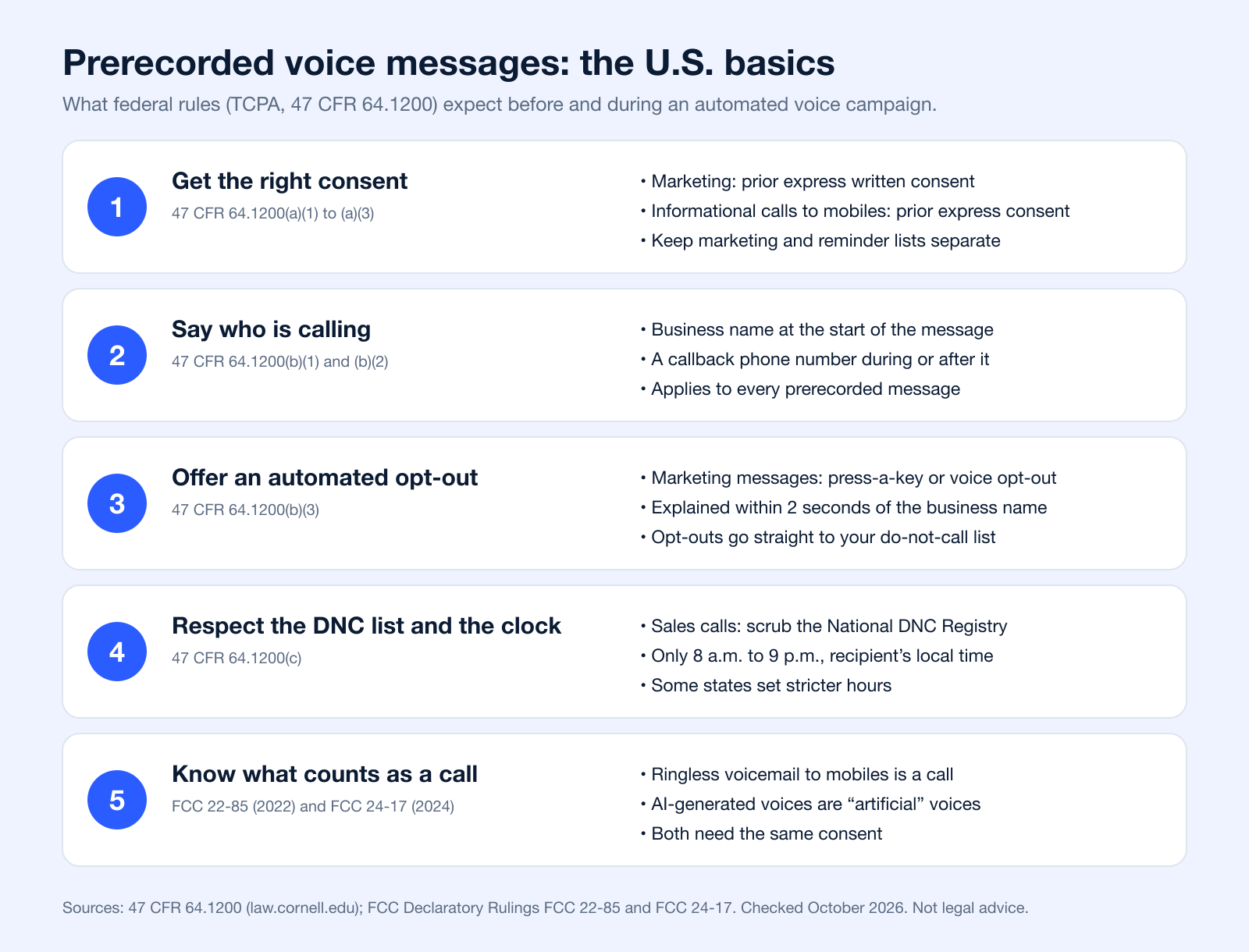
- Marketing Messages: For any message that promotes a product or service, you need prior express written consent. This is the highest level of permission. It means someone has to take a clear, explicit action (like checking a box on your website, signing a form, or replying to an email) saying "Yes, you can send me marketing calls."
- Informational Messages: For non-promotional stuff like shipping updates or appointment reminders, the bar is a bit lower. Prerecorded calls to mobile phones generally need prior express consent, which is often established when a customer gives you their phone number as part of your normal business relationship. Non-marketing prerecorded calls to residential landlines are exempt from consent only within limits, such as no more than three calls in 30 days (47 CFR 64.1200(a)(1) and (a)(3)).
Essential Best Practices for Compliance
Knowing the laws is step one. Step two is putting simple, practical systems in place that respect people's wishes and protect your business.
- Identify Yourself and Provide a Clear Opt-Out: Every prerecorded message must state your business name at the beginning and give a callback phone number during or after the message. Marketing messages must also offer an automated opt-out, for example, "Press 9 to be removed from our list," explained within two seconds of your name (47 CFR 64.1200(b)).
- Honor Requests Immediately: When someone opts out, apply the request immediately. Add them to your internal "do not call" list right away and ensure they do not receive further calls.
- Respect Calling Times: Federal rules are very clear on this. You can only make telemarketing calls between 8 a.m. and 9 p.m. in the recipient's local time zone (47 CFR 64.1200(c)(1)), and some states set stricter hours. Always check and schedule your campaigns to stay within this window.
Is There a Free Automated Voice Messaging System Available?
Usually not in the free-and-scalable sense most businesses hope for. There are free trials, limited test credits, and bundled plans with strict caps, but voice delivery has real telecom costs behind it, so fully free systems tend to be too restricted for ongoing business use.
What you’ll usually find falls into three buckets:
- Free trial plans: useful for recording a message, testing imports, and sending a small pilot
- Pay-as-you-go tools: better for occasional reminders or alerts if your volume is low
- Entry-level subscriptions: better when you need recurring campaigns, reporting, or CRM sync
The tradeoff is rarely just price. Free or ultra-cheap tools often limit delivery controls, branding, analytics, or support. If your campaign is customer-facing, a weak caller ID setup or missing opt-out tools can cost more than the software saves.
My advice is to treat “free” as a testing option, not an operating model. Use a trial to verify audio quality, workflow fit, and reporting clarity. Then decide whether the platform can support the actual use case, such as reminders, promotions, urgent alerts, or feedback, without creating manual workarounds.
How to Launch Your First Voice Campaign
Launching well is less about pressing send and more about making a few decisions in the right order: choose the message type, segment by consent and purpose, write a script for the specific goal, pilot it on a small sample, and only then scale.
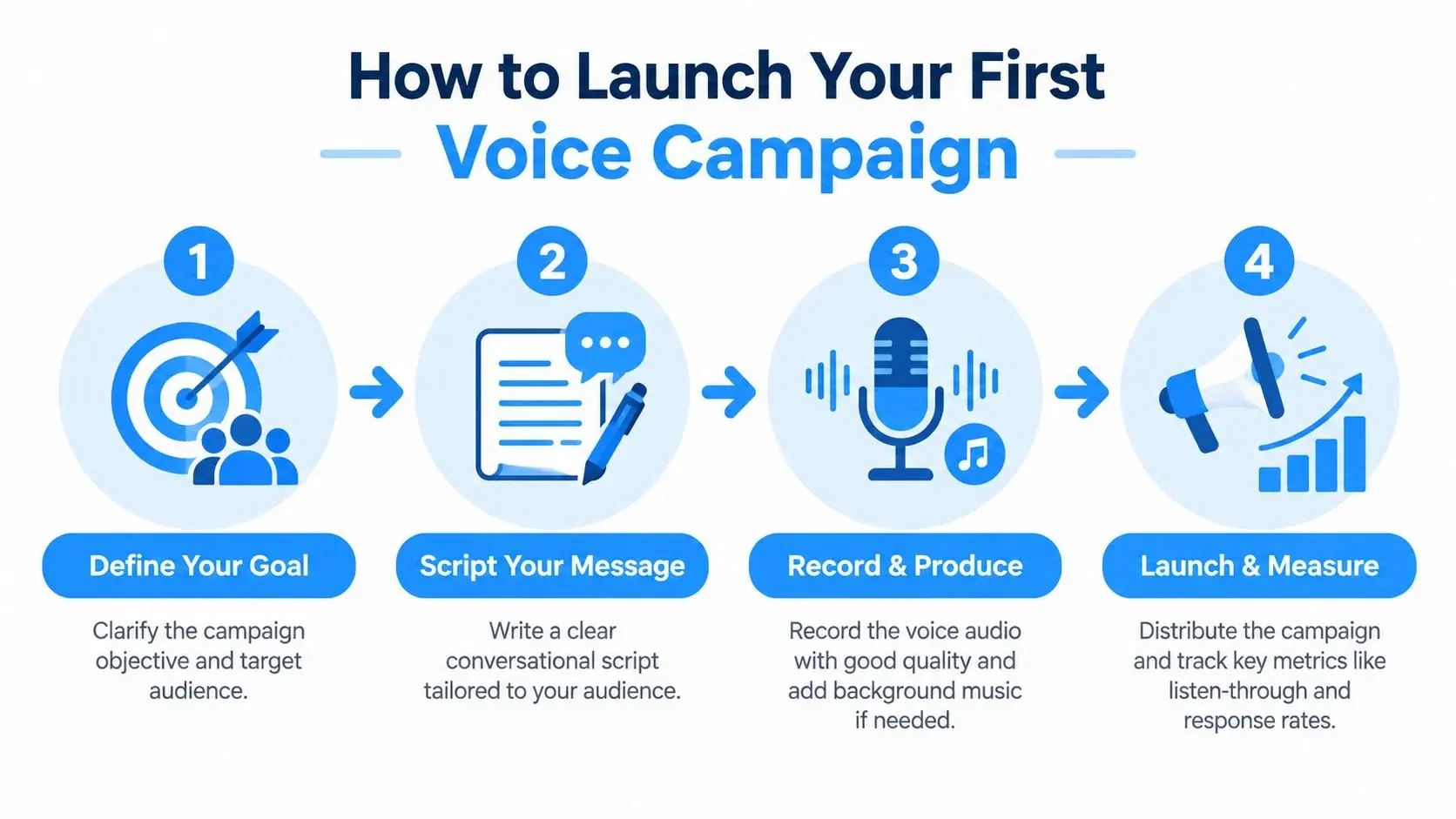
A Practical Launch Framework
- Choose the message type first. Decide whether this campaign should ring the phone, land in voicemail, or collect a response through IVR. If you choose the wrong delivery method, even a good script underperforms.
- Segment by use case and consent. Keep reminders, promotional outreach, and feedback campaigns in separate groups. Do not mix people who consented to service updates with people eligible for marketing outreach.
- Write for the campaign goal. A reminder script should confirm details and reduce confusion. A promotion should create one simple next action. A feedback call should ask for one response, not five.
- Run a pilot before full launch. Send to a small internal group or limited customer segment and listen for audio quality, caller ID clarity, timing issues, and whether the call-to-action is obvious.
- Optimize after the first send. Use the results to shorten the message, change timing, suppress poor-fit segments, or switch delivery methods if recipients are not responding well.
When to Use Standard Calls, Ringless Voicemail, or IVR
- Reminders: use a standard automated call when attendance is important; use IVR if recipients should confirm or reschedule.
- Promotions: use ringless voicemail when the goal is awareness or callback without interrupting the recipient.
- Urgent alerts: use a standard automated call because immediate attention matters more than subtlety.
- Feedback collection: use IVR when you want a rating, keypress, or transfer to an agent.
Script Angles by Goal
- Reminder: “Hi, this is [Business Name] reminding you of your appointment tomorrow at 2 p.m. Press 1 to confirm or call us if you need to reschedule.”
- Promotion: “Hi, this is [Business Name]. We’re inviting past customers to a weekend offer ending Sunday. Call us back at [number] to claim it.”
- Urgent alert: “This is an important update from [Business Name]. Today’s service window has changed due to weather. Please listen to the new arrival time.”
- Feedback: “Thanks for choosing [Business Name]. Please stay on the line to rate your experience from 1 to 5, or press 0 if you’d like a manager to call you.”
Pilot Test Criteria That Actually Matter
A useful pilot is not just “did the call go out?” Check whether the audio sounds trustworthy, the business name is stated in the first few seconds, the caller ID is recognizable, and the message is easy to follow without replaying it. Also check list quality: if a small pilot already shows high failed-delivery counts or confused callbacks, scaling will only magnify the problem.
If you're weighing your options, our guide to the best voice broadcasting software can help you sort through the noise, and these voice message templates give you more scripts to adapt. And if your workflow needs a larger automated call stack, the broader IVR market has been expected to keep growing; a market estimate from 2020, cited by Fit Small Business, put the global IVR market at $4.2 billion in 2020 and projected $6.7 billion by 2026 in its IVR statistics roundup.
Frequently Asked Questions
Jumping into the world of automated voice messaging can definitely bring up a few questions. We get it. Let’s clear up some of the most common ones so you can move forward and start connecting with your audience.
Is Automatic Voice Messaging Legal?
Yes, it absolutely is, as long as you do it the right way. Staying compliant means playing by the rules, mainly the Telephone Consumer Protection Act (TCPA).
For any marketing messages, you’ll need to get what’s called "prior express written consent" from the people you’re contacting. It's also critical to scrub your lists against the National Do Not Call Registry and make sure every single message has a clear and simple way for people to opt out.
What Is The Difference Between Voice Broadcasting And Ringless Voicemail?
The biggest difference comes down to how the message gets delivered and what the person on the other end experiences.
A standard voice broadcast rings someone's phone. If they pick up, they hear your message. If they don’t, it goes to voicemail. Simple enough.
On the other hand, ringless voicemail is a bit more elegant. The tech is designed to skip the ringing part entirely and place your message directly into their voicemail inbox. Because their phone never buzzes or makes a sound, it’s a much less intrusive way to reach out, especially for sales and marketing.
How Long Should My Automated Voice Message Be?
Keep it short and sweet. The sweet spot is right around 20 to 30 seconds.
You've got just a few seconds to grab their attention, so get straight to the point. Say who you are and why you're calling right away. Deliver the key info, and then wrap it up with one (and only one) clear call-to-action.
What Must An Automated Voice Message Include?
Under federal rules, every prerecorded or artificial-voice message must state the name of the business responsible for the call at the beginning and give a phone number the person can call, during or after the message. Marketing messages must also offer an automated, key-press or voice opt-out explained within two seconds of the identification, and a voicemail version must include a toll-free number for opting out later (47 CFR 64.1200(b)).
Can I Use An AI Or Text-To-Speech Voice?
Yes, but it is treated like a recording. In February 2024 the FCC confirmed that AI technologies that generate human voices count as an "artificial or prerecorded voice" under the TCPA, so those calls need the same prior express consent (FCC 24-17).
Does Ringless Voicemail Need Consent?
Yes. In November 2022 the FCC ruled that ringless voicemail to wireless phones is a call made with a prerecorded voice under the TCPA, so it needs the called party's consent like any other prerecorded call (FCC 22-85).
How Do I Send An Automated Voice Message?
Pick the delivery method (ringing call, ringless voicemail or IVR), record or type your message for text-to-speech, upload a contact list segmented by consent, set the caller ID and schedule in each recipient's local time, then pilot it on a small group before sending to everyone. The launch framework above walks through each step.
What Is An Automated Voicemail?
The term covers two different things: the automatic greeting your own phone system plays when you miss a call, and a prerecorded message a business sends to many people's voicemail at once, usually through ringless voicemail or an automated call that leaves a message when nobody answers. This guide covers the second kind.
Ready to connect with your audience on a more personal level? Broadcast gives you powerful, compliant tools for automatic voice messaging, ringless voicemail, and SMS campaigns to help you scale your outreach. Start your free trial today and see how easy it is to deliver your message effectively.


