Let's get right to it. A VoIP number is basically a phone number that works over the internet instead of old-school phone lines. Think of it less like a physical line plugged into a wall and more like a flexible, professional email address for your voice calls: it is tied to you, not a specific place.
What Is a VoIP Number and How Does It Work?
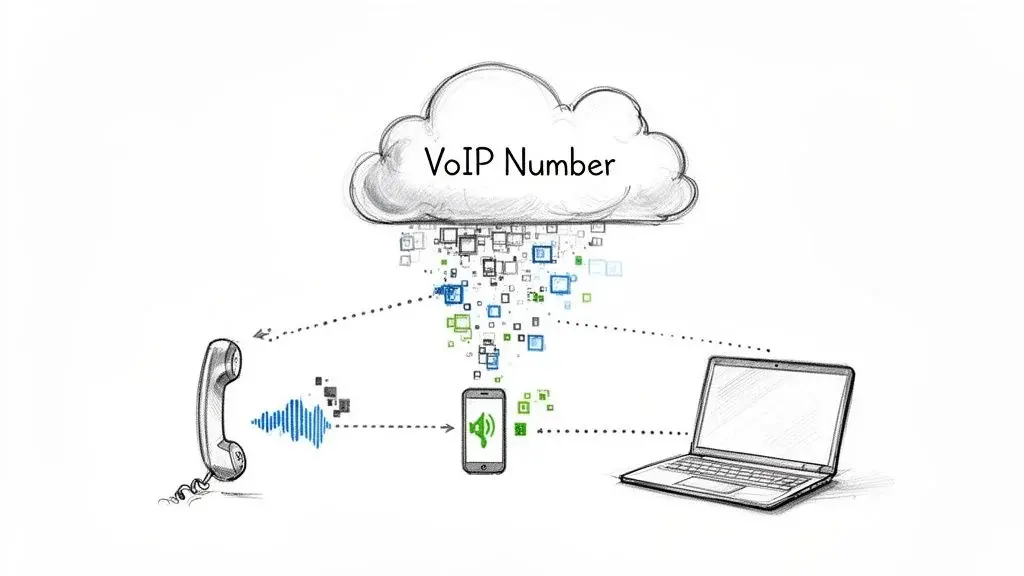
A Voice over Internet Protocol (VoIP) number completely ditches the copper wires of a traditional landline. Instead, it uses your internet connection to handle all your calls. This means your phone number isn't stuck at one physical address; it’s virtual. You can use it on any device that gets online, whether that’s a smartphone, your laptop, or a special VoIP desk phone.
Here's the simple version of how it works: when you make a call, the system instantly converts your voice into tiny digital packets of data. Those packets zip across the internet to the person you're calling, and if that person is on a regular phone number, the signal is converted back to a regular telephone signal before it reaches them (FCC, Voice over Internet Protocol). This digital method is the secret sauce that gives modern businesses so much freedom.
The Big Shift From Physical Wires to Digital Data
This switch from hardware to software is a game-changer. It means your business phone number is no longer chained to a single desk. Your team can make and take calls using your main company number from just about anywhere: at home, on the road, or even from different offices across the country.
This technology also powers some seriously effective outreach tools, like:
- Voice Broadcasting: Send a recorded voice message to thousands of contacts all at once.
- Ringless Voicemail: Drop a voicemail directly into someone's inbox without their phone ever ringing.
- Bulk SMS/MMS: Run text message campaigns from that same recognizable business number.
This digital-first approach is why so many businesses have moved their phone numbers to VoIP: one number follows the team, and adding a line becomes a settings change instead of a technician visit.
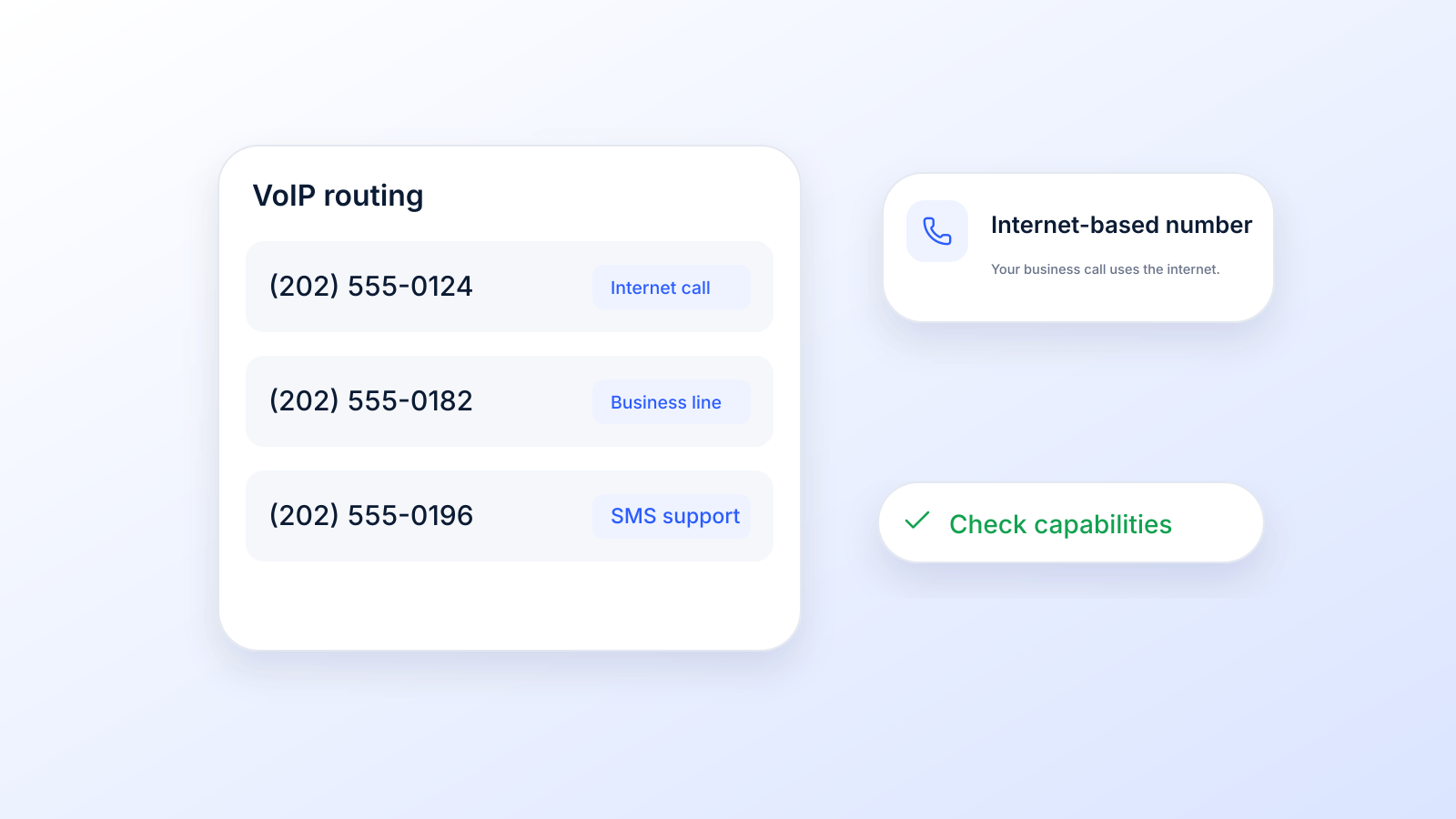
This flexibility turns a simple phone number into a real strategic tool. For instance, a special type of VoIP number called a Direct Inward Dial (DID) number lets you give unique phone numbers to specific employees or departments, but they all route through your one central system. You might be interested in learning more about what is a DID number and how it can help organize your call flow.
Fixed vs Non-Fixed VoIP Numbers (and How They Differ From Cell Numbers)
Not every VoIP number is the same. Phone data providers split them into two groups, and the difference matters for 911, for texting and for how a number shows up in a lookup. Twilio, for example, labels a fixed VoIP number as "a virtual phone number associated with a physical device" (for example, Comcast or Vonage) and a non-fixed VoIP number as "a virtual phone number obtained online without requiring a physical device" (Google Voice) (Twilio Lookup, checked October 19, 2026).
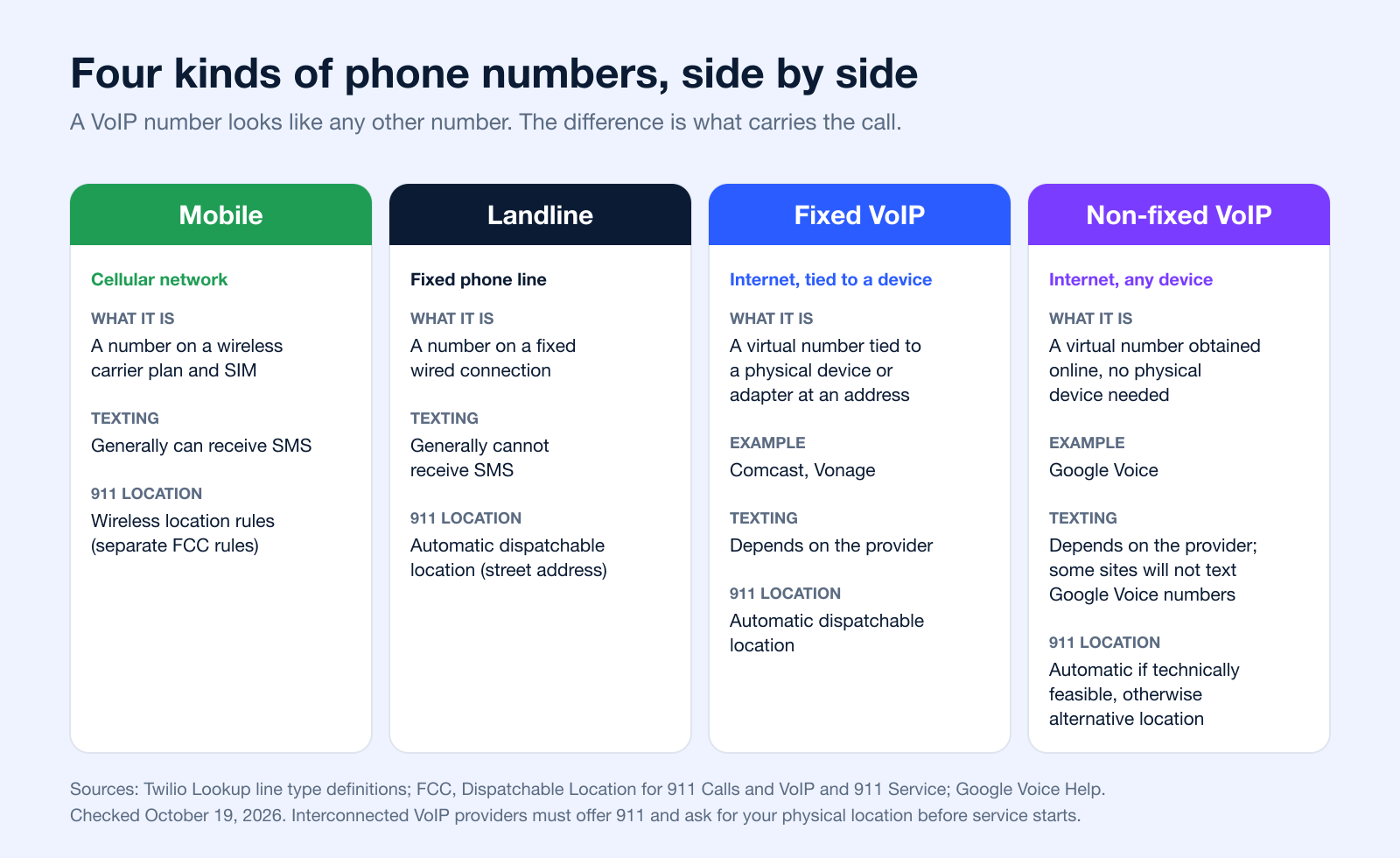
| Line type | What it is | Examples | Texting | Source |
|---|---|---|---|---|
| Fixed VoIP | A virtual phone number associated with a physical device | Comcast, Vonage | Depends on the provider | Twilio line types |
| Non-fixed VoIP | A virtual phone number obtained online without requiring a physical device | Google Voice, Enflick | Depends on the provider; some banks and services will not text Google Voice numbers (Google Voice Help) | Twilio line types |
| Mobile | A number on a wireless carrier | Any cell phone number | Generally can receive SMS | Twilio line types |
| Landline | A number on a traditional fixed line | Home or office phone line | Generally cannot receive SMS | Twilio line types |
| Toll-free | A number where calls are free for the caller (800, 888, 877, 866, 855, 844, 833) | Customer service lines | Only if the number is text enabled | FCC toll-free guide |
So is a VoIP number a cell phone number? No. It can ring on your cell phone through an app, but it is a different line type, and number lookup tools report it as VoIP, not mobile. That is also why area codes tell you nothing: numbers can be ported between wireline, IP and wireless providers (FCC). To check what kind of number you are dealing with, see our guide to identifying landline, mobile and VoIP numbers.
Choosing the Right Type of VoIP Number for Your Business
So, you get what a VoIP number is. The next logical step is figuring out which kind is the right fit for your business. This isn't a one-size-fits-all decision; the number you pick sends a direct message about your brand and can make or break a customer's first impression.
Think of it like picking a physical address for a storefront. A local number makes you feel like the shop down the street, while a toll-free one gives off a big, national-brand vibe. If you are weighing your options, our guide on how to buy a phone number for your business walks through local, toll-free and vanity numbers and where to get them.
Match the Number to Your Mission
The flexibility in number types is one of the main reasons businesses choose VoIP: you pick the number that fits how you want customers to see you, and you can add more later.
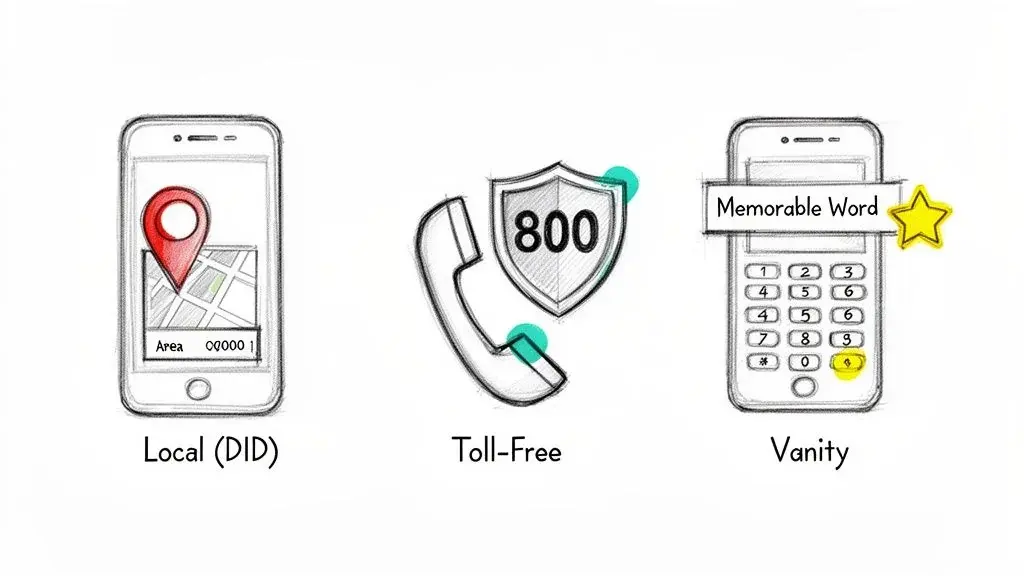
Let's break down the main options you'll come across:
- Local (DID) Numbers: These use a local area code that customers in a specific city or region will instantly recognize. They're perfect for businesses that rely on a community presence, like a local plumber or real estate agent. When a call comes from a familiar area code, people are just more likely to answer.
- Toll-Free Numbers (800, 888, 877, 866, 855, 844, 833): A toll-free number gives your business a professional, nationwide look. Callers are not charged for the call, which is a must-have for e-commerce brands or companies with a national support desk. Customers can also text a toll-free number if it is text enabled (FCC).
- Vanity Numbers: These are the numbers you can't forget, like 1-800-FLOWERS. They are pure marketing gold because they stick in a customer's brain, making it incredibly easy for them to remember and contact you when they need your service. The FCC uses 1-800-FLOWERS as its example of a toll-free vanity number (FCC).
When you choose the right number, it stops being just a string of digits and becomes a real strategic asset. A local number can feel familiar to people in that area. A toll-free number can build trust. A vanity number can become the memorable hook for your next big campaign. On that note, knowing whether you're calling a VoIP number or a landline can be important for your outreach, too. You can check out our guide on how a phone lookup service works to learn more about that.
Putting VoIP to Work with Powerful Outreach Strategies
Once you’ve got your VoIP number, the real fun begins. It’s easy to think of it as just a replacement for your old office phone, but that’s selling it short. This is where you can start using your phone number as a serious engine for business growth.
Instead of just sitting back and waiting for calls, VoIP lets you launch large-scale outreach campaigns. Because it’s all digital, you can connect with thousands of people at once, sending timely messages straight from your business number.
Unlocking Non-Intrusive Communication
One of the most powerful tools in the VoIP toolbox is Ringless Voicemail. Just like it sounds, this tech drops an audio message directly into someone's voicemail box, all without their phone ever making a peep. It’s a game-changer for anyone who wants to follow up without being disruptive.
Think about how you could use this:
- Sales Follow-Ups: A sales rep can send a personal voicemail right after a demo. It keeps the conversation warm without interrupting a prospect's busy day.
- Appointment Reminders: A clinic can send a friendly reminder straight to a patient's voicemail, cutting down on no-shows.
- Exclusive Promotions: An online store can make customers feel like VIPs by sending a "voicemail-only" discount code.
Ringless voicemail is a good way to define a VoIP number by what it actually does. It is a non-intrusive way to make sure your message gets heard. Non-intrusive does not mean unregulated, though: in 2022 the FCC ruled that a ringless voicemail to a cell phone is a "call" under the Telephone Consumer Protection Act, so it needs the same consent as a prerecorded call (FCC 22-85). Our ringless voicemail compliance guide covers what that means in practice.
Beyond ringless delivery, you also have voice broadcasting. This lets you send one pre-recorded message to a huge contact list all at once, which is ideal for things like emergency alerts or event announcements.
When you add in bulk SMS capabilities, your VoIP number becomes the command center for a full multi-channel strategy. You can connect with your audience through voice, text, and direct-to-voicemail messages. To get a better handle on this, you can learn more about how voice broadcast software works.
The Tech That Makes Your VoIP Number Work
Behind every VoIP call, a few key pieces of technology are working together to make it all happen. Getting a handle on these basics helps you see a VoIP number for what it really is: a powerful tool for your business.
The main player here is SIP (Session Initiation Protocol). Think of SIP as the digital traffic cop for your calls. When you dial out, SIP establishes the connection, keeps it running smoothly, and then ends the call when you hang up. The standard defines it as a signaling protocol "for creating, modifying, and terminating sessions", including internet telephone calls (IETF RFC 3261). It is the engine that powers the whole system.
Making a Smooth Switch
One of the first questions people ask is, "Can I keep my current business number?" The answer is a definite yes, and it’s all thanks to a process called Number Porting.
This is simply the standard procedure for moving your existing number from your old-school phone company to a new VoIP provider. The FCC confirms that, if you stay in the same geographic area, porting "can be done between wireline, IP and wireless providers" (FCC). Your new provider starts the process, so you get to keep the number your customers already know and trust. Our guide to porting a number covers the steps.
This isn't some niche technology, either. VoIP is regulated as a mainstream phone service in the US: since 2005 the FCC has required interconnected VoIP providers (services that can call and receive calls from regular phone numbers) to provide 911, and they must also comply with the Communications Assistance for Law Enforcement Act (CALEA) and contribute to the Universal Service Fund (FCC, Voice over Internet Protocol).
It's also critical that this tech meets safety and compliance rules. E911 services are mandatory for interconnected VoIP: providers must offer 911 to every customer (no opt-out), get your physical location before service starts, give you an easy way to update it, and send your callback number and registered location with every 911 call (FCC, VoIP and 911 Service). Since the RAY BAUM'S Act rules, fixed VoIP must send an automatic "dispatchable location" (street address plus details like floor or room), and non-fixed VoIP must do so when technically feasible (FCC). Keep your registered address current, and remember that VoIP may not work during a power or internet outage.
This is how a single VoIP number can become the hub for all kinds of outreach campaigns.
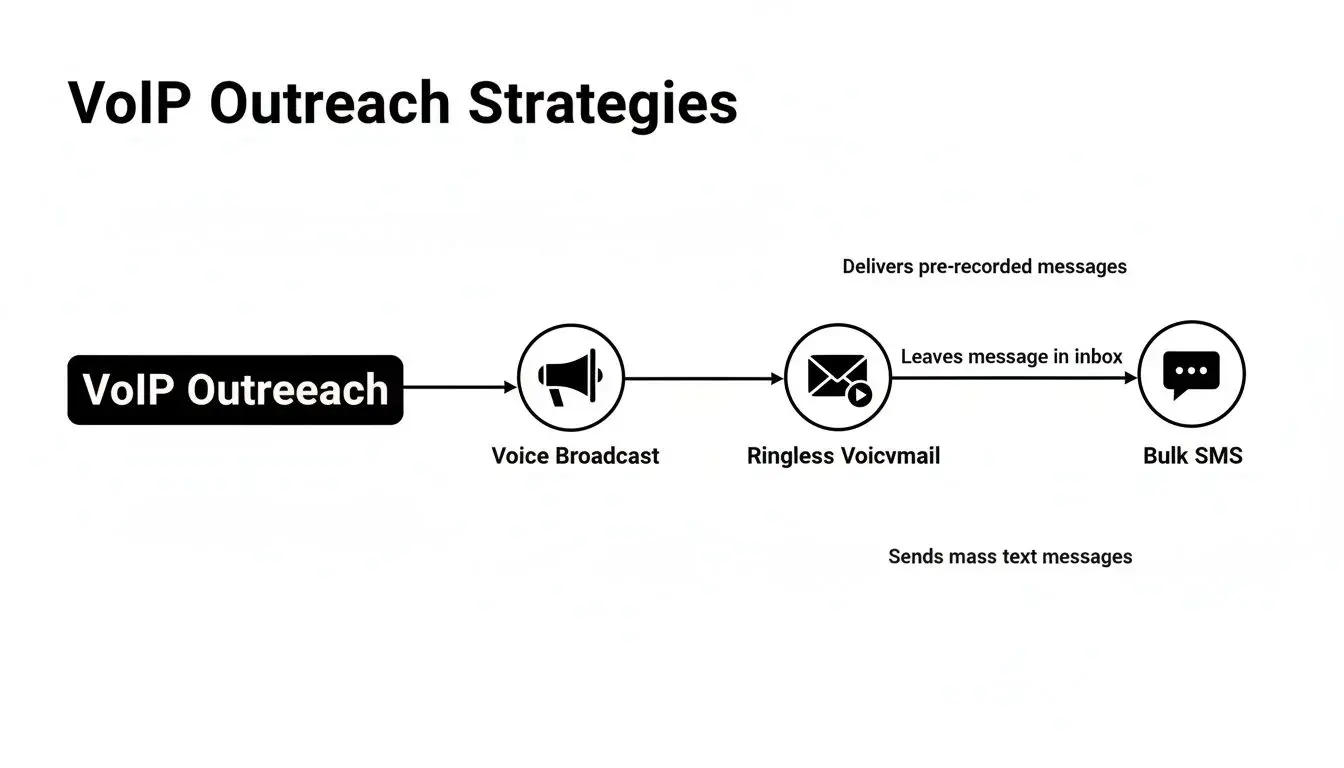
The flowchart shows how one number can drive voice broadcasts, ringless voicemail drops, and bulk SMS messages. This is how platforms like Broadcast can integrate different channels, including SMS and MMS, to create powerful campaigns from one consistent business number. Before texting from that number, it has to be registered (see the FAQ on bulk SMS below).
So, why bother switching from a phone system that already works? The simple answer is that a VoIP number unlocks some serious business advantages that your old landline just can't match. The most obvious win is often on your wallet: many businesses pay less once they drop dedicated phone lines and hardware, though the savings depend on the plan you choose and the lines you replace.
But the savings are just the start. A VoIP number gives you something even more valuable: freedom. Your business number is no longer chained to a desk in a specific building. Your team can make and take calls from literally anywhere with an internet connection: at home, on the road, or even in a different city. For today's remote and hybrid teams, that's not just a perk; it's essential.
More Than Just a Phone Number
One of the biggest headaches with old-school phones is how clunky they are to manage. Need a new line for a new hire? You'd have to call the phone company and wait. With VoIP, you can add or remove phone lines instantly yourself, right from a simple dashboard. No waiting for a technician, no fuss.
Think of a VoIP number as upgrading your phone from a basic utility, like a landline, into a smart, strategic tool for your business. It opens up a world of advanced features that were either impossible or ridiculously expensive with the old way of doing things.
These features are what really set a VoIP number apart and turn it into a powerhouse for your business:
- Intelligent Call Routing: Imagine your phone system automatically sending callers to the right person or department based on their needs, the time of day, or rules you set up. That’s what smart routing does.
- Automated Attendants: Give every caller a professional welcome with a virtual receptionist. It can guide them where they need to go, 24/7, making your business sound bigger and more organized.
- CRM Integrations: This is a game-changer. Your phone system can talk directly to your CRM, automatically logging calls and pulling up customer info the second they call. Your team gets instant context for every single conversation.
- Voice Broadcasting: Need to get an important message out to a huge list of contacts? You can send a single pre-recorded announcement to thousands of people at once, right from your main business number.
- Ringless Voicemail: This one's clever. You can drop a pre-recorded message straight into someone's voicemail without ever making their phone ring. It’s perfect for gentle follow-ups or reminders that don't interrupt their day.
When you put all these pieces together, your VoIP number becomes the command center for all your communications. It helps you work smarter, connect with customers more effectively, and grow your business without being held back by outdated tech.
Common Questions About VoIP Numbers
As you get ready to make the switch, a few last-minute questions usually pop up. It's totally normal. Most businesses want to get a final gut check on things like reliability, features, and what the transition actually looks like. Let's tackle those common concerns head-on so you can feel good about moving forward.
Can I Keep My Current Business Phone Number?
Absolutely. You don't have to give up the number your customers already know and trust. The process is called number porting, and it's a standard practice that lets you move your existing number over to a new VoIP service.
Your new provider handles most of the work behind the scenes: you give them your 10-digit number and account details, and they request the port from your old carrier (FCC). Don't cancel your old service before the port starts, or you can lose the number. You get to keep all that brand recognition you've built and plug it right into a more modern system.
Is VoIP as Reliable as a Traditional Landline?
Yes, as long as you have a solid internet connection (which most businesses already rely on for everything else), VoIP can be just as dependable. Many providers also offer high-definition (HD) voice. The main difference: VoIP may not work during a power outage or when the internet connection fails, so consider backup power for important phones (FCC).
It's not a niche technology anymore. The platforms that businesses use are built on networks designed for high uptime; ask any provider for its uptime commitment and its backup options before you move your main number.
How Does Ringless Voicemail Actually Work with VoIP?
This is one of those clever features that VoIP makes possible. Ringless voicemail places the audio file directly in the voicemail box that the carrier keeps for that number, instead of ringing the phone first.
That is why their phone never rings. It is still treated as a call under US law: the FCC ruled in 2022 (FCC 22-85) that ringless voicemail to a cell phone is covered by the TCPA and needs prior consent. With consent in place, it works well for sales follow-ups, appointment reminders, or quick updates because you can deliver your message without interrupting someone's day.
Can I Use a VoIP Number for Bulk SMS?
Yes, if the provider has enabled texting on it; not every VoIP number can send texts. A business-grade VoIP number can be enabled for both SMS and MMS messaging, which lets you run all your outreach (voice and text) from one single, recognizable number. In the US, business texting also needs registration first: messages from unregistered local (10DLC) numbers have been blocked since September 1, 2023 (Twilio), and unverified toll-free numbers have been blocked since January 31, 2024 (Twilio).
With a platform built for it, you can use that same number to:
- Send mass text messages to contacts who opted in (see bulk SMS).
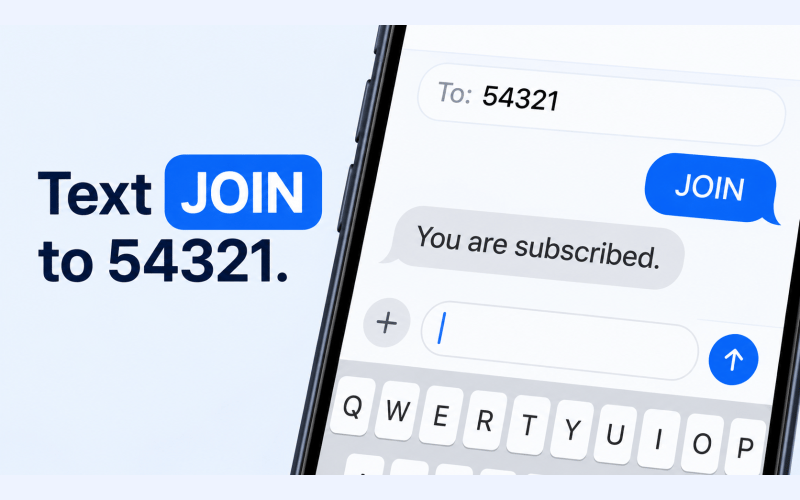
- Run "text-to-join" campaigns to capture new leads.
- Have real two-way text conversations with your customers.
Your phone number stops being just a way for people to call you and becomes the command center for all your customer communication.
Our guide to sending SMS from a virtual number covers registration, consent and setup step by step.
Why Would Someone Use a VoIP Number?
Mostly for flexibility. One business number can ring on desk phones, laptops and cell phones wherever the team is, lines can be added or removed from a dashboard, and features like call routing, auto attendants and CRM logging come built in. People also use non-fixed VoIP numbers to keep a separate work number on their personal phone.
Can a VoIP Number Be Traced?
Usually yes, by the provider and by law enforcement, though not by the person you called. Interconnected VoIP providers must collect a registered address for 911 and comply with the Communications Assistance for Law Enforcement Act (CALEA) (FCC). Carriers also sign caller ID on IP networks with STIR/SHAKEN, which the FCC says helps "law enforcement to more readily identify the source of illegal robocalls" (FCC). Caller ID itself can be faked: spoofing with intent to defraud or cause harm is illegal under the Truth in Caller ID Act (FCC).
Is a VoIP Number a Cell Phone Number?
No. A VoIP number can ring on a cell phone through an app, but it is a different line type: lookup services classify it as fixed or non-fixed VoIP, not mobile (Twilio). That difference matters for texting: some banks and services will not send texts to Google Voice numbers, for example (Google Voice Help).
What Is an Example of a VoIP Number?
Any number from Google Voice is a common non-fixed VoIP example; phone service from providers such as Comcast or Vonage that runs through a device at your address is a fixed VoIP example (Twilio). The number itself looks like any other phone number, such as a local 10-digit number or a toll-free 800 number. A DID number is another common example in business phone systems.
Ready to see how a VoIP number can transform your outreach? Broadcast provides a powerful platform for SMS, voice broadcasting, and ringless voicemail to help you connect with your audience at scale. Get started with Broadcast today!