A mass texting service for nonprofits is simply a tool that lets you send SMS messages to large groups of your supporters, volunteers, and donors all at once. Think of it as a direct line to your community, one that cuts right through the clutter of email inboxes and noisy social media feeds to deliver messages that get read almost instantly.
Why Mass Texting Is a Game-Changer for Nonprofit Missions
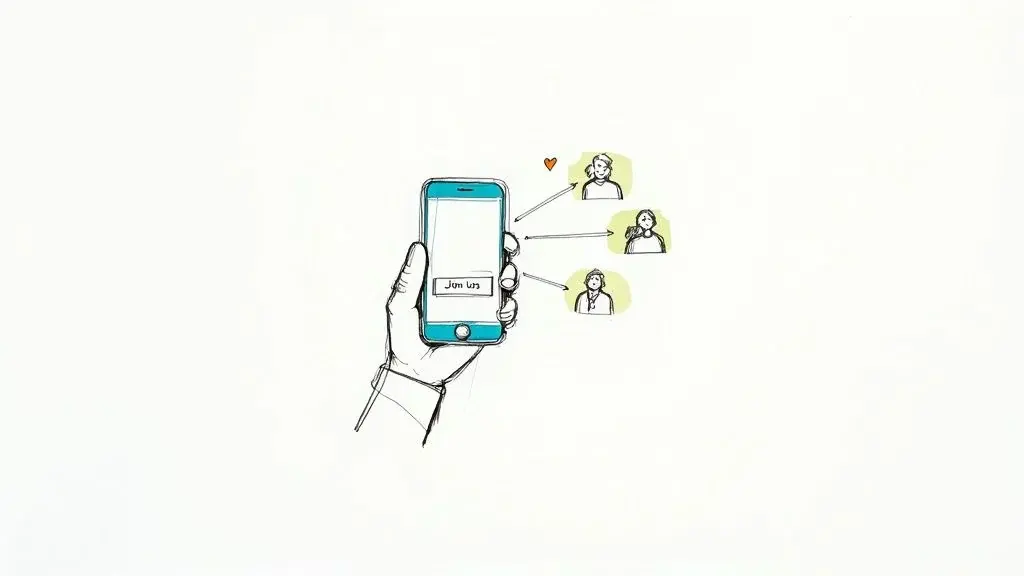
Let's be honest, connecting with supporters is tougher than ever. Traditional methods like email are losing their punch, often going unread for days. Social media posts get buried in an endless scroll. This is where a mass texting service for nonprofits makes a real difference, giving you a direct, personal, and immediate way to connect.
Imagine sending out a quick text that reaches hundreds of people in seconds. You could spark an immediate flood of donations for an urgent campaign or fill those last few volunteer spots for this weekend's event. It's not just about broadcasting messages; it's about building real relationships that move your mission forward. The simplicity of a text can create a massive impact.
Cutting Through the Communication Noise
The biggest win with SMS is its incredible ability to grab attention. An email might sit unopened, but a text message? It almost always gets seen within minutes. That kind of speed is a massive advantage for anything time-sensitive.
Texting works best as a fast, direct companion to email, not a replacement. The 2026 M+R Benchmarks Study (2025 data from U.S. nonprofits) found that mobile lists are still small, with 176 mobile subscribers for every 1,000 email subscribers, but mobile revenue grew 48% in 2025 while overall online revenue grew 15%. Mobile advocacy messages averaged a 2.6% response rate, and mobile fundraising messages a 3.7% click-through rate.
Unlocking New Possibilities for Engagement
Beyond just sending out announcements, this technology is a multi-tool for your outreach strategy. It opens up all sorts of dynamic ways to communicate. You can use it to:
- Boost Donor Engagement: Send out urgent donation pleas, share powerful success stories, and make giving as simple as tapping a link.
- Streamline Volunteer Management: Quickly alert volunteers to new opportunities, send out shift reminders, and say thank you for their hard work.
- Drive Event Attendance: Text registration links, send day-of reminders with maps and parking info, and follow up with a thank-you note to everyone who came.
To see how texting fits into a bigger strategy, the annual M+R Benchmarks Study offers great context: it compares email, mobile messaging, advertising, social media and website results across hundreds of nonprofits, so you can plan where every channel works together to get your mission heard loud and clear.
Putting Nonprofit Texting into Action
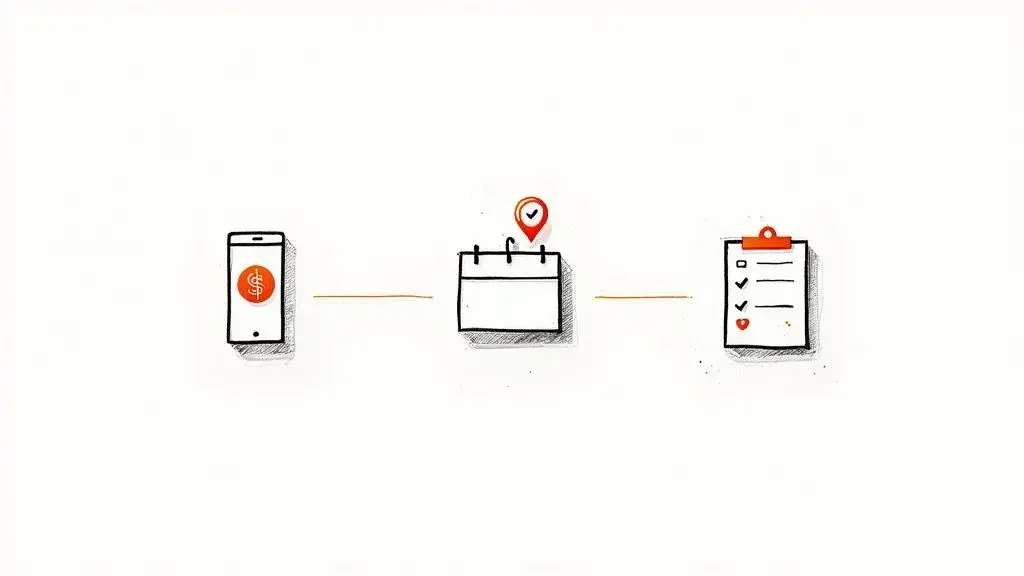
So, what does a mass texting service for nonprofits look like in the real world? It's much more than just a messaging tool; it's a direct line to your community, ready to mobilize people at a moment's notice.
Think of it as your secret weapon for boosting donations, organizing volunteers, or packing the house at your next event. When an email might get buried, a text message cuts through the noise and gets seen.
This is where the magic happens. You can shape your SMS outreach to fit any goal. Imagine a sudden need for disaster relief funds. A single, powerful text with a story and a donation link can turn your supporters' compassion into immediate contributions.
Supercharge Your Fundraising Efforts
Let's face it, fundraising is the lifeblood of most nonprofits. Texting gives you a direct, personal channel to supporters who are eager to help. Its speed makes it perfect for urgent appeals and flash campaigns that just can't wait.
You can set up text-to-donate campaigns in a snap. Supporters simply text a keyword like "GIVE" to your number and get a donation link sent right back to them. This removes all the friction. No lengthy forms, no complicated websites: just a few taps, and their donation is on its way.
There are two kinds of text-to-donate. The common one is the keyword-and-link model above: the supporter gives on your donation page, and the text is just the doorway. The other is a gift charged to the supporter's phone bill through a short code. Under CTIA's short code handbook, carrier-billed giving is open only to 501(c)(3) charities accredited by an independent organization (such as the BBB Wise Giving Alliance or Charity Navigator), and a one-time donor must opt in separately before getting recurring messages. Our keyword text messaging guide covers how keywords work.
A great example? An animal shelter during a brutal heatwave sends out a text: "Extreme heat puts our animals at risk! Text 'COOL' to 555-555 to donate $10 for cooling supplies and save a life today." It's simple, urgent, and gives people a clear way to help right now.
Streamline Event Management
From annual galas to community clean-up days, events are a huge part of nonprofit life. A mass texting service is your best friend for making sure everything runs without a hitch.
Kick things off by texting out registration links to build early excitement and lock in attendees. As the big day gets closer, send automated reminders with key details (schedules, addresses, parking info) to make sure nobody gets lost and no-shows are kept to a minimum.
Afterward, a quick thank-you text with a survey link is a fantastic way to gather feedback and make your attendees feel truly appreciated. It’s a full-circle approach that keeps everyone engaged.
Mobilize and Coordinate Volunteers
Your volunteers are your heroes, but getting everyone on the same page can feel like herding cats. Texting cuts right through the logistical headaches and lets you talk to your entire volunteer crew at once.
- Shift Reminders: Send a quick text the day before a shift to confirm attendance and share any last-minute details.
- Last-Minute Needs: Unexpectedly short-handed? Blast out a message to all available volunteers and fill that gap in minutes.
- A Simple Thanks: A text that says, "Thank you for all your hard work today!" goes a long way in making volunteers feel valued and excited to come back.
Ultimately, mass texting is a cornerstone of community engagement because it helps you build a tight-knit community that's fired up about your cause.
Expanding Your Toolkit with Ringless Voicemail
While texting is incredibly powerful, sometimes a message just needs a more personal, human touch. That's where ringless voicemail enters the picture. It’s a neat piece of tech that drops a pre-recorded audio message straight into someone's voicemail box without their phone ever ringing.
Think of it as leaving a personal, heartfelt message for hundreds of people at once. You could record your director sharing a genuine thank-you and send it to your top donors after a big campaign. It adds a layer of warmth and personality that a simple text can't always capture.
Using a mass texting service for nonprofits that also offers ringless voicemail drops gives you another powerful way to connect with your supporters on a much deeper level. One rule to know: the FCC ruled in 2022 that a ringless voicemail is a "call" made with a prerecorded voice, so sending one to a cell phone needs the recipient's prior consent (FCC 22-85). Our ringless voicemail compliance guide explains the details.
Must-Have Features in a Nonprofit Texting Platform
Picking a mass texting service for nonprofits isn't just about finding a tool that sends messages. It’s about finding a partner for your mission. The right platform is your command center for mobile outreach, built with the specific tools you need to navigate the unique challenges of the nonprofit world.
Think of it this way: you wouldn't build a community center with just any old materials. You’d want the strongest, most reliable supplies that fit your specific blueprints. The same goes for your texting strategy. The right features are the foundation you build everything on.
There's a reason nonprofits keep investing in text messaging. In the M+R Benchmarks data, nonprofit mobile lists grew 13% and 15% in the two years before 2025 and 4% in 2025, and nonprofits sent 40% more mobile messages in 2025 than in 2024 (M+R Benchmarks 2026). This isn't just a trend; it's a sign of how useful SMS is for connecting with supporters and driving real action.
Segmentation and Personalization
Let's be real: not all your supporters are the same. So why would you send them all the same message?
Segmentation is your secret weapon here. It’s the ability to group your contacts based on who they are and how they interact with you. You can create lists for major donors, monthly givers, first-time volunteers, or people who attended your last gala. This lets you send super-relevant content to the people who are most likely to care.
Personalization takes it to the next level. Instead of a generic blast, you can use custom fields to automatically pop in a supporter's first name, mention a recent donation, or reference an event they attended. A text that says, "Hi Sarah, thank you for your incredible support at the gala!" feels like a personal thank-you note, not a mass message. When you combine these two, your texts start to feel less like broadcasts and more like one-on-one conversations.
Compliance and Deliverability Tools
Navigating regulations like the Telephone Consumer Protection Act (TCPA) isn't just a good idea; it's the law. A solid platform will have compliance baked right in, taking the worry off your plate.
- Easy Opt-In and Opt-Out: Your service needs to make it dead simple for supporters to subscribe (like texting a keyword to a number) and just as easy to unsubscribe (by replying "STOP"). This whole process should be automated, so you're not stuck manually managing lists.
- Registered Numbers (10DLC or Toll-Free): Carriers only deliver business texts from numbers that are registered. A local 10-digit number must be registered for A2P 10DLC through your provider (Twilio), and a toll-free number (800, 888, etc.) must pass toll-free verification; texts from unverified toll-free numbers have been blocked since January 31, 2024 (Twilio error 30032). Either one, registered properly, gives your nonprofit a professional, recognizable sender.
Your platform should be your compliance partner, not just a message sender. Look for features that automatically handle the legal necessities, so you can focus on your mission without worrying about the fine print.
Nonprofit Texting Rules at a Glance
Federal law treats a text to a cell phone as a "call" under the TCPA (Campbell-Ewald v. Gomez). Tax-exempt nonprofits get a few exceptions, but not a free pass. Here is what the rules and carrier guidelines say, checked October 19, 2026.
| Topic | What applies to a tax-exempt nonprofit | Source |
|---|---|---|
| Consent for autodialed texts | Prior express consent of the recipient. The stricter prior express written consent rule for telemarketing does not apply to calls "by or on behalf of a tax-exempt nonprofit organization." | 47 CFR 64.1200(a)(1) and (a)(2) |
| National Do Not Call Registry | The "telephone solicitation" definition excludes calls by or on behalf of a tax-exempt nonprofit, so the Registry rules in 64.1200(c) do not cover your own outreach. | 47 CFR 64.1200(f)(15) |
| Opt-out | Replies like "stop," "quit," "end," "cancel" or "unsubscribe" revoke consent; honor them within 10 business days at most (sooner is better). | 47 CFR 64.1200(a)(10) |
| Ringless voicemail | A "call" with a prerecorded voice: prior consent needed for cell phones. | FCC 22-85 |
| Carrier registration | Register your brand and campaign for 10DLC (a "Charity" use case exists for 501(c)(3)s) or verify your toll-free number. | Twilio, The Campaign Registry |
| Text-to-donate on the phone bill | 501(c)(3) only, accredited by an independent organization, separate opt-in for recurring messages. | CTIA Short Code Handbook 3.12 |
This section is general information, not legal advice. State laws can add rules, so check with counsel before a large campaign. Our express written consent guide and 10DLC compliance guide go deeper.
So, what are the essential features your nonprofit should be looking for? Here's a quick comparison to help you evaluate different platforms.
Key Features Comparison for Nonprofit Texting Services
| Feature | Why It's Critical for Nonprofits | Example Use Case |
|---|---|---|
| Segmentation | Allows you to send targeted messages to specific supporter groups, increasing relevance and response rates. | Sending a special "thank you" text to everyone who donated over $100 last quarter. |
| Personalization | Makes mass texts feel like personal, one-on-one conversations, strengthening supporter relationships. | "Hi [FirstName], a reminder that our volunteer orientation is this Saturday. Can't wait to see you!" |
| Automated Opt-In/Out | Supports TCPA compliance by automatically managing subscriber consent without manual effort. | A supporter texts "STOP" and is removed from all future campaigns. |
| Robust Analytics | Provides the data needed to understand what's working and what isn't, so you can optimize your strategy. | Tracking the click-through rate on a fundraising link to see how effective your call to action was. |
| Registered Numbers | Carriers block texts from unregistered 10DLC numbers and unverified toll-free numbers. | Registering your 10DLC campaign (or verifying your 888 number) before your first event reminder. |
| Integrations | Connects your texting platform to other tools (like your CRM), saving time and keeping data in sync. | Automatically adding new text subscribers to your donor database in Salesforce or Bloomerang (which now includes Kindful). |
| Ringless Voicemail | Adds a personal, human touch to your outreach for high-impact messages like donor thank-yous. | Sending a pre-recorded voice message from your director to top donors who gave consent, after a campaign. |
Choosing a platform with these core features sets you up for success, ensuring your messages are not only sent but also seen, acted upon, and fully compliant.
Analytics and Reporting
If you can't measure it, you can't improve it. That’s where analytics come in. You absolutely need a platform that gives you a clear, easy-to-read dashboard with the metrics that matter.
At a minimum, you need to track:
- Delivery Rates: What percentage of your messages actually made it to your contacts' phones?
- Open Rates: An estimate of how many people saw your message. (For SMS, this is almost always sky-high!)
- Click-Through Rates (CTR): How many people clicked the link in your text? This is huge for measuring engagement.
- Unsubscribe Rates: How many people opted out after a particular message?
These numbers tell a story. A high unsubscribe rate after a donation request might mean your ask was a little too strong. A low CTR for an event registration link could signal that your call-to-action wasn't clear enough. By keeping an eye on these metrics, you can stop guessing and start making data-driven decisions to boost your impact.
To get a better idea of what a full-featured platform looks like, check out our guide on bulk SMS capabilities.
Implementing Your Mass Texting Strategy Step-By-Step
So, you're ready to launch a mass texting program. Fantastic. But success isn't just about blasting out messages; it's about having a thoughtful, step-by-step strategy. If you break down the process, you can build a powerful communication channel that actually deepens supporter relationships and pushes your mission forward.
Let's walk through the roadmap, from building your list the right way to sending compelling, automated campaigns that work while you sleep.
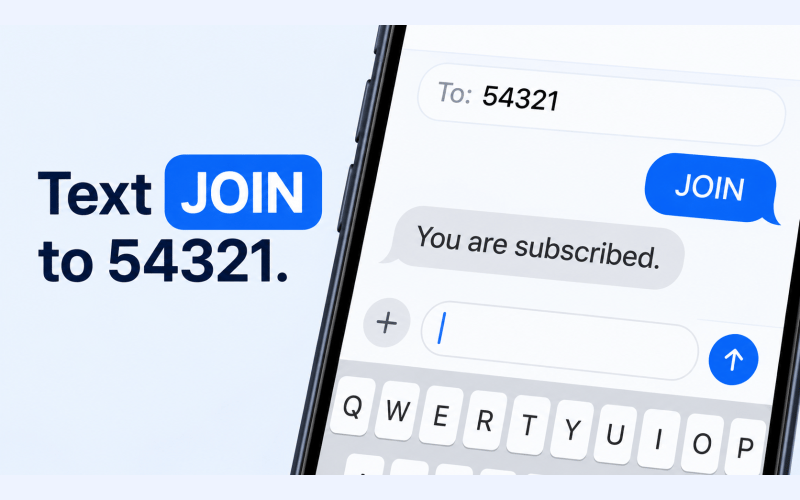
The very first, and most critical, step is building your contact list while staying compliant. Sure, you can import existing phone numbers from your donor CRM, but you must have their prior express consent to text them (for a tax-exempt nonprofit, that is the federal minimum under 47 CFR 64.1200; carriers expect a clear, documented opt-in per the CTIA Messaging Principles). A much cleaner approach is using opt-in keywords. For example, you can ask supporters to text "JOIN" to your number.
This method is simple, effective, and it automatically documents their consent. No guesswork, no compliance headaches. Just always be crystal clear about what they're signing up for, whether it's event alerts, volunteer opportunities, or donation drives.
Before your first send, your provider also has to register your organization and use case with the carriers. For a local 10-digit number that means A2P 10DLC through The Campaign Registry (brands register through their provider, not directly); unregistered 10DLC traffic has been blocked across the industry since February 1, 2025 (Bandwidth). Registered 501(c)(3) charities can use the "Charity" use case, which, in Twilio's list, does not include religious organizations (Twilio). Churches usually register under another use case; our church texting guide covers that side.
Segmenting Your Audience for Maximum Impact
Once your list starts to grow, the temptation is to send the same message to everyone. Don't do it. Audience segmentation is what makes your communication feel personal and relevant instead of like spam. A good mass texting service for nonprofits will let you slice and dice your list into distinct groups.
Think about all the different ways people engage with your organization. You could create segments for:
- Donation History: Group major donors, recurring givers, and one-time contributors. You wouldn't ask all of them for money in the same way, right?
- Volunteer Status: Keep active volunteers, past volunteers, and people who've only expressed interest in separate buckets to send hyper-relevant opportunities.
- Event Attendance: Create a list of everyone who came to your last gala. They get the first thank you and an exclusive early-bird ticket offer for the next one.
When you send the right message to the right group, engagement shoots up, and the chance of someone hitting "STOP" plummets.
The workflow is simple: segment, personalize, send, and measure. That is how you move from a broad shout to a targeted, data-informed conversation.
This process really highlights that effective texting isn’t a one-and-done deal. It’s a cycle of segmenting, personalizing, and analyzing to constantly sharpen your outreach.
Crafting Compelling and Actionable Messages
With your audience neatly segmented, it's time to write messages that actually get a response. The best texts are short, clear, and have a single, direct call-to-action (CTA). You've got a tight character limit, so every word has to pull its weight.
Here are a few templates you can steal to get started:
Fundraising Appeal:
"Hi [FirstName], our food pantry is critically low. A gift of just $15 can feed a family for a week. Can you help? Donate here: [Link]"
Volunteer Request:
"We need 5 more volunteers for our community cleanup this Saturday at 9 AM! It's a fun way to make a difference. Sign up for a shift here: [Link]"
Event Reminder:
"Reminder: Our Annual Charity Gala is tomorrow at 7 PM at the Grand Hall. We're so excited to see you there, [FirstName]! Map: [Link]"
Texting works well for fundraising when the ask is immediate and the link is one tap away. Keep expectations realistic, though: in the M+R data, about 3.7% of recipients clicked a mobile fundraising message and about 4.2% of those who clicked completed a gift, for an average response rate of 0.17% (M+R Benchmarks 2026). Small lists add up when every message is relevant.
Scheduling and Automating Your Campaigns
Finally, this is where the real magic happens. The true power of a mass texting service is unlocked with automation. You don't have to be glued to your screen, manually sending every single message. Automation saves you countless hours and ensures no supporter ever falls through the cracks.
Set it and forget it. Automation handles the repetitive tasks, freeing you to focus on building relationships and advancing your mission.
Think about setting up automated message sequences, often called "drips," for different situations. You can learn more about how to set up automated text message reminders so your supporters never miss an important date again.
Here are some automations you should implement right away:
- Welcome Series: The moment someone opts-in, automatically send them a warm welcome message. First impressions matter.
- Event Reminders: Schedule a series of reminders (one a week before, one the day before, and one an hour before your event) to get every possible person in the door.
- Birthday Wishes: Send a personalized birthday text with a quick message. It’s a small touch that makes your supporters feel seen and valued.
By methodically building your list, segmenting it smartly, crafting great messages, and automating the workflow, you can turn your texting program from a simple tool into a core engine driving your nonprofit's success.
Best Practices for Nonprofit Text Messaging
Kicking off a mass texting program is a big deal, but making it stick and drive real results is where the real work begins. To build genuine trust and keep your supporters hooked, following a few best practices matters a lot. This is about more than just blasting out messages; it's about creating a communication channel that people actually value.
Think of your text list like a community that's invited you into their most personal space: their phone. Every single message you send needs to honor that invitation. It comes down to finding the right rhythm, making sure every text is useful, and speaking in a voice that sounds like your nonprofit.
Finding the Right Message Frequency
One of the fastest ways to get someone to hit "STOP" is to blow up their inbox. Bombarding supporters with daily texts, even if you mean well, just leads to "notification fatigue" and a fast-growing unsubscribe list. The goal is simple: stay on their radar without becoming a pest.
So, what's the magic number? It's a little different for everyone, but a great place to start for most nonprofits is somewhere between one to four messages per month. That's often enough to keep the connection alive but rare enough that each text feels like it matters. If you're in the middle of a huge fundraising drive or a busy event season, you might dial it up a bit, but just make sure to let your audience know what to expect.
For a benchmark, the median nonprofit in the M+R study sent 7.3 fundraising, 5.9 advocacy and 4.3 other mobile messages per subscriber in 2025, roughly one or two texts a month in total, and nonprofits at the 75th percentile sent about twice that (M+R Benchmarks 2026).
Timing Your Messages for Maximum Impact
When you send your message is almost as important as what you send. A text pinging someone's phone at 3 AM is a definite no-go, and one that arrives during the morning commute might get a quick glance before being totally forgotten. You have to think about your supporters' daily lives and where they are.
As a general rule, stick to business hours, but try to dodge the early morning chaos and the end-of-day rush.
One legal note: the federal 8 a.m. to 9 p.m. calling window applies to "telephone solicitations," and that definition excludes tax-exempt nonprofits (47 CFR 64.1200(c)(1) and (f)(15)). Staying inside it is still the respectful default, and vendors that text on your behalf may apply their own quiet hours.
- Mid-morning (10 AM - 12 PM): Most people have settled into their day by this point and are more likely to be checking their phones.
- Mid-afternoon (2 PM - 4 PM): This is another sweet spot, usually after lunch when people are looking for a quick break and engagement is high.
If you have supporters all over the country, a solid mass texting service for nonprofits will let you schedule messages based on the recipient's local time. It's a small touch that shows you respect their schedule and can make a huge difference in your response rates.
Crafting a Clear Call-to-Action
Every single text you send needs a point. Without a clear, direct call-to-action (CTA), your message is just an FYI, and a massive missed opportunity. Your supporters should never be left scratching their heads, wondering, "Okay, so what do they want me to do now?"
Your CTA should be one, single, focused request. Don't ask them to donate, sign a petition, and watch a video in the same text. Keep it simple and make it obvious.
Good CTA: "Can you help us reach our goal? Donate now: [Link]" Confusing CTA: "Check out our new video, sign the petition, and if you have time, please donate."
The first one is clean and easy. The second one causes instant confusion and decision paralysis, making it way less likely your supporter will do anything at all. For a deeper dive into crafting messages that work, check out these SMS marketing best practices to really sharpen your skills.
Monitor Analytics to Refine Your Strategy
Finally, the best strategies aren't built on guesswork; they're built on data. Your job isn't over when you hit "send." You need to keep a close eye on your campaign analytics to see what's actually connecting with your audience and what's falling flat.
Here are the key metrics you should be watching:
- Delivery Rate: Are your messages actually making it to their phones?
- Click-Through Rate (CTR): This is a huge one. How many people are clicking the links in your texts? It’s a direct measure of how engaging your content is.
- Unsubscribe Rate: Are you seeing a lot of people opt-out after a specific message? That's a red flag.
By checking in on this data regularly, you can make smart tweaks to your approach. A low CTR on event invites might tell you the copy isn't exciting enough. A high unsubscribe rate could be a sign you're texting too often. This cycle of sending, measuring, and adjusting is what will turn a good texting program into a truly great one.
Frequently Asked Questions About Mass Texting
Diving into any new communication tool brings up questions. As you start exploring a mass texting service for nonprofits, it's totally normal to wonder about the legal stuff, the costs, and how it all actually works. Let's clear the air and tackle the most common questions nonprofit leaders ask.
Is Mass Texting Legal for Nonprofits?
Yes, it's legal for nonprofits, but you have to play by the rules. The big one to know is the Telephone Consumer Protection Act (TCPA). For a tax-exempt nonprofit, autodialed texts need the recipient's prior express consent; the stricter prior express written consent is required for telemarketing and advertising messages sent by businesses, not for calls made by or on behalf of a tax-exempt nonprofit (47 CFR 64.1200(a)(2)). Many nonprofits collect written opt-ins anyway, because carriers expect documented consent.
Don't worry, it's easier than it sounds. This usually means someone checks a box on a donation form or texts a keyword like "GIVE" to your number. You also have to give them a dead-simple way to opt out, like replying with "STOP." Any decent texting platform will have these compliance features baked right in, so it handles the consent and opt-outs for you, keeping your outreach both legal and respectful.
Is Bulk SMS Illegal?
No. Sending bulk SMS is legal in the U.S. when you have consent, honor opt-outs, and send from a registered number. What is illegal is autodialed texting without consent: a text counts as a call under the TCPA (Campbell-Ewald v. Gomez), and carriers block unregistered business traffic.
How Much Does a Mass Texting Service Cost?
The price tag for a mass texting service can really vary. It depends on the provider you go with, how many messages you think you'll send each month, and how big your contact list is. Most services price things in one of two ways.
- Pay-As-You-Go Plans: This is where you buy a block of message credits upfront. It’s a fantastic option if you only plan to text for specific campaigns or big events and don't need to be in constant contact.
- Monthly Subscriptions: These plans give you a certain number of messages or contacts for one flat monthly fee. If you're communicating with your community regularly, this model is almost always the more cost-effective route.
Some providers offer nonprofit discounts. For example, SimpleTexting gives "nonprofits, churches, and other tax-exempt organizations" 15% off monthly plans (SimpleTexting pricing). When you're comparing your options, look for straightforward pricing with no hidden fees, check the carrier and registration fees, and pick a plan that can scale up as your mission grows. Here are a few published starting prices, checked October 19, 2026:
| Provider | Starting price | Fees and notes | Source |
|---|---|---|---|
| Text-Em-All | Monthly plan from $19 per month (1 to 50 contacts) | Credits plan also available; the vendor says non-profits usually choose Monthly | text-em-all.com/pricing |
| EZ Texting | $25 per month (Launch, 500 credits); $20 billed annually | $5/month telecom fee on Launch; 10DLC registration included | eztexting.com/pricing |
| SimpleTexting | $39 per month billed yearly (500 credits) | $4 one-time carrier registration; 15% off for tax-exempt organizations | simpletexting.com/pricing |
Can We Have Two-Way Conversations?
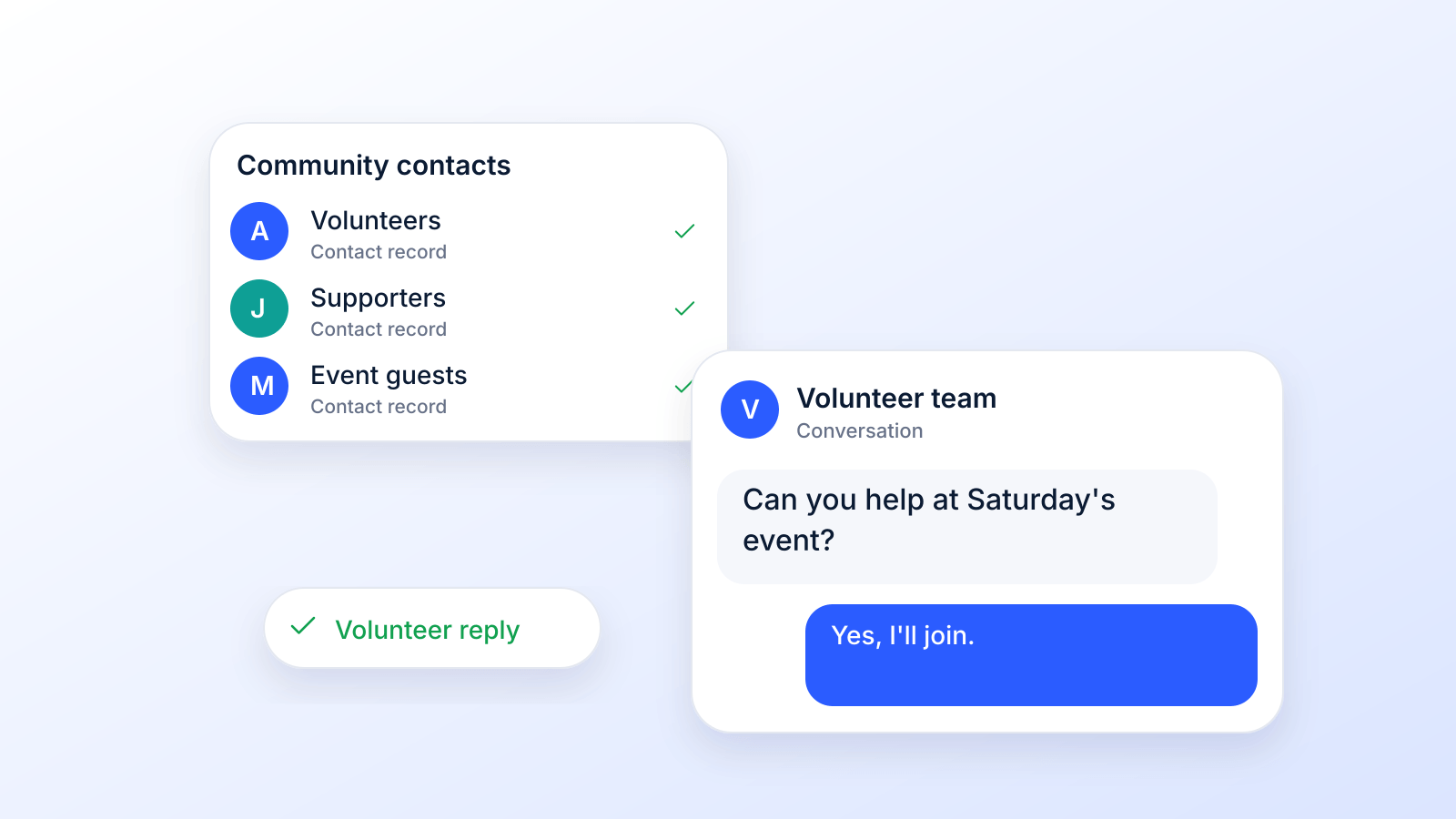
Absolutely! This is where a mass texting service for nonprofits goes from a useful tool to a game-changer. Modern platforms are way more than just a megaphone for one-way announcements. They come with a unified inbox where your team can see and reply to texts from your supporters, just like you would with email.
This turns your texting program from a simple broadcast channel into a real engagement hub. For example, a volunteer might text back with a question about their shift after getting a reminder. A staff member can see that message and reply right from the platform's dashboard. Having these real, back-and-forth conversations is how you answer questions, solve problems on the fly, and build much stronger relationships with your community.
What Is Ringless Voicemail?
Ringless voicemail is a pretty cool piece of tech that lets you drop a pre-recorded audio message directly into someone's voicemail box without their phone ever ringing. It’s a less intrusive way to deliver a personal message, giving you the reach of mass communication with the warmth of a real human voice.
For nonprofits, this is an incredible tool for donor stewardship. Just imagine your executive director recording a heartfelt thank-you and having it appear in the voicemail of every major donor after a big campaign. That’s a personal touch that an email or text just can't replicate.
Many platforms that handle mass texting also offer ringless voicemail drops, giving you another channel to connect with people. You can use it for big announcements, special thank-yous, or anything where hearing a voice makes a bigger impact, working hand-in-hand with your SMS strategy. Because the FCC treats ringless voicemail as a call, get the same prior consent you would for texts before sending it to cell phones (FCC 22-85).
How Do We Get People to Sign Up?
Getting people onto your text list is all about being proactive and making the value proposition crystal clear. You need to promote your list everywhere you engage with your community and give them a compelling reason to join.
Here are a few tried-and-true methods to grow your list:
- Website Forms: Pop a simple sign-up form on your homepage, contact page, and especially your donation forms.
- Email and Social Media: Put a clear call-to-action in your email newsletters and social media profiles. Something like, "Text VOLUNTEER to 123-456 for the latest opportunities!" works wonders.
- In-Person Events: Use flyers, signs, or a quick shout-out from the stage asking attendees to text a keyword to get event updates and future news.
Always be upfront about what's in it for them, whether it's exclusive updates, early-bird ticket access, or urgent calls to action. The better the reason you give them, the faster your subscriber list will grow.
Is There a Free Service for Bulk Text Messaging?
Not for real bulk sending. Group texts from your own phone are free but meant for small groups, and business platforms offer free trials rather than free plans: for example, SimpleTexting's 14-day trial includes 50 messages (SimpleTexting), and EZ Texting offers a 14-day trial with no credit card (EZ Texting). Carrier registration and per-message carrier fees are why ongoing mass texting costs money.
What Is the 80/20 Rule for Nonprofits?
It is an informal rule of thumb based on the Pareto principle: a large share of donations (often described as about 80%) tends to come from a small share of donors (about 20%). It is not a law or a fixed statistic, and your own donor data will differ. For texting, it is a reminder to segment: thank and steward your most committed supporters personally, and keep broad appeals short and relevant.
Do Nonprofits Need to Register for 10DLC?
Yes, if you text from a local 10-digit number through a platform. Your provider registers your brand and campaign with The Campaign Registry; unregistered traffic is blocked (Bandwidth). 501(c)(3)s can pick the "Charity" use case. With a toll-free number, you complete toll-free verification instead (Twilio).
Ready to see how direct, personal communication can elevate your mission? Broadcast provides a powerful, compliant, and easy-to-use platform for SMS, ringless voicemail, and voice broadcasting, designed to help nonprofits like yours connect with supporters and drive action. Explore our features and start your free trial today at broadcast.so.