Getting 10DLC compliance right is no longer optional: it's the ticket to the game for anyone using local 10-digit numbers for business texting. It simply means you've registered your business and your messaging campaigns, through your messaging provider, so carriers know who is sending and why.
This process is the new standard for all Application-to-Person (A2P) SMS and MMS sent from 10-digit numbers in the US. When you comply, carriers see your messages as legitimate, which is critical for deliverability. When you do not, your texts are simply blocked. If the A2P term is new to you, start with our guide to what A2P texting is. Rules and figures in this guide were checked on October 19, 2026.
What Is 10DLC and Why It Matters for Your Business
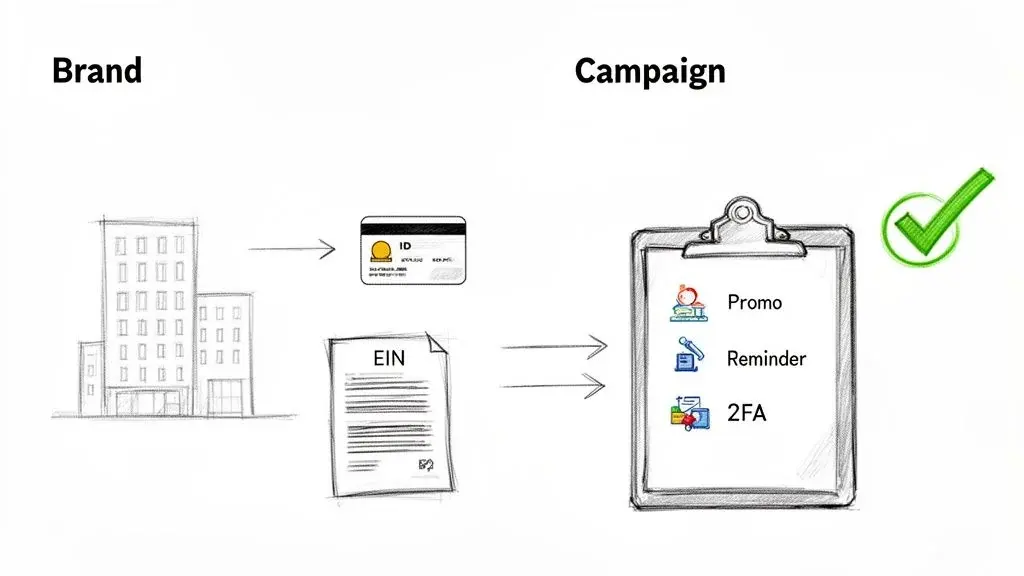
Think of 10DLC as the new rulebook for business texting, created by mobile carriers like T-Mobile and AT&T. They were getting hammered by spam and needed a way to separate the good guys from the bad. Before 10DLC, businesses sending texts from regular 10-digit numbers would often get flagged as spam because the networks had no way to verify who was sending what.
Now, with 10DLC, you formally register your brand and your specific messaging use cases (called "campaigns") with a central organization, The Campaign Registry (TCR). You do not do this alone: "direct registration with TCR is not available for Brands," so your texting provider (a Campaign Service Provider) submits it for you. This process proves you are who you say you are and tells carriers what kind of messages to expect from you.
The Benefits of Embracing 10DLC Compliance
Getting registered isn't just about dodging trouble; it's a smart business move. Once you're in the system, carriers give your messages preferential treatment, and the advantages are huge.
Here's what you gain:
- Higher Deliverability: Registered texts have a much lower chance of being filtered, and unregistered ones are blocked outright. Registration does not guarantee delivery (content and consent still matter), but it gets your promotions, reminders, and alerts in the door.
- Increased Throughput: Carriers assign you a sending speed based on your registration. At Twilio, registered 10DLC traffic gets anywhere from 3 to 180 messages per second depending on the brand and use case (Twilio). This is crucial if you're sending texts at scale.
- Enhanced Customer Trust: When your texts arrive consistently and professionally, it builds your credibility and strengthens your brand's reputation.
To really get the full picture, it helps to know a bit about the numbers you're using. Understanding how sending texts from a virtual number works provides great context for how this all fits together in the modern messaging world.
To help you keep track of everything, here’s a quick checklist of the core components you'll need to address.
At-a-Glance 10DLC Compliance Checklist
| Compliance Area | Key Action Required | Source |
|---|---|---|
| Brand Registration | Give your provider your exact legal business name, EIN, address, a working website and a contact person; it registers the brand with The Campaign Registry (TCR). No EIN? Use a Sole Proprietor brand. | Twilio; TCR |
| Campaign Registration | Define each messaging use case (e.g., marketing, 2FA, reminders) with a clear description and 2 to 5 sample messages, and submit it for approval. | Twilio |
| Content & Opt-In | Ensure message content is clear, matches the registered use case, and you have documented proof of customer consent (opt-in). | CTIA 5.1.2 |
| Opt-Out Language | Include clear opt-out instructions (e.g., "Reply STOP to unsubscribe") and honor STOP and similar replies. | CTIA 5.1.3; 47 CFR 64.1200 |
| HELP and Privacy | Answer HELP with your business name and contact details, and link a privacy policy from your sign-up form. | CTIA 5.1.2.1 and 5.2.1 |
| Technical Setup | Configure your sending patterns to respect carrier throughput limits, and use only branded, dedicated link shorteners. | Twilio; CTIA 5.3.2 |
| Monitoring | Regularly check delivery reports for any signs of filtering or blocking, and update campaigns when what you send changes. | Best practice |
Getting these pieces in place is the foundation of a solid, long-term SMS strategy.
The Real-World Consequences of Non-Compliance
Let's be blunt: ignoring 10DLC is a direct threat to your ability to text your customers. The grace periods are over. Twilio has blocked unregistered 10DLC traffic since September 1, 2023 (Twilio changelog), and Bandwidth reports that "as of February 1, 2025, unregistered outbound traffic is being blocked in the industry" (Bandwidth).
You simply cannot afford to ignore 10DLC registration. Messages from an unregistered 10-digit number are blocked before they reach anyone. Register first, then send.
For businesses that mix SMS with other channels like ringless voicemail and voice broadcasts, staying compliant is non-negotiable. While 10DLC is specific to texting, the core principles of consent and transparency protect your entire outreach strategy. For more details on what A2P texting means and how it differs from personal texting, check out our A2P texting guide.
At the end of the day, 10DLC compliance is the first and most important step to making sure your text marketing, alerts, and customer support are reliable and effective. Without it, you're putting your most direct connection to your customers at serious risk.
Your Playbook for 10DLC Brand and Campaign Registration
Getting squared away with 10DLC compliance really comes down to two main things: Brand Registration and Campaign Registration. I like to think of it like this: first, you get your business license to prove you're a legit company, and then you get permits for the specific things you want to do.
You'll prove your business is real, and then you'll detail exactly how you plan to use text messaging.
This whole setup is managed by The Campaign Registry (TCR), the central group that works with mobile carriers to vet everyone. Your messaging partner, like us here at Broadcast, will handle the actual submissions for you, but it’s on you to provide all the correct info. Trust me, getting this right the first time is the secret to getting approved quickly and without headaches.
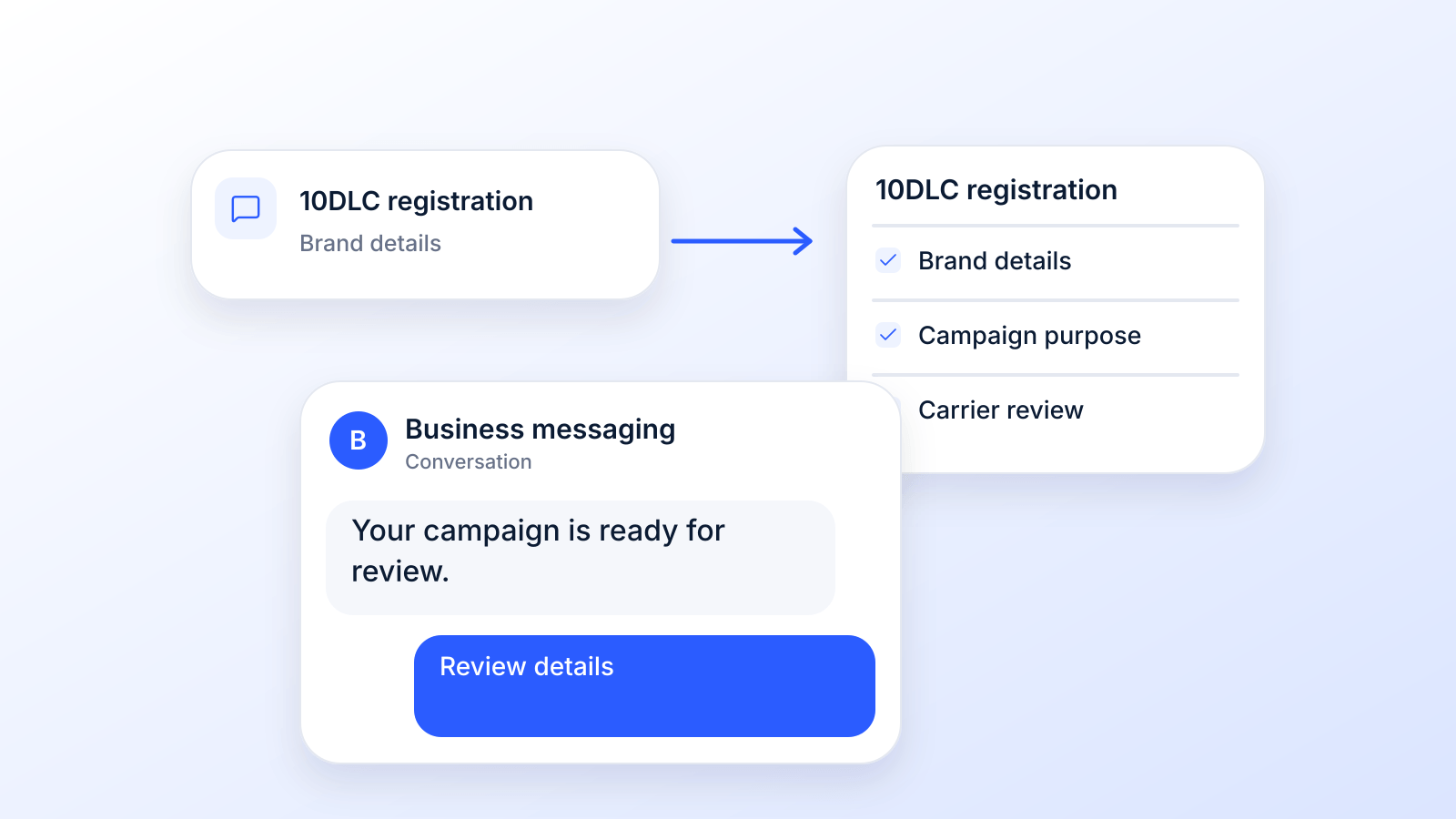
Once you’re compliant, your messages flow through the system smoothly, like this:
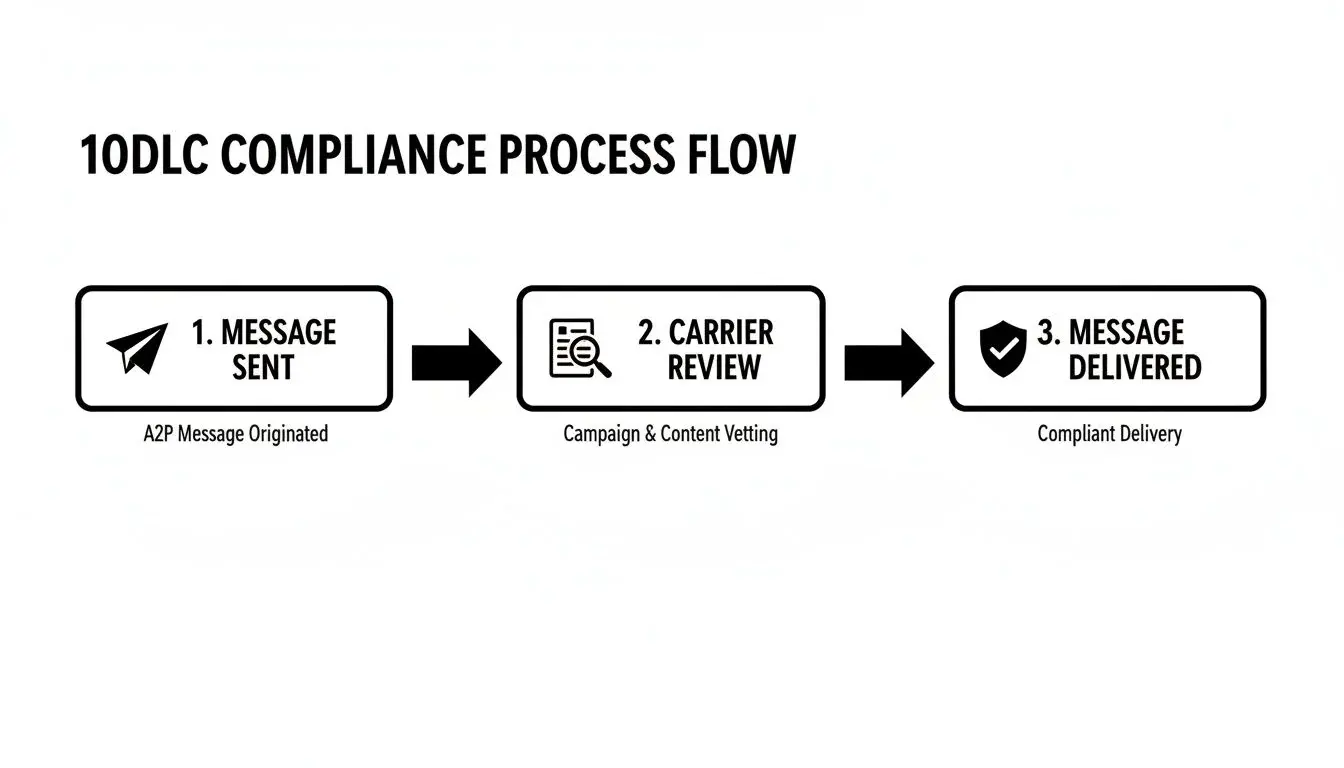
This shows why registration is so important. When carriers see your messages are coming from a registered source, they know you're legitimate and prioritize getting them delivered.
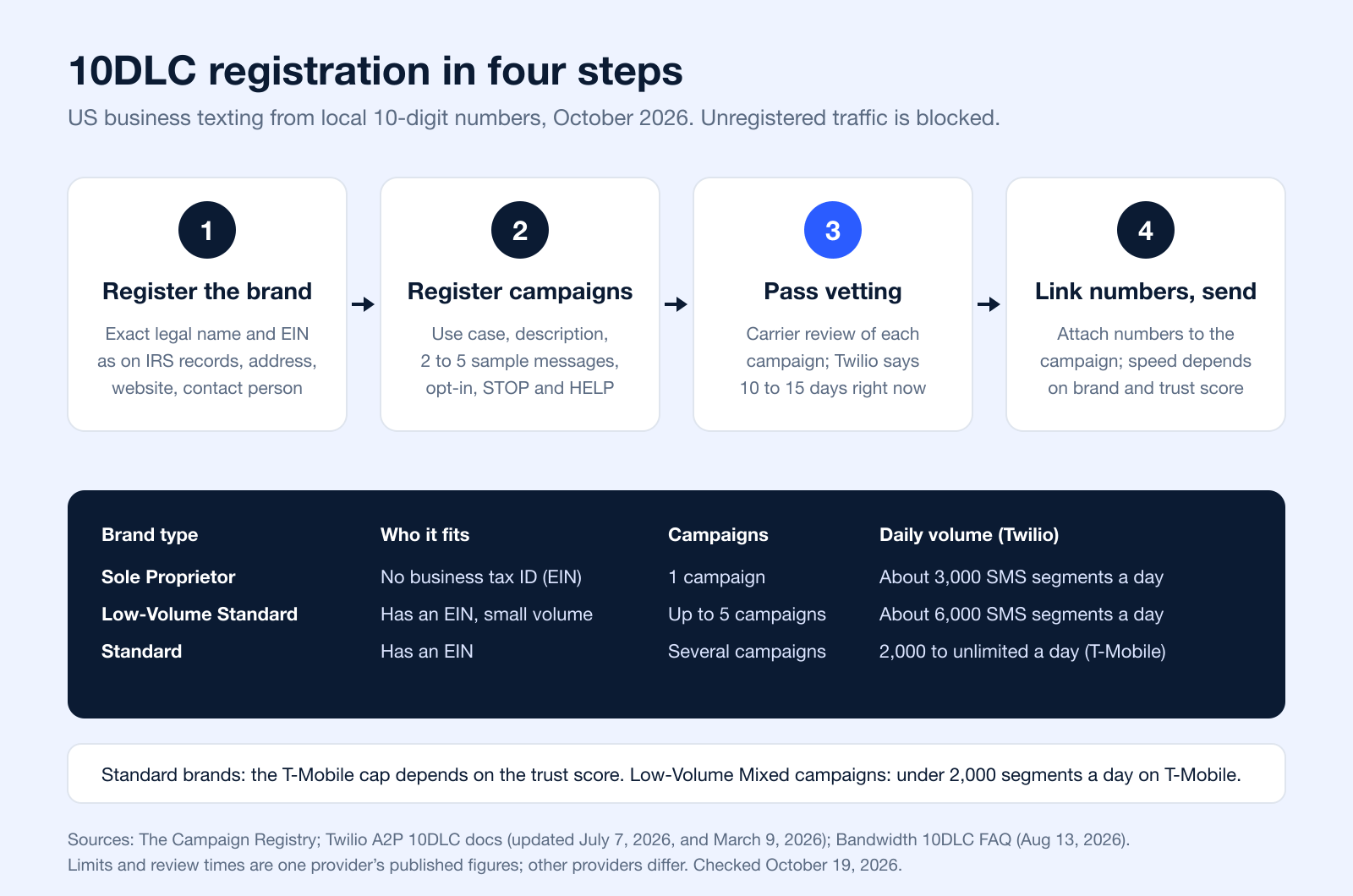
Nailing Your Brand Registration
First up is registering your brand. This is where you establish your business's identity with TCR, and it's the foundation for everything else. The goal is to prove you're a real, verifiable entity, which helps TCR give you a Trust Score that impacts your messaging throughput.
You’ve got to be precise with your company details. There’s no room for “close enough” here.
Key Info for Brand Registration (what providers such as Twilio ask for):
- Legal Company Name: This has to be the exact name registered with your tax agency. In the US, Twilio asks for "the exact legal business name as registered with the EIN," as shown on your IRS CP 575 EIN confirmation letter.
- Employer Identification Number (EIN): Your federal tax ID. Senders without a business tax ID register a Sole Proprietor brand instead, which allows one campaign and lower volume (Twilio). Not every provider offers that path.
- Legal Company Address: The official address on your tax forms.
- Business Contact Info: A name, email, and phone number for someone at your company who can be contacted about your registration.
- Website: A working site that clearly belongs to the business. Twilio says the site "must be functional" and related to the business name it registers.
A mismatch between the legal name and the EIN is one of the most common reasons brand registrations fail. Pull out your IRS paperwork and copy the name exactly as it appears: even a small difference like "Inc" versus "Incorporated" can get you rejected.
| Brand type | Who it fits | Campaigns | Approximate daily volume | Source |
|---|---|---|---|---|
| Sole Proprietor | Individuals and very small senders with no business tax ID (EIN) | 1 per brand | About 3,000 SMS segments or MMS a day across US carriers | Twilio |
| Low-Volume Standard | Businesses with an EIN that send small volumes | Up to 5 per brand | About 6,000 SMS segments or MMS a day across carriers | Twilio |
| Standard | Businesses with an EIN | Several | From 2,000 up to unlimited a day to T-Mobile, depending on the trust score | Twilio |
These are one provider's published limits (Twilio docs updated July 7, 2026); other providers set their own. Checked October 19, 2026.
Mapping Your Use Case to a Campaign
After your brand gets the green light, it’s time to register your messaging "campaigns." A campaign isn't just one marketing blast; it’s a specific use case that defines the purpose of your messages. Are you sending appointment reminders? Special offers? Account alerts? The carriers want to know.
Every campaign you register is tied back to your approved brand, creating a clear chain of accountability. This is where you lay out the what and how of your entire texting strategy.
Picking the right campaign type from the get-go is critical for getting approved.
Common Campaign Use Cases:
- Marketing & Promotions: For sending out sales announcements, discount codes, or other promotional content.
- Account Notifications: Used for things like order confirmations, shipping updates, or security alerts.
- Customer Care: For two-way conversations to handle support questions and issues.
- 2FA (Two-Factor Authentication): For sending one-time passcodes to help users log in securely.
- Appointment Reminders: Simple automated reminders for scheduled appointments.
- Low-Volume Mixed: Several use cases in one campaign for senders under 2,000 message segments a day on T-Mobile (Twilio).
- Special use cases: Categories such as non-profits and emergency services, which go through extra review (Twilio; Bandwidth).
The idea is similar to what's been done for years with high-volume short codes, but 10DLC opens this up for standard 10-digit local numbers. If you're weighing your options, you can learn more about short code registration in our guide.
Crafting Compliant Campaign Descriptions
When you register a campaign, you have to write a crystal-clear description and provide sample messages. Twilio, for example, asks for a description of 40 to 4,096 characters and 2 to 5 sample messages that include your brand name (Twilio). Vague descriptions are a fast-track to rejection. You need to be specific about who you're texting, why, and how they opted in.
For instance, a weak description like, "Sending marketing messages to my customers," is almost guaranteed to fail.
A strong, compliant description looks more like this: "This campaign sends promotional offers and new product alerts to customers who have opted in on our website. Customers receive messages about weekly sales and exclusive discounts. Customers opt in by checking an unchecked box on our website sign-up form, and can reply STOP to opt out at any time."
Your sample messages have to match that description and include all the required compliance language.
Example Compliant Message Template: "Hi [FirstName]! This is The Local Gym. Our Black Friday sale starts now! Get 50% off your first 3 months. Show this text to redeem. Reply STOP to unsubscribe."
This sample works because it does three things right:
- It clearly says who is sending the text (The Local Gym).
- It perfectly matches the "Marketing & Promotions" use case.
- It includes obvious opt-out instructions ("Reply STOP to unsubscribe").
By being meticulous with your brand and campaign details upfront, you're building a solid foundation. This doesn’t just make sure your texts get delivered; it also builds trust with carriers and your customers right from the start.
Crafting Compliant Messages and Managing User Consent
Okay, so you've navigated the brand and campaign registration process. That's a huge step, but the real work starts now. Successful 10DLC compliance isn't a one-and-done task; it’s about what you send, and who you send it to, every single day.
This is where the rubber meets the road. Carriers scrutinize message content just as closely as they do your registration details. Think of every text as a direct reflection of your brand's trustworthiness. Your goal is to consistently prove you're a legitimate business sending valuable, solicited information.
The Non-Negotiables of Compliant Message Content
To get past carrier filters and build trust with your subscribers, certain elements simply have to be in your messages. These aren't suggestions; they're the absolute fundamentals of A2P messaging.
Making these a consistent part of your messaging dramatically cuts the risk of being flagged as spam.
Your Core Content Checklist:
- Business Identification: Always lead with who you are. The very first message in any conversation must clearly state your business name. No exceptions.
- Clear Opt-Out Instructions: Every promotional text needs a simple, clear way for people to unsubscribe. The gold standard is "Reply STOP to end" or similar, unambiguous language.
- Help Keyword: You also need to offer a "HELP" keyword. This should trigger a response with more info about your service and how users can get in touch with you.
- Opt-In Confirmation: After someone joins a recurring program, send one confirmation with the program name, how to get help, how to opt out, how often you will text, and any fees or charges, such as message and data rates (CTIA 5.1.2.1).
And these rules aren't just for SMS. They're solid best practices for any kind of outbound communication, including ringless voicemail and voice broadcasts. This creates a consistent, respectful customer experience no matter how you reach them.
Steering Clear of Prohibited Content
Just as important as what you include is what you leave out. Carriers have absolutely zero tolerance for certain types of content. Sending messages about these topics will get you blocked, fast and hard.
This is a red line you can't cross. Doing so can permanently torpedo your sender reputation.
The industry has a handy acronym for the big no-nos: SHAFT. It stands for Sex, Hate, Alcohol, Firearms, and Tobacco. CTIA lists SHAFT, gambling, and sweepstakes as content that is "either explicitly prohibited or has additional Wireless Provider requirements" (CTIA Short Code Monitoring Handbook 3.5). Federally illegal content is out; legal alcohol, tobacco, or firearms content needs a working age gate and carrier approval, and is filtered hard without them.
Beyond SHAFT, other categories are also heavily restricted. This includes things like high-risk financial services (think payday loans), gambling, and any kind of deceptive marketing; CTIA also expects marketing content to meet the FTC's Truth-In-Advertising rules (CTIA 5.3.1). Your best defense is to stick to your approved campaign use case and never stray into these areas without your provider's approval.
Securing and Documenting User Consent
The absolute foundation of all compliant messaging is consent. For marketing texts, that means prior express written consent: the FCC says "Commercial texts require written consent" (FCC). You need clear, documented proof that every person agreed to get text messages from you.
This isn't just a 10DLC thing; it's a legal requirement under the Telephone Consumer Protection Act (TCPA), where people can sue for $500 per violation, up to $1,500 if the violation is willful or knowing (47 U.S.C. 227(b)(3)). Getting consent right protects you from that exposure and keeps your contact list healthy.
Here are the approved ways to get and document consent:
- Compliant Web Forms: Your website forms must have specific disclosure language right next to the submit button. It should clearly say that by entering their number, the user agrees to receive automated marketing texts and that consent isn't a condition of purchase (47 CFR 64.1200(f)(9)).
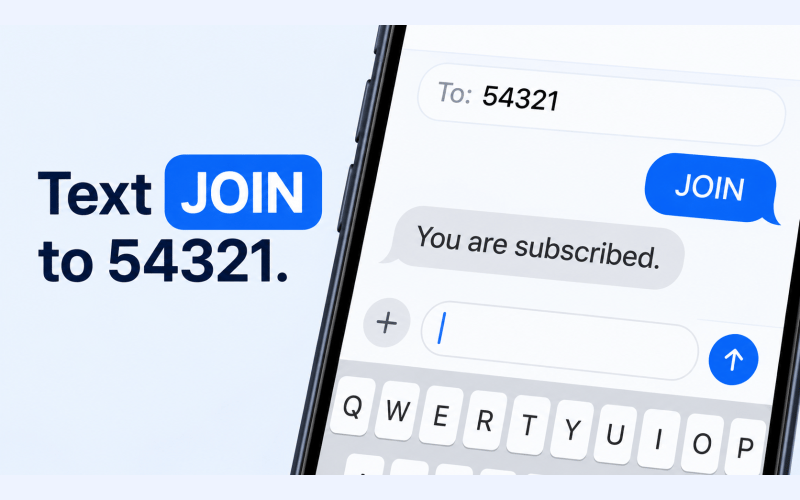
- Text-to-Join Keywords: When someone texts a keyword (like "JOIN") to your number, your auto-response must confirm their subscription and include opt-out info. This creates a clean digital paper trail of their opt-in.
- Written Forms: If you collect numbers offline, the physical form needs the exact same clear disclosure language as a web form, and you need the user's signature.
Whatever the method, keep the record. CTIA lists what to store for each opt-in: the timestamp, the medium (web form, keyword, paper form), the exact language the person saw, the campaign it covers, the IP address, the phone number, and who consented (CTIA 5.1.2). One opt-in covers only the campaign and sender it was given for; rented or shared lists are out (CTIA 5.1.2.2 and 5.1.4).
Managing these consent records is non-negotiable. To make sure your methods are airtight, you can check out our deep-dive on best practices for express written consent.
Managing a Compliant Do Not Call List
Respecting opt-outs is every bit as important as securing opt-ins. When a user replies "STOP" (or a plain-language equivalent such as END, CANCEL, UNSUBSCRIBE or QUIT), your system should add them to your internal opt-out list, send one final confirmation, and stop all future messages for that campaign (CTIA 5.1.3). Under FCC rules, such replies revoke consent and must be honored within a reasonable time, no more than 10 business days (47 CFR 64.1200(a)(10)). The FCC revised parts of its revocation rules again on September 30, 2026, so check the current rule with your provider.
But it doesn't stop with individual opt-outs. Your business also has to respect the National Do Not Call (DNC) Registry. This is especially critical if your strategy involves voice broadcasts or ringless voicemail, where TCPA rules are incredibly strict.
The stakes are high. Consumers had placed more than 258 million telephone numbers on the National Do Not Call Registry by the end of fiscal year 2025, and the FTC has collected nearly $400 million from violators since the Registry started in 2003 (FTC, January 2026). Some states even have their own separate DNC lists to complicate things further. Our Do Not Call list compliance guide covers the details.
Using a platform with built-in DNC scrubbing is essential for any modern business. These systems check your lists against national and state registries before sending anything, helping you avoid FTC civil penalties of up to $53,088 per violation of the Telemarketing Sales Rule (FTC). This isn't an optional step; it's a critical part of running a compliant outreach program.
Technical Best Practices for Maximum SMS Deliverability
Getting your content and consent right is only half the battle. To really nail your deliverability, you have to get the technical side of sending right, too. Once The Campaign Registry (TCR) gives your brand and campaigns the green light, you need to play by the carriers' rules.
Mastering these technical details is what separates the pros from the spammers. It's how you make sure your messages actually land in the inbox, not in a carrier's filter. Think of it as tuning your engine after building the car: it’s the final step toward a smooth ride.
Understanding Throughput and Trust Scores
When your brand gets registered, it's assigned a Trust Score. This score is a huge deal. It comes mainly from brand vetting, and it directly controls your throughput: the speed at which you can send messages. On Standard brands, it also sets your daily cap to T-Mobile, from 2,000 messages up to unlimited (Twilio).
Throughput is measured in messages per second (MPS) or messages per minute (MPM). On 10DLC it ranges from 3 to 180 MPS depending on brand and use case (Twilio). A high Trust Score means you get to send faster, which is critical for large, time-sensitive campaigns. If your score is low, ask your provider about secondary vetting: at Bandwidth, a campaign resubmission uses the highest vetting score, not the latest (Bandwidth). A low score will throttle your sending speed and create frustrating bottlenecks.
Adopt Smart Sending Patterns
Nothing screams "spam!" to a carrier like a brand-new phone number suddenly blasting out thousands of texts. That kind of activity will get you flagged almost immediately. The secret is to be smart and deliberate.
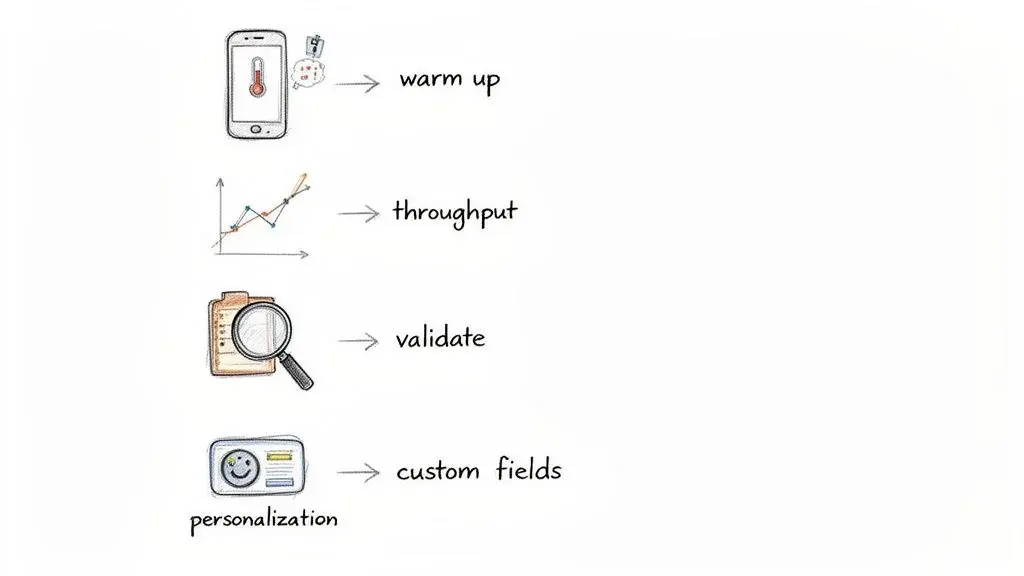
Always "warm up" a new 10DLC number. Start by sending a small batch of messages, then slowly ramp up your volume over a few days or weeks. This shows the carriers you're a legitimate sender and helps build a positive reputation for that number.
When you're ready to send a big campaign, don't just dump the entire list into the queue at once. Spacing out your sends is much safer. Sending 10,000 messages over an hour looks way better to carriers than trying to fire them all off in five minutes.
The Critical Role of Number Validation
Sending texts to bad numbers is like throwing money away. Worse, it tanks your sender reputation. Every time a carrier gets a delivery error because a number is a landline or disconnected, it's a strike against you. Too many of those, and your messages will start getting filtered.
Before you even think about hitting "send," you need to clean your list with a number validation service.
- It weeds out invalid numbers: It catches and removes any numbers that are disconnected or just plain wrong.
- It filters out landlines: A common source of delivery errors is sending SMS to landlines that can't receive them. This stops that cold.
- It protects your reputation: A clean list means higher delivery rates, which signals to carriers that you're a high-quality, responsible sender.
Taking this one step can have a massive impact on your 10DLC compliance and the ROI of your campaigns. You're making sure you only pay to send messages that can actually be delivered.
Use Personalization and Link Shorteners Wisely
Personalization is more than just a nice touch; it's a deliverability tool. Using custom fields to include a subscriber's name or other relevant info makes your texts feel less like a generic blast. This boosts engagement and makes it less likely someone will report you as spam.
Link shorteners are also handy for tracking clicks and saving characters. But be careful here. CTIA says that if you use a shortener, it should have "a web address and IP address(es) dedicated to the exclusive use of the Message Sender" (CTIA 5.3.2), and Twilio rejects campaigns whose samples use free public shorteners such as bit.ly or TinyURL (error 30892, Twilio). A custom branded link not only looks more professional to your customers but is also what carriers expect. More on keeping texts out of filters on our deliverability page.
Troubleshooting Common Rejections and Maintaining Compliance
It's happened to the best of us. You’ve put in the work, filled out all the forms, and hit "submit" on your 10DLC registration, only to get a rejection notice. It’s frustrating, but it’s rarely a dead end.
Think of it less as a final verdict and more as the start of a conversation with the carriers. They’re not trying to shut you down; they just need more clarity. Understanding why they reject submissions is the key to getting a quick approval on your second try.
Decoding and Fixing Common Campaign Rejections
When a campaign gets rejected, you’ll get a reason code. Instead of guessing, let’s break down what the most common ones really mean and exactly how to fix them.
- EIN/Business Name Mismatch: This is one of the most common reasons for brand rejection. The legal business name you entered doesn't perfectly match what the IRS has on file for your EIN. Even something as small as "ABC Co." versus "ABC Company, Inc." can trigger a failure. The fix? Pull up your IRS CP 575 EIN confirmation letter (Twilio's reference document) and copy the legal name exactly as it appears.
- Vague Campaign Description: A description like "marketing and notifications" just won't cut it. It’s too broad, and carriers need the specifics. A strong description sounds more like this: "This campaign sends weekly promotional offers for our e-commerce store and appointment reminders for scheduled services. Customers opt in via a website checkbox." Clearly state who is sending, what they're sending, and how users gave you permission.
- Sample Messages Don't Match Use Case: This is an easy mistake to make. If you register a "Customer Support" campaign but your sample message is a flash sale announcement, it's an instant rejection. Twilio rejects samples that are "either not provided, unclear, or content does not match the campaign use case" (error 30893). Your samples must be real-world examples of the campaign type you selected and include your business name.
- Missing Opt-Out Language: Every single marketing message must include clear opt-out instructions. Your sample messages have to contain language like, "Reply STOP to unsubscribe." Forgetting this is an automatic fail.
- Public Link Shorteners: Sample messages with bit.ly or TinyURL links are rejected; use a dedicated, branded short domain (Twilio error 30892).
By directly addressing the reason for the rejection and resubmitting, you're showing the carriers you’re responsive and serious about playing by the rules.
| Rejection | Twilio error | Fix |
|---|---|---|
| Invalid campaign description | 30886 | Say who sends, what they send, to whom, and how people opt in |
| Sample messages missing, unclear or off use case | 30893 | 2 to 5 real examples that match the use case and name your business |
| Public URL shortener in samples | 30892 | Use a dedicated, branded short domain |
Source: Twilio campaign troubleshooting guide (updated September 25, 2026). Twilio also advises editing and resubmitting a failed campaign rather than deleting it and creating a new one, which avoids paying the vetting fee twice. Checked October 19, 2026.
Compliance Is a Marathon, Not a Sprint
Getting your 10DLC compliance approved isn't a one-time setup; it’s an ongoing process. Your sender reputation isn't set in stone; it's a living thing that changes based on your daily messaging habits. And you can bet the carriers are always watching for signals that might indicate a problem.
I like to think of it like maintaining a car. You don't just buy it and assume it will run forever. You have to get regular oil changes and check the tire pressure. Proactively monitoring your messaging analytics is the "preventative maintenance" for your sender reputation.
High opt-out rates or a sudden spike in delivery error codes are the early warning signs of a compliance issue. Ignoring them is the fastest way to get your messages filtered or completely blocked. Proactive management is the only way to ensure long-term deliverability.
Proactively Managing Your Sender Reputation
Staying compliant means keeping a close eye on your performance and being ready to adapt. This active management is what protects your ability to connect with customers through SMS, ringless voicemail, and other channels.
Here's what you should be doing regularly:
- Monitor Opt-Out Rates: If a new campaign suddenly gets a spike in "STOP" replies, it’s a huge red flag. It could mean your messaging is off-target or your opt-in wasn't as clear as you thought. This is a critical metric to watch.
- Track Error Codes: Pay close attention to your delivery reports. A high number of "undelivered" errors could point to a bad list or, worse, a carrier-side block that needs immediate investigation.
- Review Campaigns Annually: Your business changes. Make it a yearly habit to review all your registered campaigns. Do they still accurately reflect what you’re sending? If not, update them.
- Stay Informed on Policy Changes: Carrier rules evolve. A good messaging partner like Broadcast will keep you in the loop, but it’s ultimately your responsibility to adapt your strategy to new policies so you don't fall out of compliance.
This ongoing diligence is what ensures your text and voice outreach remains a reliable and effective tool for your business. It protects your investment and, most importantly, maintains the trust you've built with your customers.
Let's clear up some of the most common questions about 10DLC. Even with all the guides out there, a few things can still feel a bit fuzzy when you're in the weeds.
Does 10DLC Apply to Ringless Voicemail?
This is a great question. The short answer is no, not directly. 10DLC rules are specifically for A2P (application-to-person) SMS and MMS traffic.
However, that doesn't mean you're in the clear. The principles behind 10DLC (consent and transparency) apply to every channel. The FCC ruled in November 2022 that ringless voicemail to a cell phone is a "call" under the TCPA, so it needs prior consent like any prerecorded call (FCC 22-85). So you still need a clean, opt-in list scrubbed against the DNC. See our ringless voicemail compliance guide.
What's the Difference Between a Standard and Low-Volume Campaign?
Think of it in terms of volume, cost, and what you're trying to do.
A Standard Campaign is built for a single, focused purpose, like "Account Notifications" or "Marketing." Its limits depend on your brand type and trust score, which suits larger lists.
A Low-Volume Mixed-Use Campaign is your flexible option. It's designed for businesses sending a lower number of messages: Twilio describes it as fewer than 2,000 message segments per day on T-Mobile (Twilio). The big win here is you can bundle different use cases (like marketing and customer service) into one campaign, which is a good starting point for many small businesses.
How Long Does 10DLC Registration Take?
This is a two-part answer. Getting your brand registered is usually the fast part when your business info matches your official records; your provider emails you when the TCR review is done (Twilio).
Campaign registration is where you need to plan ahead. Twilio says campaign reviews are currently taking 10 to 15 days (Twilio), while Bandwidth says standard use cases "should be approved immediately" and special use cases can take "up to a few weeks" (Bandwidth).
Get this done before you plan to send any messages. Texts from an unregistered 10-digit number are blocked, so plan the review time into your launch date.
Can I Use One 10DLC Number for Multiple Campaigns?
Usually not at the same time. Each number sends under the campaign it is linked to: at Twilio, for example, "a Messaging Service can only be linked with one Campaign at a time," and its numbers send under that campaign (Twilio). If you need two use cases on one number, register one campaign that covers both, such as Low-Volume Mixed if your volume fits, or use separate numbers for separate campaigns.
Either way, keep your use cases neatly separated by campaign where you can. It shows carriers you're being transparent about your traffic, which helps deliverability and builds a solid sender reputation over time.
What is 10DLC, and do I need it for business texting?
10DLC (10-digit long code) is a local US phone number registered for business texting. If your business sends texts from a local 10-digit number through any app or platform, yes: "anyone sending SMS/MMS messages over a 10DLC number from an application to the US must register for A2P 10DLC" (Twilio). Toll-free numbers and short codes use their own approval processes instead.
Does 10DLC apply to MMS?
Yes. Registration covers SMS and MMS sent from 10-digit numbers, and Twilio's published daily limits count both SMS segments and MMS (Twilio).
Can I register for 10DLC without an EIN?
Yes, as a Sole Proprietor brand, built for individuals without a business tax ID: one campaign and about 3,000 SMS segments a day at Twilio (Twilio). If you have an EIN, you must register a Standard or Low-Volume Standard brand instead. Not every provider supports Sole Proprietor brands; Bandwidth, for example, does not (Bandwidth).
Does 10DLC apply to toll-free numbers or short codes?
No. 10DLC covers local 10-digit numbers only. Toll-free numbers need toll-free verification before they can text US and Canadian phones (Twilio), and short codes go through their own registry lease and carrier review. Our A2P texting guide compares the three.
Can I text back a missed call from a 10DLC number?
The text needs a registered campaign like any other business text, so describe the text-back flow in your campaign. Consent is the harder part: CTIA's opt-in examples include a person starting a text conversation and the business replying only with responsive information, but a phone call is not on that list (CTIA 5.1.2). Keep a missed-call text to one informational reply without marketing, and confirm your flow with your provider and a lawyer.
Ready to simplify your outreach and ensure your messaging is always compliant? Broadcast provides a powerful, multi-channel platform for SMS, voice broadcasting, and ringless voicemail, with all the tools you need to manage 10DLC compliance effortlessly. Start connecting with your customers today.