Text messaging is everywhere: Americans exchanged nearly 2.2 trillion SMS and MMS messages in 2024, according to CTIA. But choosing the right tool from a crowded, complex field is crucial for turning that attention into tangible results like higher revenue, better appointment attendance, and increased customer loyalty. This guide cuts through the noise, providing a deep-dive analysis into the best SMS marketing platforms available today.
Source for the volume figure: CTIA's 2025 Annual Survey highlights. Every price and plan below was checked on the vendor's own page (checked October 19, 2026). Jump to the pricing table, the US rules every platform must follow or the FAQ.
We go beyond surface-level feature lists to give you the insights needed to make a confident decision. For each platform, you will find a detailed breakdown of its core strengths, ideal use cases, and potential limitations. We'll explore who benefits most from each tool, whether you're a karate studio sending class reminders, a healthcare provider requiring HIPAA compliance, or an ecommerce brand driving flash sales. Understanding how these powerful tools fit into broader Direct-to-Consumer (D2C) marketing strategies is essential for building a direct line to your audience.
This comprehensive resource is designed to be your definitive guide. We will examine key features, transparent pricing models, and specific industry applications from ecommerce to agencies. We'll also touch on complementary technologies like ringless voicemail drops, which can amplify your outreach without being intrusive. Keywords like ringless voicemail service and voicemail drops refer to this method of delivering a pre-recorded message directly to a user's inbox, creating another powerful touchpoint. Each review includes screenshots and direct links to the vendor's own pricing or product page. Whether you're a small business owner, an agency marketer, or part of an enterprise team, this breakdown will equip you to select the platform that perfectly aligns with your operational needs and strategic goals.
1. Broadcast
Best For: Multi-Channel Automation & HIPAA Compliance
Broadcast distinguishes itself as one of the best SMS marketing platforms by moving beyond simple text blasts. It's a comprehensive, multi-channel outreach system designed for businesses that need to automate and scale communication across SMS, voice calls, and ringless voicemail. This integrated approach allows for sophisticated, timed follow-up sequences that can significantly boost engagement for webinars, sales appointments, and patient reminders, making it a powerful tool for marketing agencies, healthcare providers, and sales-driven teams.
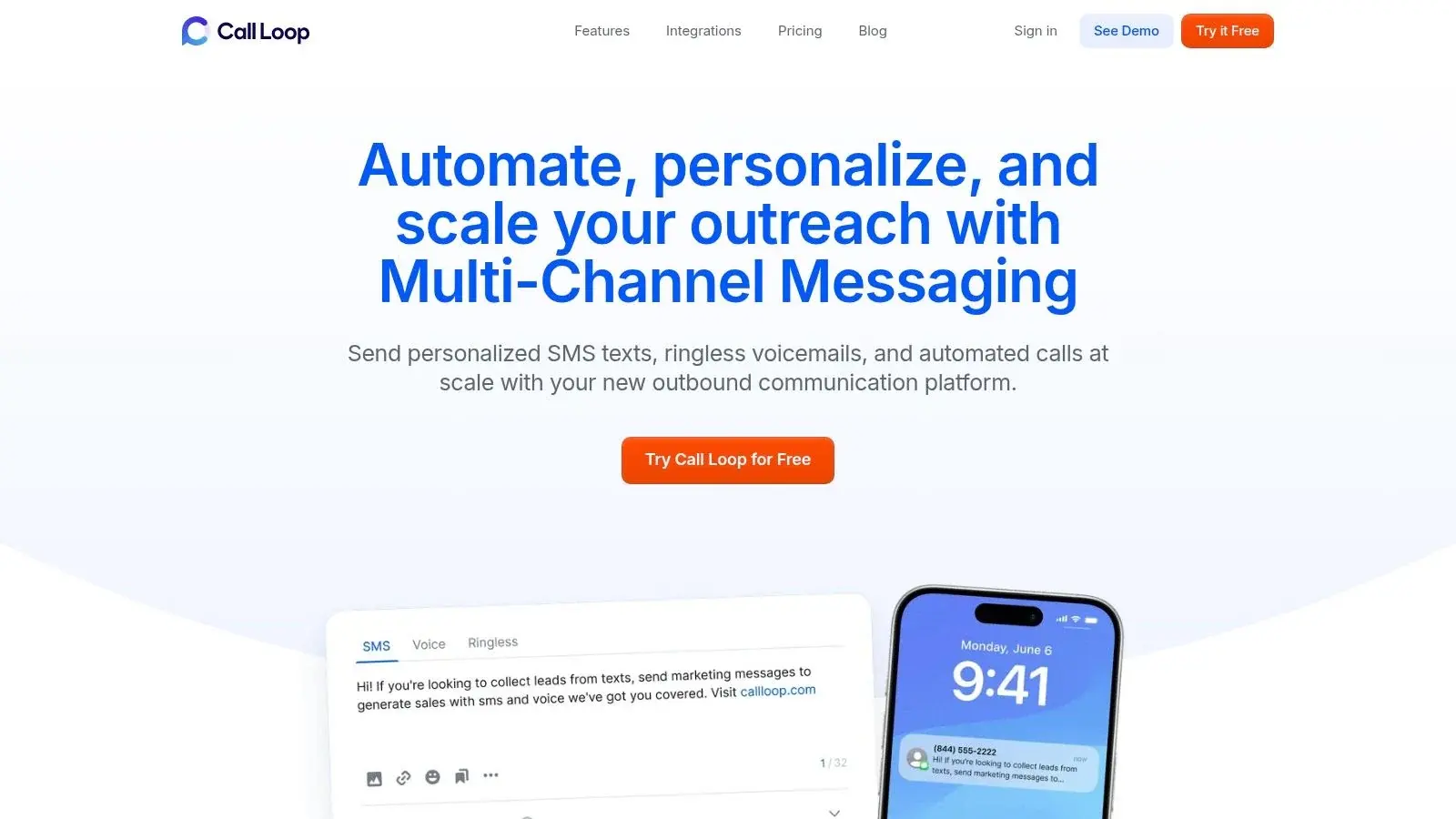
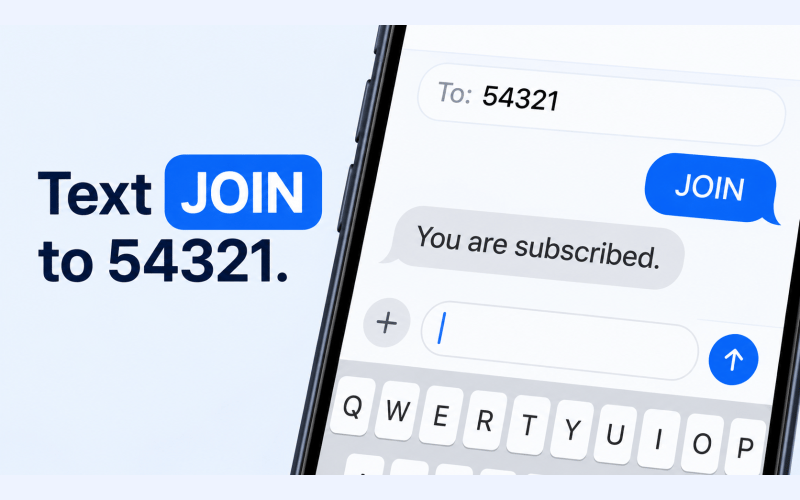
What truly sets Broadcast apart is its ability to orchestrate these different channels into a single, cohesive drip campaign. For instance, a user could sign up via a text-to-join keyword, receive an immediate SMS confirmation, get a ringless voicemail drop 24 hours before an event, and a final SMS reminder 15 minutes prior. This level of automation ensures messages are timely and relevant, driving measurable results like the 24% increase in webinar attendance reported by users. The platform is also built with robust compliance features, including HIPAA support for secure healthcare communications, which is a critical differentiator for medical practices and related entities.
Key Features & Use Cases
- Multi-Channel Drip Campaigns: Combine SMS/MMS, voice broadcasts, and ringless voicemail drops into automated sequences. This is ideal for appointment reminders, lead nurturing, and event promotion where multiple touchpoints increase response rates.
- Deep CRM Integration: Native connections with HubSpot, Keap, and ActiveCampaign, plus Zapier integration, allow Broadcast to act as the communication engine for your existing marketing stack. You can trigger messages based on CRM tags or actions, keeping all data synchronized.
- HIPAA Compliance: A standout feature for healthcare, enabling secure patient communication like appointment confirmations, pre-op instructions, and health reminders without compromising patient privacy.
- Advanced Voice & Voicemail: The platform includes sophisticated voice features like press-1 transfers and live-answer detection. Its ringless voicemail capability is particularly effective, delivering a pre-recorded message directly to a user's voicemail inbox without their phone ever ringing, offering a less intrusive way to communicate.
Pricing
Broadcast operates on a usage-based pricing model rather than fixed monthly tiers. This includes a pay-per-successful-drop model for its ringless voicemail service, which helps control costs by ensuring you only pay for delivered messages. A free trial and personalized demos are available to help you estimate campaign costs based on your expected volume.
| Pros | Cons |
|---|---|
| True multi-channel automation across SMS, voice, and ringless voicemail. | Pricing is not transparent on the website; requires a trial or demo to estimate costs. |
| Strong compliance features, including crucial HIPAA support for healthcare. | Automated voice and ringless voicemail outreach have regional legal restrictions; compliance is user-dependent. |
| Excellent integration with major CRMs and thousands of apps via Zapier. | The interface may have a slightly steeper learning curve for users accustomed to simpler, SMS-only tools. |
| Cost-effective pricing models like pay-per-successful-drop voicemail. |
Learn more at broadcast.so
2. Twilio
Twilio isn't a conventional, out-of-the-box SMS marketing platform but rather a powerful Communications Platform as a Service (CPaaS). It’s the foundational engine behind many applications, providing developers with the APIs to build completely custom communication workflows. This makes it an ideal choice for tech-savvy businesses or those with development resources who need ultimate flexibility to integrate SMS, MMS, WhatsApp, and even voice features directly into their proprietary software or complex operational systems.
Unlike WYSIWYG editors, Twilio’s value lies in its programmatic control. For example, an e-commerce brand could build a custom workflow that triggers an MMS with a product image immediately after a cart is abandoned, or a healthcare provider could create a secure, HIPAA-compliant appointment reminder system tied directly to its EMR. While this requires coding, the extensive documentation and developer community support make it manageable. Many of the best SMS marketing platforms are actually built on top of Twilio's reliable infrastructure.
Key Features and Pricing
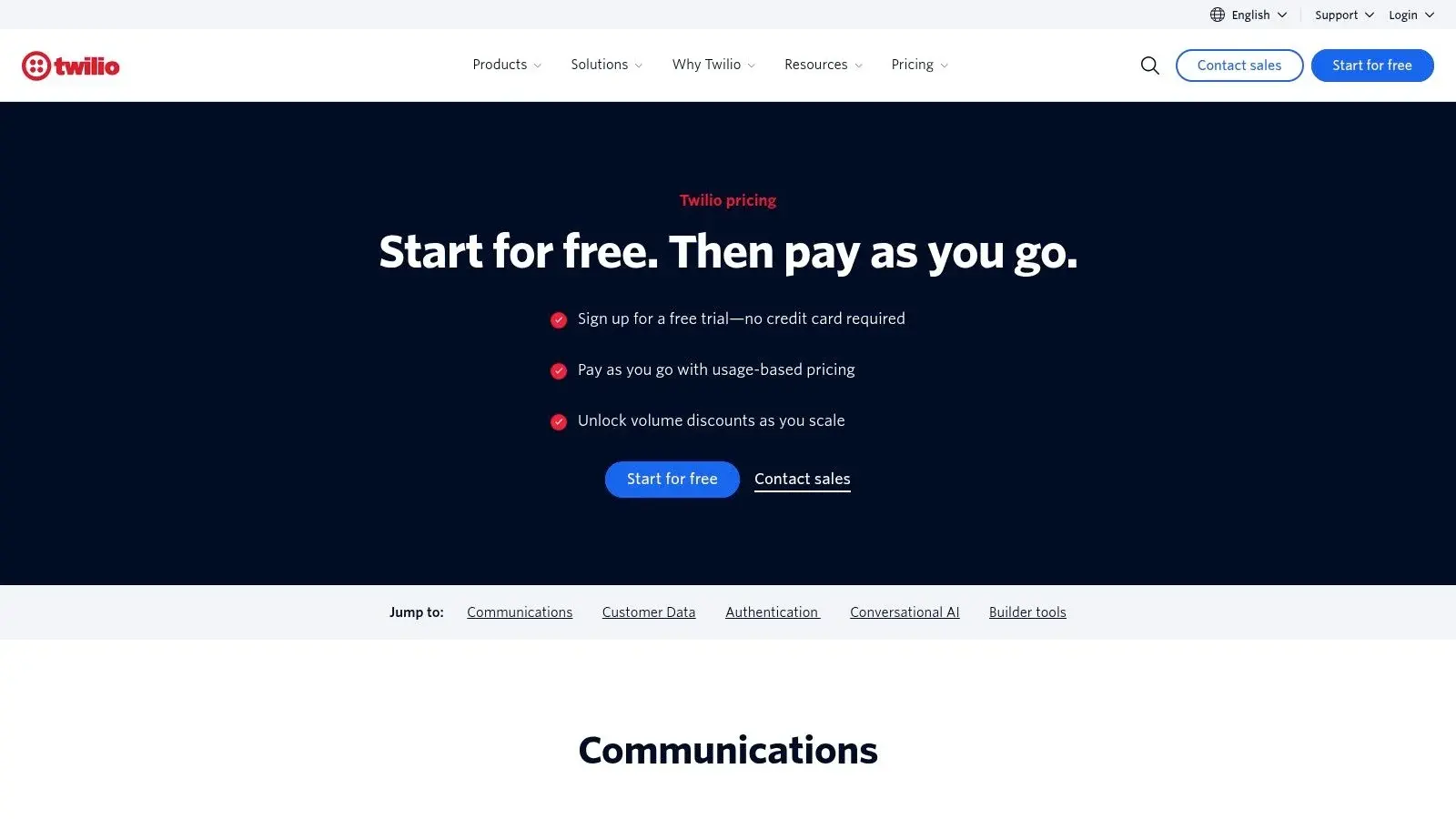
- Pricing: Twilio operates on a usage-based model with no long-term contracts. In the US, sending or receiving an SMS costs $0.0083 per 160-character segment and an outbound MMS $0.022, plus phone number fees, carrier fees passed through at cost (for example $0.0035 per outbound SMS on AT&T) and $0.001 for each failed message (Twilio US SMS pricing, checked October 19, 2026). This pay-as-you-go structure is cost-effective for businesses with fluctuating volume.
- Unique Offerings: The platform provides robust APIs for 10DLC, toll-free numbers, and short codes, alongside comprehensive compliance tooling to navigate TCPA guidelines. Its global reach is a significant advantage for international operations.
- Pros: Unmatched flexibility, enterprise-grade reliability with a 99.95% monthly API availability commitment (Twilio APIs SLA), and extensive, well-regarded documentation.
- Cons: Requires a developer to implement and manage. Costs can be unpredictable as they scale with volume and various carrier fees.
3. Attentive
Attentive is an enterprise-grade mobile messaging platform squarely aimed at large retail and e-commerce brands. It goes beyond basic SMS marketing, offering a comprehensive suite that includes MMS, RCS, email and push to create sophisticated, cross-channel customer journeys. The platform's core strength lies in its extensive list-growth tools and deep integrations with the e-commerce ecosystem, making it a powerful choice for high-growth merchants focused on maximizing revenue from their mobile channel.
Unlike platforms designed for smaller businesses, Attentive provides a white-glove service with dedicated success and onboarding teams. This hands-on approach helps large brands implement complex strategies like triggered cart abandonment flows, back-in-stock alerts, and advanced segmentation based on user behavior. Its two-tap™ mobile sign-up is designed to convert website visitors into subscribers, a critical component for scaling a compliant list quickly. Applying the right SMS marketing best practices within a powerful platform like this is key to success.
Key Features and Pricing
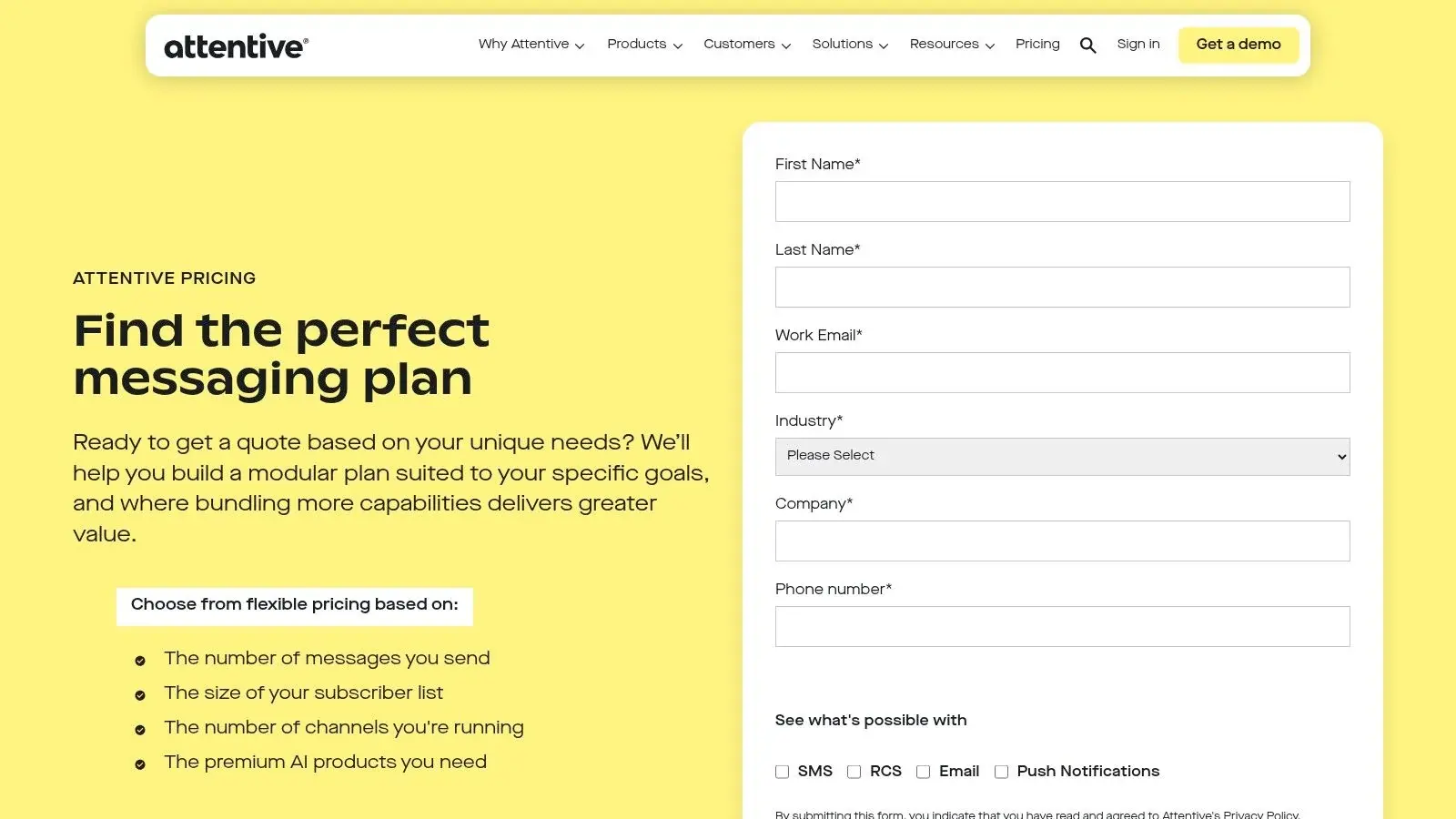
- Pricing: Attentive's prices are not public. Its pricing page describes usage-based pricing (no credit system) set by message volume, subscriber list size, number of channels and the AI products you add; AI Pro and AI Grow carry a flat monthly fee. Attentive says it offers free trials and bundle discounts (See Attentive's pricing page, checked October 19, 2026).
- Unique Offerings: The platform features patented list-growth tools, AI-powered features for optimizing copy and personalizing sends, and cross-channel journey building across SMS and email. The dedicated client strategy team is a significant value-add for enterprise clients.
- Pros: Exceptional performance and ROI for e-commerce, strong compliance support for TCPA, and expertise in managing very large subscriber lists and complex campaigns.
- Cons: Can be cost-prohibitive and overly complex for small teams or stores just starting with SMS. The lack of transparent pricing makes it difficult for smaller businesses to evaluate.
4. Klaviyo
Klaviyo excels as a unified marketing automation platform designed specifically for e-commerce. Rather than being a standalone SMS tool, it integrates SMS and MMS directly alongside its powerful email marketing suite. This creates a single source of truth for customer data, allowing businesses to build sophisticated, multi-channel automated flows based on a customer's complete behavioral history. For merchants already using Klaviyo for email, adding SMS is a natural and highly effective extension.
The platform’s strength lies in its deep integration with e-commerce platforms like Shopify and BigCommerce. It provides pre-built automations for common scenarios such as abandoned cart reminders, browse abandonment follow-ups, and post-purchase thank-you messages that can seamlessly blend email and text. This unified approach simplifies reporting and attribution, making it easier to see how SMS campaigns directly impact revenue. This makes it one of the best SMS marketing platforms for online stores looking to consolidate their tech stack. For more strategies, you can learn more about SMS marketing for ecommerce.
Key Features and Pricing
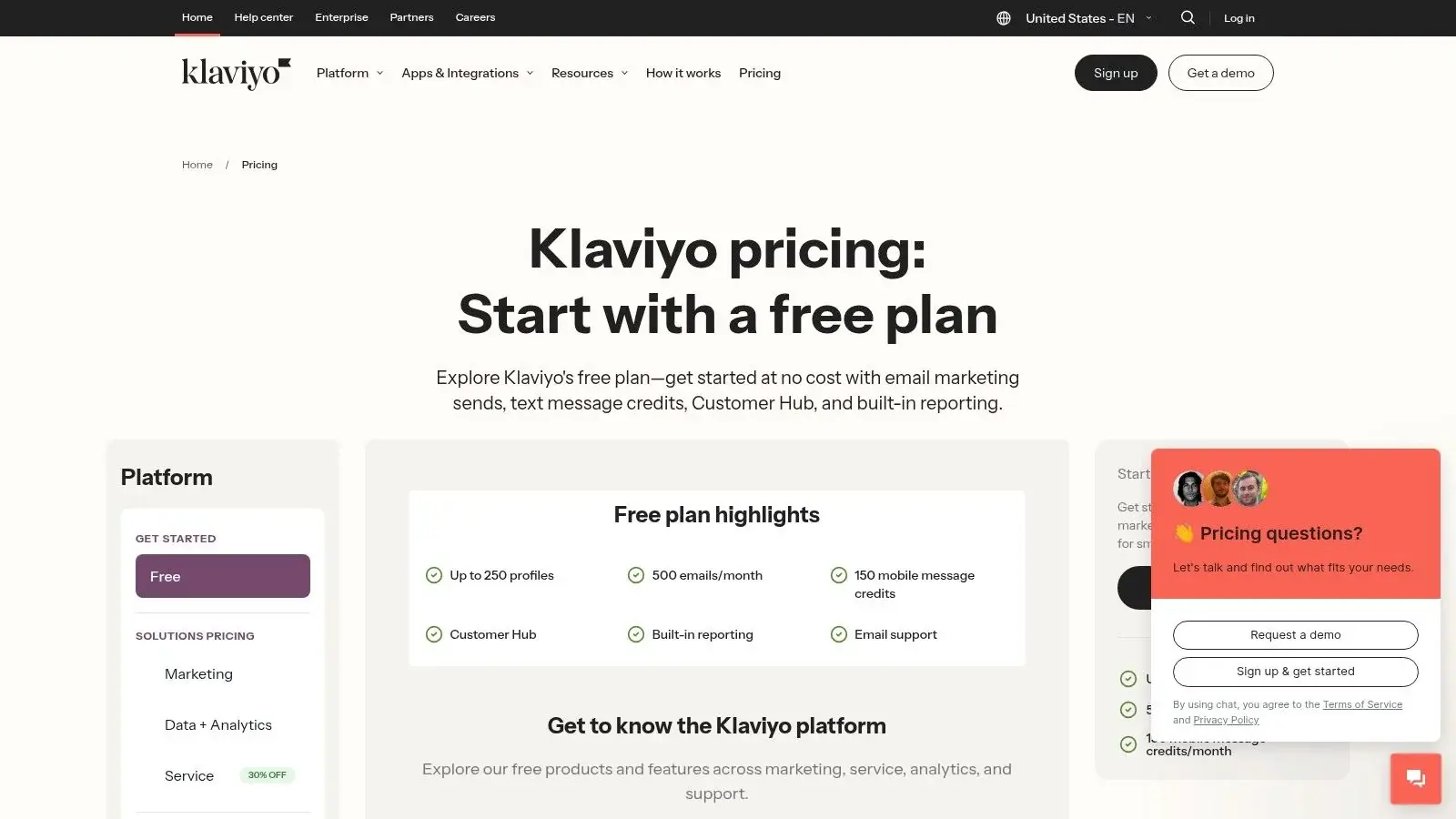
- Pricing: Klaviyo has a free plan for up to 250 profiles with 500 emails and $5 of mobile messages (SMS and MMS) a month. Paid plans scale with your profile count and your monthly SMS volume; use the calculator on the Klaviyo pricing page for your list (checked October 19, 2026).
- Unique Offerings: The platform features unified customer profiles, advanced segmentation using a mix of email and SMS behavior, AI-powered content tools, and more than 350 prebuilt integrations. Its pre-built e-commerce flows are a significant time-saver.
- Pros: Seamless integration with Shopify and BigCommerce, one platform for email and SMS simplifies attribution, and powerful pre-built automation workflows.
- Cons: SMS credits can be consumed quickly with high-volume campaigns, and the platform delivers the best value when both email and SMS channels are used together.
5. Postscript
Postscript is an SMS marketing platform built almost exclusively for e-commerce brands operating on the Shopify ecosystem. Its deep integration allows it to pull rich customer data directly from Shopify, enabling highly personalized and automated campaigns that drive revenue. This Shopify-first approach means that everything from subscriber acquisition tools to automation flows is optimized for direct-to-consumer (DTC) brands looking for a quick setup and a clear return on investment.
The platform excels with its visual flow builder, which comes pre-loaded with essential e-commerce automations like abandoned cart reminders, browse abandonment follow-ups, and welcome series. For a Shopify store, this means you can deploy sophisticated, behavior-triggered SMS campaigns without writing a single line of code. Its native attribution and revenue tracking provide clear, actionable insights into how SMS is contributing to your bottom line, making it one of the best SMS marketing platforms for data-driven e-commerce marketers.
Key Features and Pricing
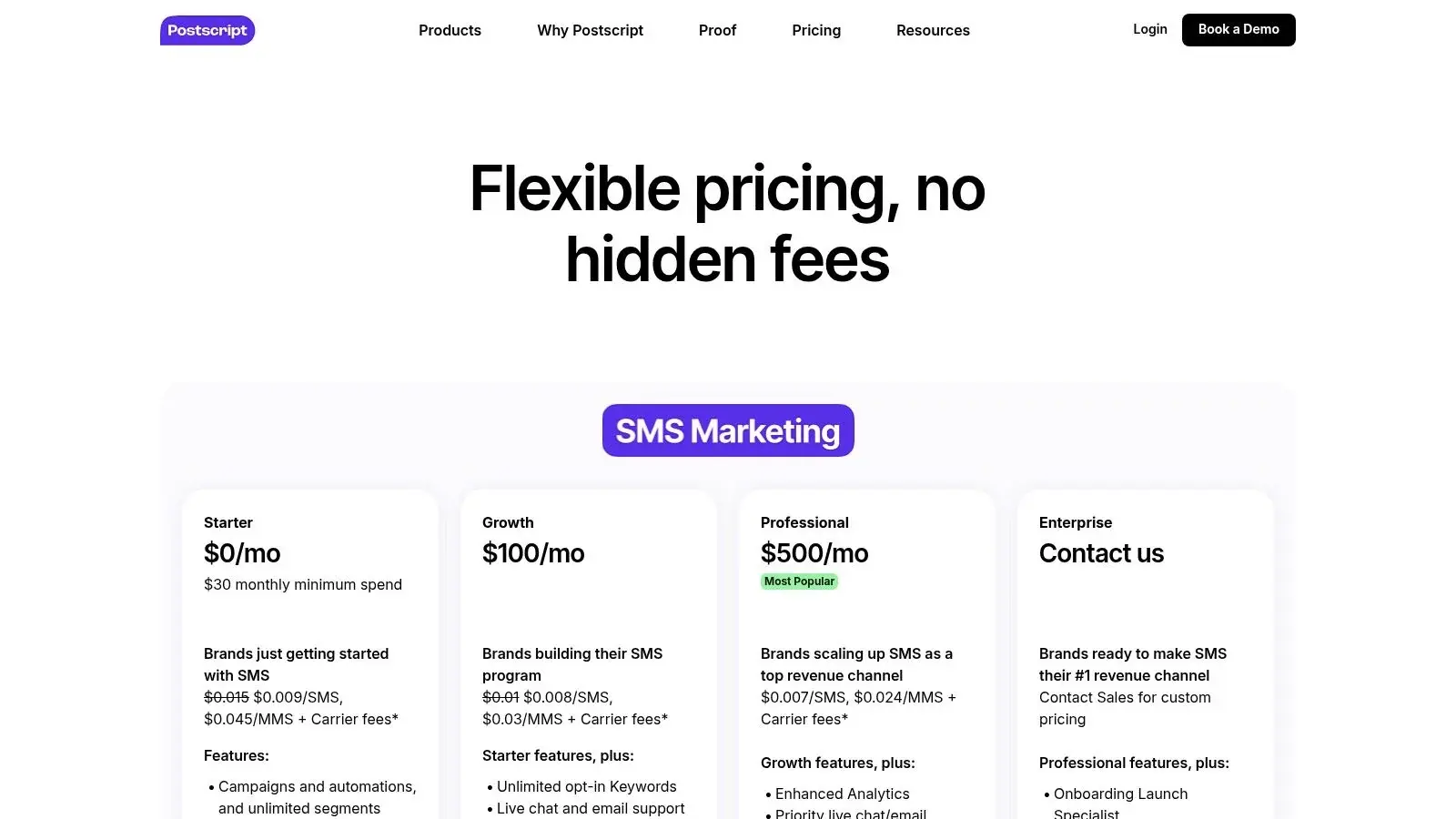
- Pricing: Postscript charges a monthly platform fee plus per-message rates, billed after you send. Starter is $0 a month with a $49 monthly minimum spend at $0.009 per SMS and $0.045 per MMS; Growth is $100 a month at $0.008 per SMS; Professional is $500 a month at $0.007 per SMS; carrier fees are added at cost (US average $0.0033 per SMS). A free trial includes a $100 credit for the first 30 days (Postscript pricing, checked October 19, 2026).
- Unique Offerings: The platform features a powerful visual flow builder with prebuilt e-commerce automations, advanced segmentation based on Shopify data (like purchase history and LTV), and dedicated toll-free numbers. Its native revenue tracking is a standout feature for proving ROI.
- Pros: Deep Shopify integration provides powerful, out-of-the-box segmentation and attribution. The platform is user-friendly, with transparent pricing that clearly separates platform costs from carrier fees.
- Cons: Its primary focus on Shopify makes it less suitable for businesses on other platforms. MMS coverage is limited outside of the US and Canada, and the combination of a monthly fee plus per-message and carrier fees can be complex to forecast across regions. Listed rates cover the US and Canada only.
6. Yotpo SMS & Email (formerly SMSBump)
Yotpo SMS & Email, formerly known as SMSBump, is a powerful marketing solution built specifically for e-commerce merchants on platforms like Shopify. It stands out by tightly integrating SMS and email marketing into a single, unified app, simplifying campaign management and customer communication. This synergy allows businesses to create cohesive, multi-channel journeys, such as sending an email for a cart recovery sequence and following up with an SMS to boost conversion, all from one dashboard. Its deep Shopify integration makes setup and list growth seamless for store owners.
The platform is designed for direct-to-consumer brands that want to maximize revenue through targeted, automated messaging. Beyond standard campaigns, it supports sophisticated segmentation based on shopping behavior, enabling hyper-personalized offers. For instance, you can automatically text a unique discount code to customers who have purchased more than three times or target users who viewed a specific product category. The inclusion of modern messaging formats like RCS provides a richer, more interactive experience, making it one of the best SMS marketing platforms for forward-thinking e-commerce brands.
Key Features and Pricing
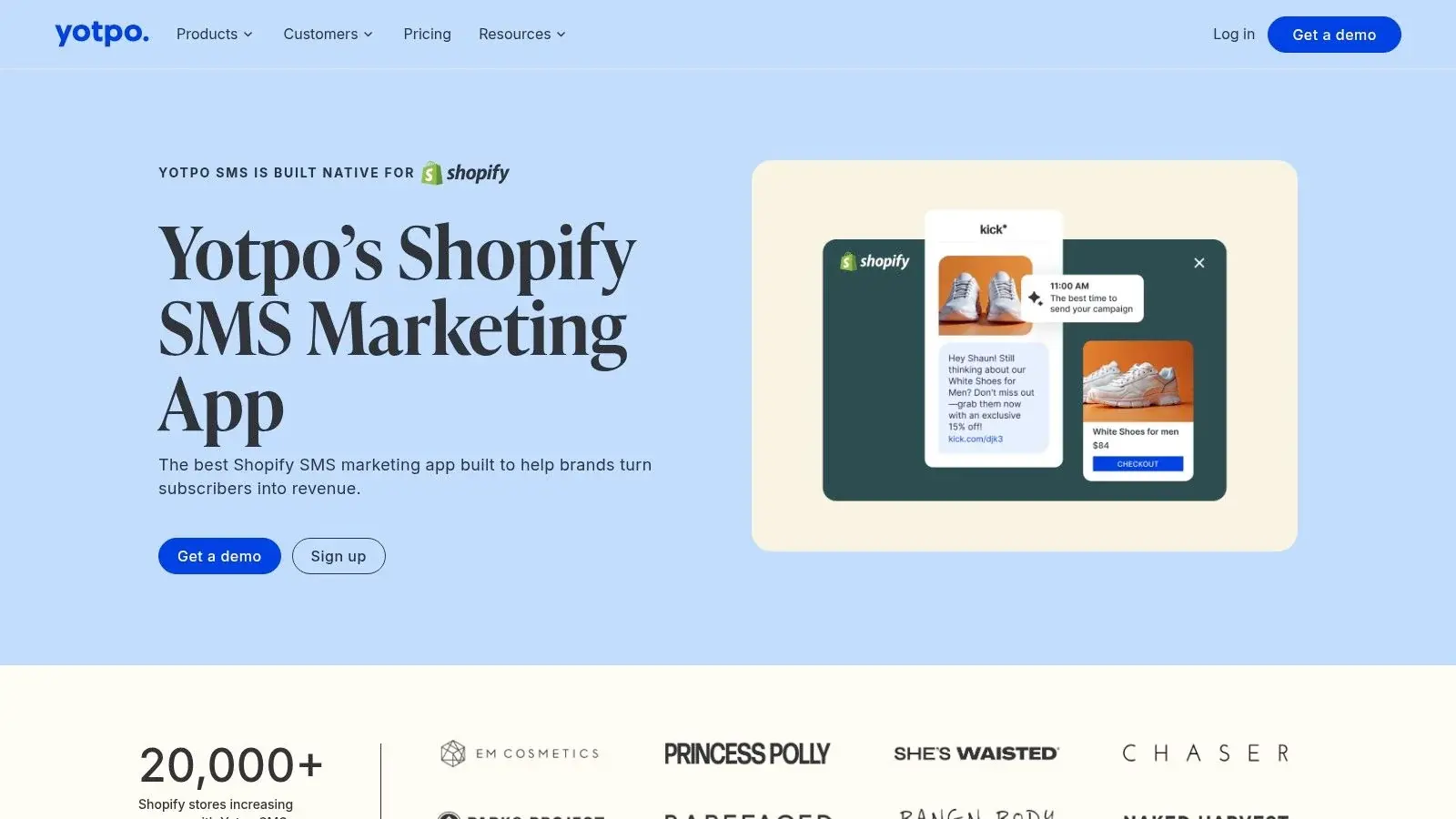
- Pricing: Yotpo describes SMS as pay as you go, with "No carrier fee hikes, contact list charges, platform fees", and says the app is free to install (Yotpo SMS, checked October 19, 2026). A free email allowance is not listed on Yotpo's current pages.
- Unique Offerings: The platform provides a unified inbox for two-way conversations, robust list growth tools like pop-ups and keywords, and a drag-and-drop email editor. It also offers support for RCS messaging and integrates with Zapier to connect with other tools.
- Pros: Seamless and deep integration with Shopify, pay-as-you-go SMS with no platform fee, and excellent compliance defaults for opt-out management.
- Cons: Per-SMS costs can vary significantly based on the destination country and number type. Access to the most advanced automation and segmentation features may require upgrading to a paid monthly plan.
7. SimpleTexting
SimpleTexting is a highly accessible and user-friendly SMS marketing platform designed specifically for small to medium-sized businesses. Its strength lies in its straightforward approach, combining essential features like mass texting campaigns, two-way messaging, and keyword-based automation with transparent, credit-based pricing. This makes it an ideal choice for organizations like local service providers, retail shops, or community groups that need a quick, no-fuss way to engage their audience without a steep learning curve or technical overhead.
The platform is built for practical, everyday use cases. A karate studio can use keywords to send class schedules, a real estate agent can set up autoresponders for property inquiries, and a local restaurant can blast out a last-minute MMS special with a mouth-watering photo. With a clean user interface and live customer support, teams can get campaigns running the same day they sign up, making it one of the best SMS marketing platforms for those prioritizing speed and simplicity over complex, developer-centric tools. The inclusion of rollover credits also provides valuable flexibility for businesses with seasonal communication needs.
Key Features and Pricing
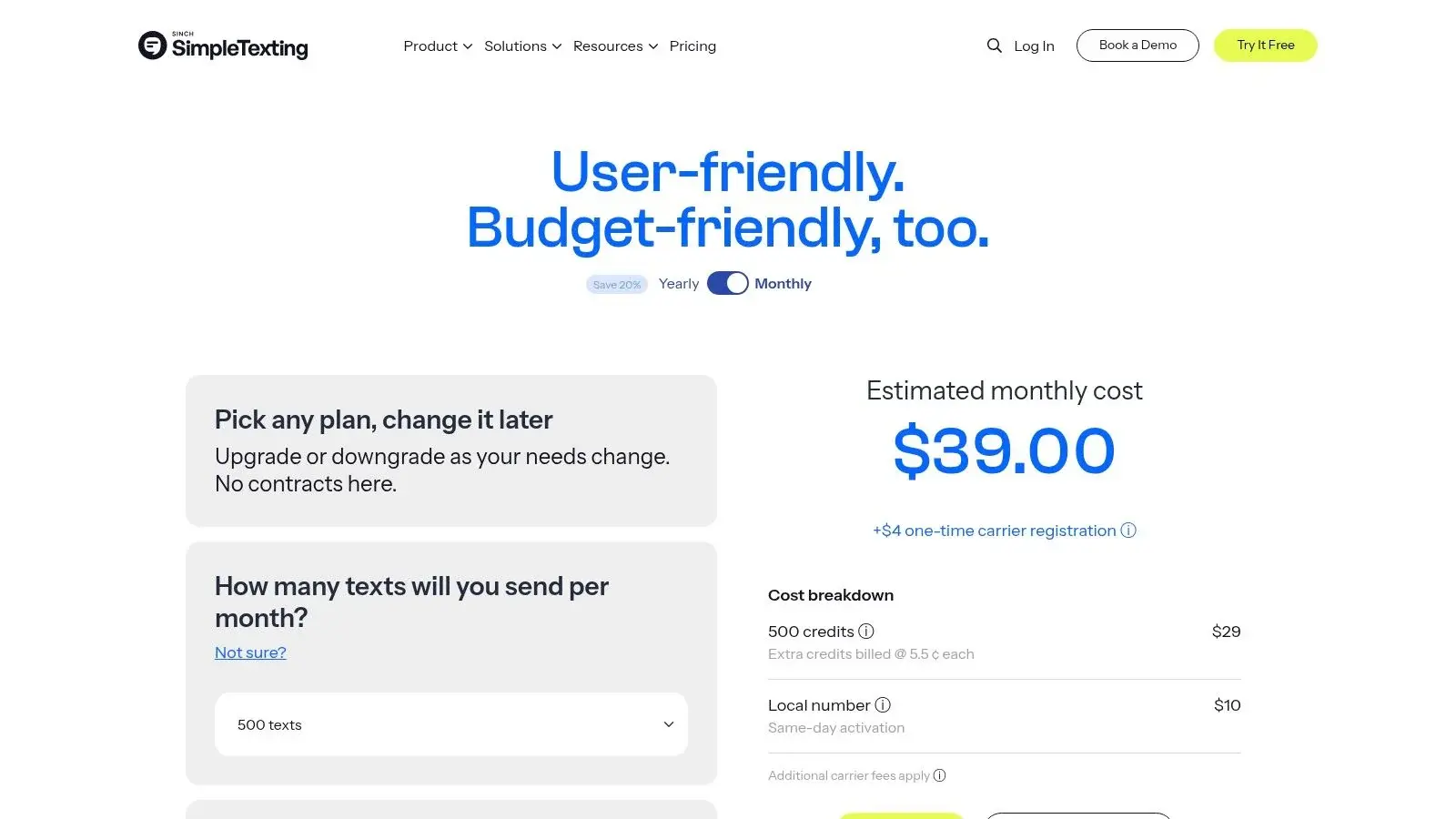
- Pricing: SimpleTexting uses a monthly credit system, starting at $39 a month for 500 credits ($33.20 a month billed yearly), plus a $4 one-time carrier registration; extra credits cost 5.5 cents. On monthly plans, unused credits roll over to the end of the following month. A standard SMS costs 1 credit and an MMS 3 credits; incoming SMS are free. The trial needs no credit card (SimpleTexting pricing, checked October 19, 2026).
- Unique Offerings: The platform provides a shared inbox for team collaboration, a built-in link shortener with click-tracking, and helpful templates. Integrations with Mailchimp and Zapier extend its functionality to connect with hundreds of other apps.
- Pros: Very easy to set up and use, even for non-technical users. Transparent credit-based plans and rollover credits offer great value and predictability.
- Cons: The credit model can make MMS and longer messages costly. Three user seats are included; extra users cost $20 a month each and extra numbers $10 a month each, which can increase the total price.
8. EZ Texting
EZ Texting is a long-standing player in the SMS space, designed for businesses that need a straightforward, fast-to-launch text marketing solution. Its primary appeal is its simplicity and clear, credit-based pricing model, making it a great fit for non-technical teams, local businesses, or organizations that prioritize quick campaign execution over complex, multi-step automation workflows. The platform focuses on core functionalities like mass texting, keyword-based list building, and a unified inbox for two-way conversations.
Unlike platforms built for deep e-commerce integrations, EZ Texting shines in its direct approach to communication. A karate studio can quickly set up a keyword like "BELTTEST" for students to subscribe to testing date reminders, or a local restaurant can blast a daily special to its entire subscriber list with just a few clicks. The platform also supports MMS. Earlier versions of this guide said EZ Texting had expanded into voicemail drops; its current feature pages do not list voicemail drops (checked October 19, 2026), so confirm with EZ Texting if you need them. It remains one of the more approachable, if not the most technically advanced, of the best SMS marketing platforms available.
Key Features and Pricing
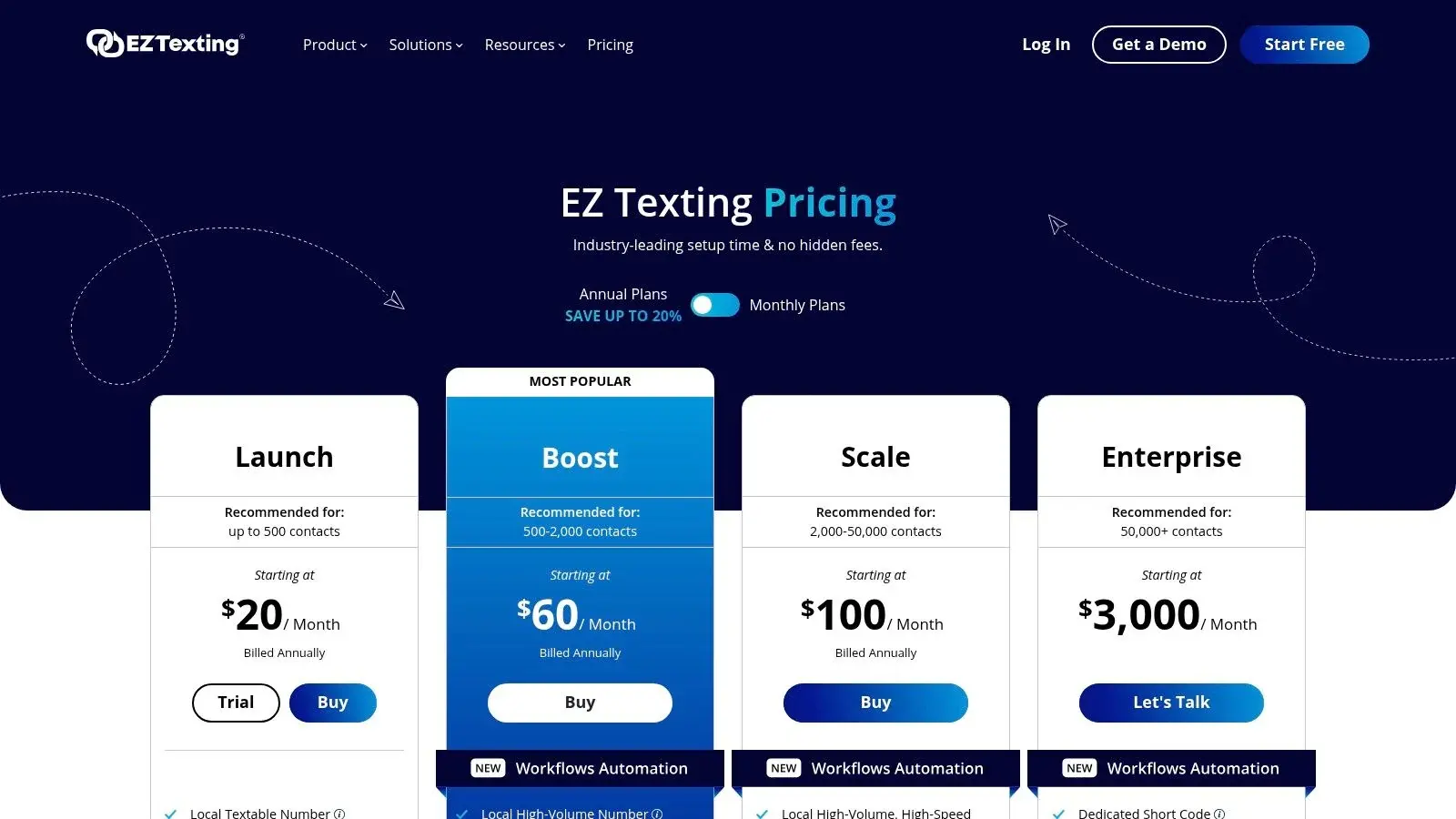
- Pricing: EZ Texting's Launch plan costs $25 a month ($20 a month billed annually) with 500 monthly credits; Boost ($75) and Scale ($125) add higher-volume numbers, and Enterprise ($3,000 a month) includes a dedicated short code and 200,000 monthly credits. One SMS costs 1 credit and one MMS 3 credits; overage credits cost $0.01 to $0.04 depending on plan; Launch carries a $5 monthly telecom fee. A 14-day free trial is available (EZ Texting pricing, checked October 19, 2026).
- Unique Offerings: Setup within one business day, detailed reporting, and a library of text message templates. (Ringless voicemail is not listed on EZ Texting's current site.)
- Pros: Very fast onboarding with no long-term contracts required. The credit-based system is easy to understand, and overage pricing is transparent.
- Cons: The credit model and separate telecom fees can be confusing for newcomers. Its automation capabilities are more basic compared to e-commerce-focused tools.
9. Omnisend
Omnisend is an e-commerce-focused marketing automation platform where SMS is deeply integrated alongside email and web push notifications. It stands out for merchants who want a unified system to manage their customer communication, eliminating the need to sync data between separate email and SMS tools. The platform is built to support a cohesive omnichannel strategy, allowing a brand to create workflows that combine email and SMS based on customer behavior, such as sending a text message as a follow-up to an unopened email promotion.
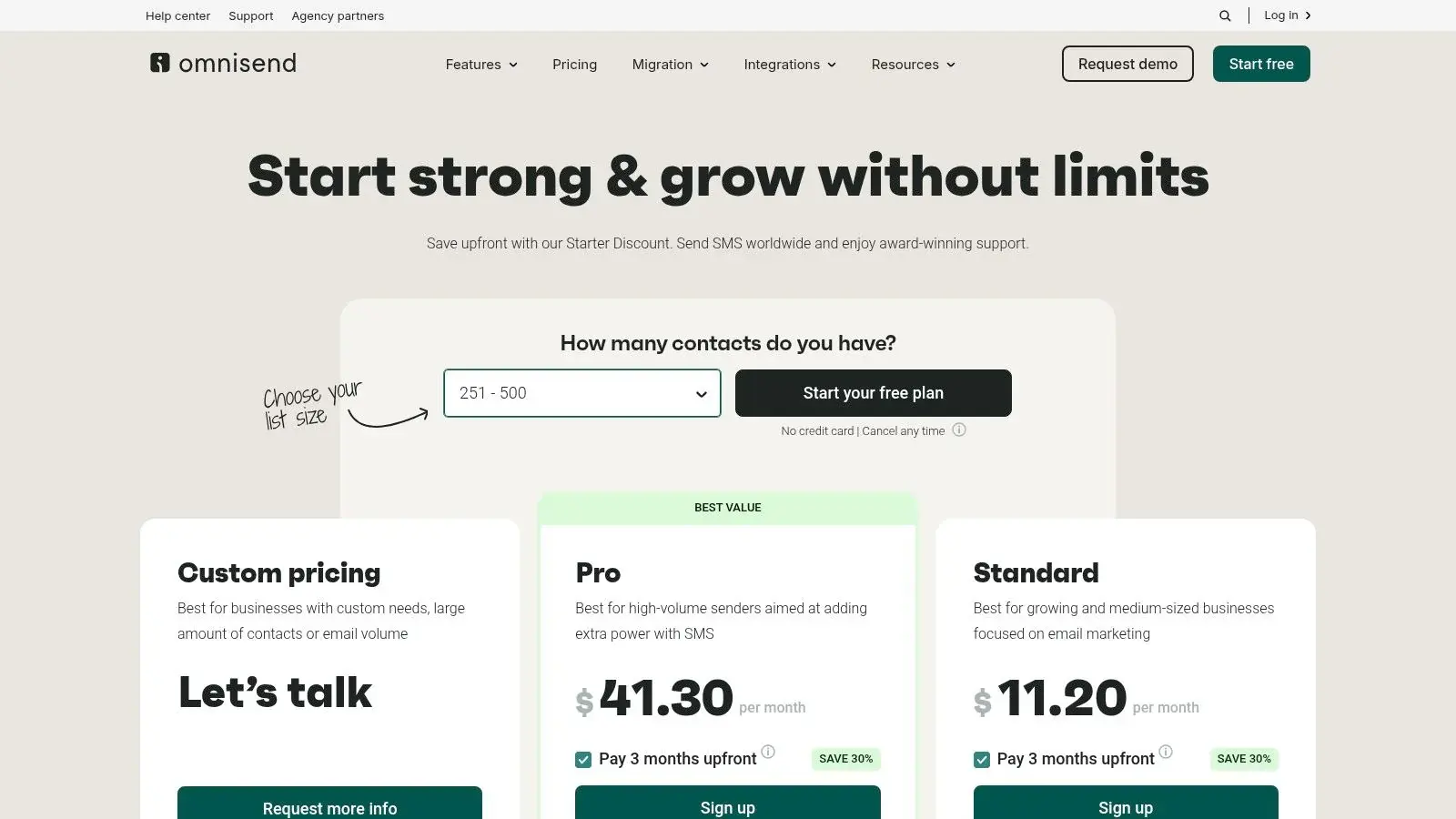
The primary value proposition for many growing e-commerce stores is the platform's pricing model. On the Pro plan, Omnisend includes bonus SMS credits equal to your monthly bill, effectively making SMS a high-value add-on rather than a separate, costly channel. For example, a business on the $59/month Pro plan also receives $59 in SMS credits (Omnisend pricing, checked October 19, 2026). This structure makes Omnisend one of the best SMS marketing platforms for brands aiming to balance a robust email program with a growing text message marketing strategy without a complex budget.
Key Features and Pricing
- Pricing: A Free plan (500 emails a month to up to 250 contacts) and paid plans from $16 a month (Standard) and $59 a month (Pro), scaling with contact list size. Pro includes bonus SMS credits equal to the monthly bill; SMS starts at $0.007 per message for high-volume US sends and varies by country. MMS is available for US and Canada recipients only (Omnisend pricing, checked October 19, 2026).
- Unique Offerings: The platform provides combined email and SMS automation workflows, deep integration with Shopify and other e-commerce platforms, and global SMS capabilities. The built-in SMS pricing calculator provides transparency for international campaigns.
- Pros: Strong value for merchants using both email and SMS. The free monthly SMS credits significantly offset costs, and 24/7 support is available on all plans.
- Cons: SMS rates vary by country and must be checked via the calculator. Some advanced segmentation and personalization features are locked behind higher-tier plans.
10. Braze
Braze is an enterprise-grade customer engagement platform designed for large brands that need to unify communication across multiple channels. It goes beyond simple SMS marketing, integrating text messaging, MMS, and even RCS into a broader strategy that includes email, push notifications, and in-app messages. This makes it a top choice for organizations needing to orchestrate complex, multi-touch customer journeys and maintain a single source of truth for user data.
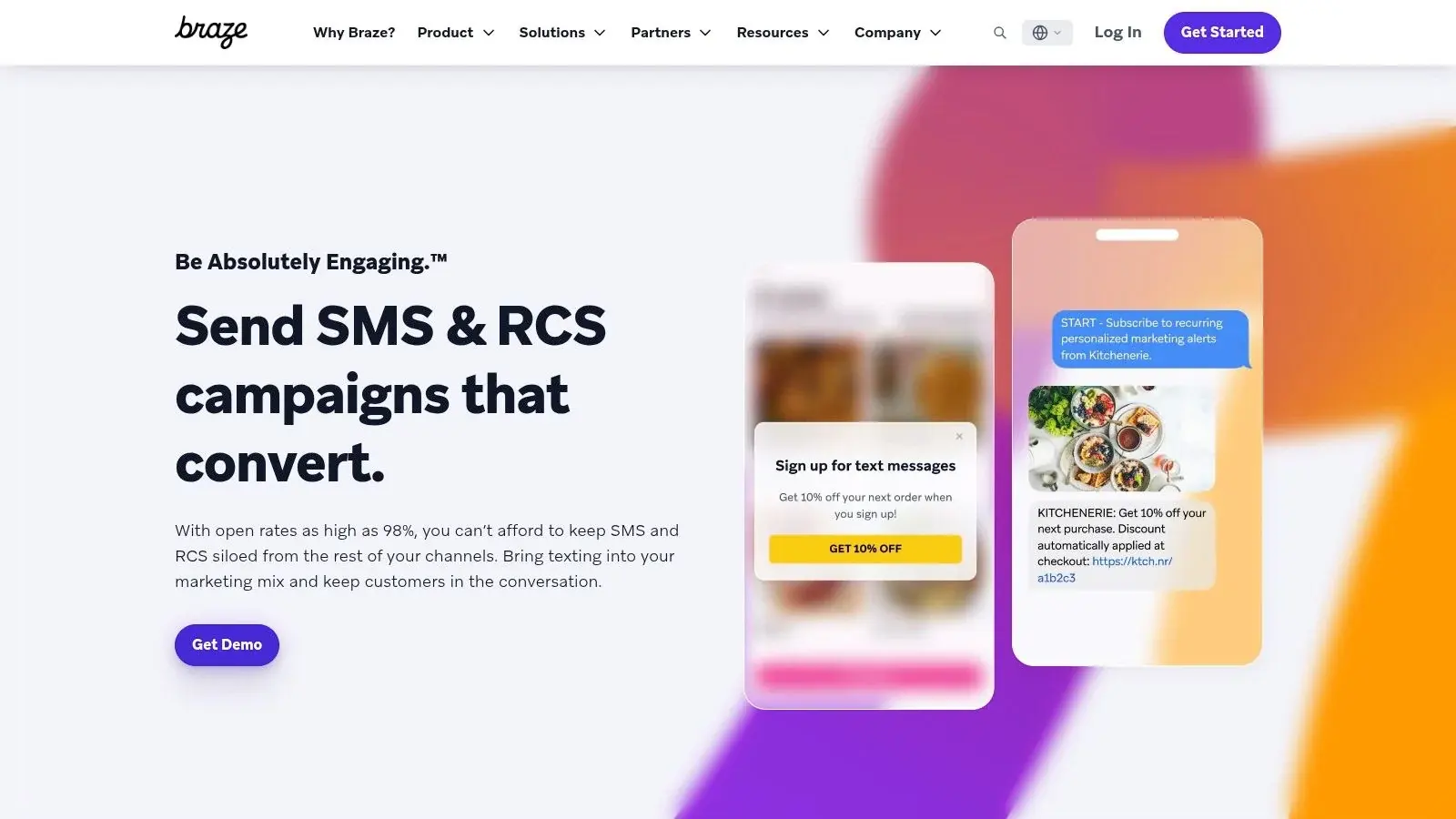
The platform’s strength lies in its sophisticated orchestration and personalization engine. A retail brand, for example, could build a workflow that sends an in-app message when a user browses a product, followed by an email with related items, and then a targeted SMS with a limited-time offer if they still haven't purchased. This level of cross-channel intelligence and data activation is what sets Braze apart from more focused SMS tools. For businesses needing a powerful, all-in-one solution, Braze is one of the best sms marketing platforms available.
Key Features and Pricing
- Pricing: Braze does not publish prices. Pricing scales with Monthly Active Users (MAU); there is no free plan, but Braze offers trials, startup programs and tailored entry plans (Braze pricing, checked October 19, 2026). It is positioned for enterprise clients with significant budgets.
- Unique Offerings: The platform provides centralized journey orchestration that combines SMS/MMS/RCS with all other major digital channels. It features advanced segmentation, A/B/n testing, and predictive analytics to optimize campaign performance at scale.
- Pros: Unifies multiple engagement channels into a single platform, powerful segmentation and testing for enterprise-level optimization, and a scalable infrastructure built for high-volume sends.
- Cons: Pricing is not transparent and is likely prohibitive for small to mid-sized businesses. The platform can be overly complex for teams only needing a simple SMS program.
11. Telnyx
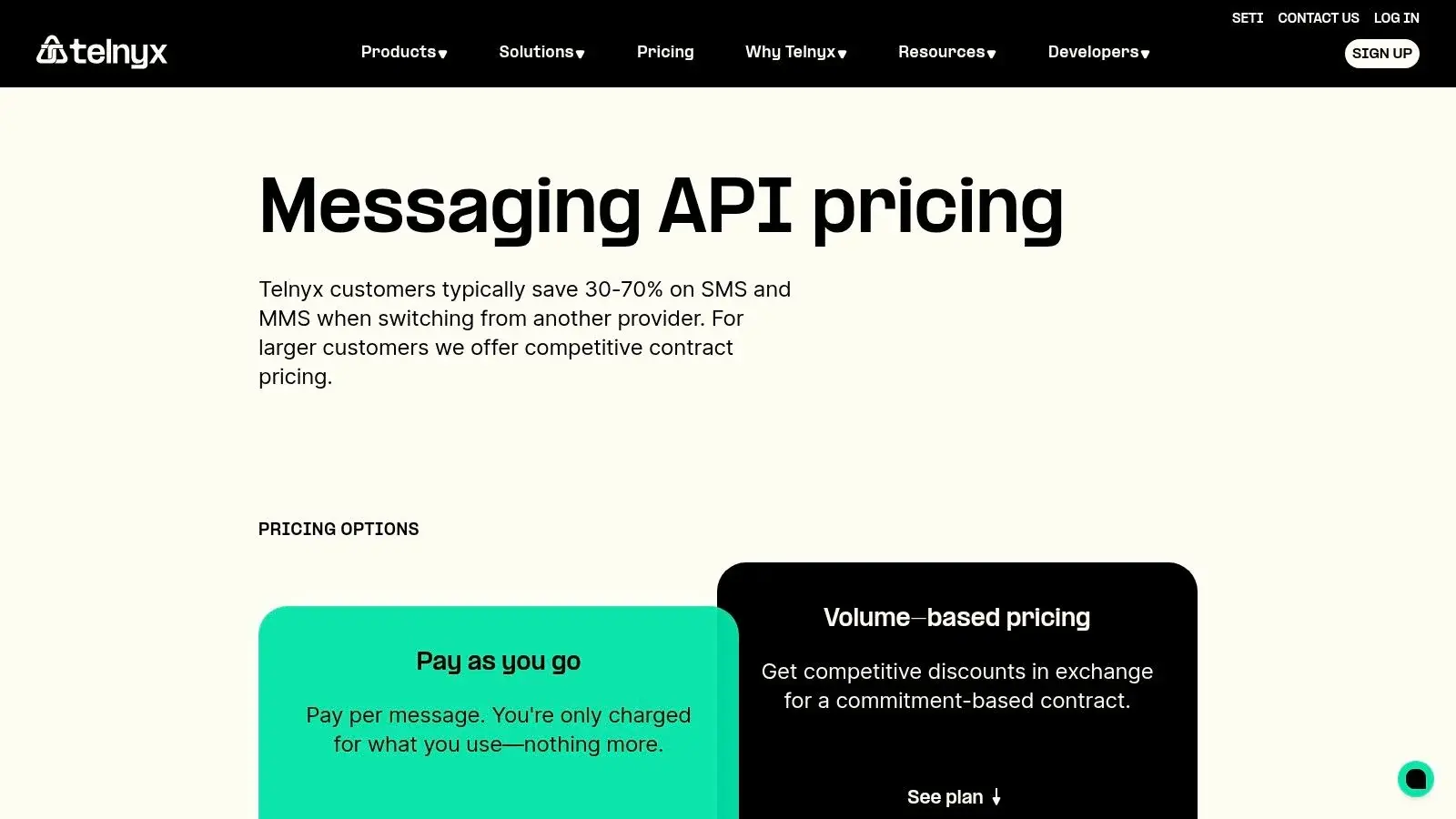
Telnyx stands out in the CPaaS (Communications Platform as a Service) space with a strong focus on transparent, aggressive pricing, making it a powerful contender for businesses with development teams. Like Twilio, it provides the API-level building blocks for creating custom communication solutions, but its primary differentiator is its public, highly detailed breakdown of carrier fees. This granular visibility allows companies with high-volume SMS programs to forecast costs with much greater accuracy and optimize their carrier routing for maximum cost-efficiency.
This platform is engineered for developers who need deep control over their messaging infrastructure and direct access to a global private network. A logistics company, for example, could leverage Telnyx APIs to build a multi-country notification system, choosing number types and routes based on the most favorable carrier rates in each region. While it requires technical expertise to implement, it rewards users with cost savings and control that pre-built platforms cannot offer, positioning it as one of the best SMS marketing platforms for cost-conscious, high-volume senders.
Key Features and Pricing
- Pricing: Telnyx uses a pay-as-you-go model: in the US, $0.004 per SMS part sent or received on local (10DLC) numbers and $0.015 per outbound MMS, plus carrier fees passed through without markup, with automatic discounts above 100 million messages a month (Telnyx messaging pricing, checked October 19, 2026). The key is its transparent pricing table, which details the pass-through surcharges for each major carrier.
- Unique Offerings: The platform provides a clear, publicly available table of per-carrier fees (e.g., T-Mobile, Verizon), which is rare in the industry. It also supports a wide range of services including number management, MMS, and voice APIs for building features like ringless voicemail drops.
- Pros: Extremely competitive base rates, especially in the US. Unmatched transparency on carrier surcharges allows for precise budget management.
- Cons: Requires developer resources to build, integrate, and manage. The complexity of calculating total costs, including carrier fees, can be a hurdle for non-technical users.
Bonus Research Tool: G2 (SMS Marketing Software category)
While not a platform itself, G2's SMS Marketing category is an indispensable research hub for any business evaluating its options. It aggregates real user reviews, satisfaction ratings, and feature-level comparisons for dozens of vendors in one place. This makes it an essential first or final stop to validate choices, benchmark user experiences, and uncover potential deal-breakers that aren't advertised in marketing copy. It’s the closest thing to getting a trusted referral from hundreds of peers.
The platform allows you to filter the best SMS marketing platforms by company size, key features like MMS or ringless voicemail capabilities, and specific integrations. For instance, a small karate studio could filter for platforms highly rated by other SMBs, while an enterprise might focus on solutions with robust APIs and compliance tools. Reading through the pros and cons sections of verified user reviews offers invaluable, unbiased insights into a platform’s real-world performance and customer support quality.
Key Features and Pricing
- Pricing: G2 is completely free to use for buyers researching software. The pricing information displayed for listed vendors, however, can sometimes be outdated, so it's crucial to verify costs directly on the vendor's website.
- Unique Offerings: The platform provides a proprietary "G2 Grid®" that visually plots vendors based on market presence and customer satisfaction. It also offers detailed comparisons where you can see side-by-side feature lists and ratings for your shortlisted tools.
- Pros: Neutral, review-driven discovery helps benchmark usability and support. It's an excellent free resource for validating claims and finding genuine alternatives.
- Cons: Sponsored placements can influence vendor visibility on category pages. Pricing and feature data may not always be current.
Top 11 SMS Marketing Platforms: Features & Pricing Comparison
| Product | Channels & Core features | Compliance & Deliverability | Best for / Target audience | Pricing & Value | Unique strengths / differentiator |
|---|---|---|---|---|---|
| Broadcast (Recommended) | SMS/MMS, voice broadcasting, ringless voicemail; keywords, segmentation, drip sequences, rich media | HIPAA-ready; toll-free approval, number validation, DNC management, double opt-in | SMBs, agencies, sales/CS teams, event organizers, healthcare providers | Usage-driven; free trial/demo; pay-per-successful-drop for voicemail | True multi-channel automation + deep integrations (ActiveCampaign, HubSpot, Keap, Zapier); strong analytics |
| Twilio | Programmable SMS/MMS APIs, phone numbers, WhatsApp/RCS support | Carrier/compliance tooling (10DLC, short codes, verification) | Developers & high-scale builders | $0.0083 per US SMS segment plus carrier fees; usage-based | Extremely flexible APIs and global reliability |
| Attentive | SMS/MMS/RCS + email; 2-tap sign-up, journeys, AI add-ons | Enterprise compliance support for retail | Large retail & ecommerce brands | Usage-based, sales-led (custom quote); free trials | Retail-focused growth tools and dedicated onboarding |
| Klaviyo | Unified email + SMS, deep segmentation, 350+ integrations | Standard compliance features; integrated profiles improve deliverability | Ecommerce brands using Klaviyo for email | Free plan (250 profiles, $5 of mobile messages a month); paid by profiles and SMS volume | Unified customer profiles and prebuilt ecommerce flows |
| Postscript | SMS/MMS, visual flow builder, Shopify-native attribution | Toll-free & carrier support; Shopify-centric compliance | DTC brands on Shopify | Monthly fee from $0 ($49 minimum spend) plus per-message rates and carrier fees at cost | Fast Shopify setup, clear attribution and pricing transparency |
| Yotpo SMS & Email (check availability) | SMS + built-in email, two-way inbox, RCS | STOP/UNSUBSCRIBE handling; Shopify app security | Shopify merchants wanting integrated email+SMS | Pay-as-you-go SMS; free to install | Integrated email + SMS inside Shopify app store |
| SimpleTexting | Campaigns, inbox, keywords, autoresponders, link shortener | 10DLC guidance; standard compliance defaults | Local businesses, SMBs, non-technical teams | From $39 a month for 500 credits; rollover on monthly plans | Easy setup, live support, transparent plans |
| EZ Texting | Keywords, inbox, basic automations, credit bundles | Standard compliance; setup within 1 business day | Organizations needing quick launch and simple plans | From $25 a month ($20 billed annually) for 500 credits | Fast onboarding and clear overage policies |
| Omnisend | Email + SMS automation, web push, reporting, Shopify integration | Global SMS rates vary; built-in compliance features | Ecommerce merchants balancing email & SMS | Free plan; paid from $16 a month; Pro adds bonus SMS credits equal to the bill | Good value for mixed email+SMS programs; credit bonuses |
| Braze | SMS/MMS/RCS + email, push, in-app; advanced orchestration | Enterprise compliance and scalable infra | Large enterprises needing cross-channel orchestration | Sales-led pricing by Monthly Active Users (not public) | Powerful segmentation, testing and journey orchestration |
| Telnyx | SMS/MMS APIs, number management, carrier fee visibility | Detailed per-carrier fee tables; standard compliance | Technical teams optimizing cost for high-volume SMS | $0.004 per US SMS part plus carrier fees passed through | Very cost-competitive + transparent carrier fee breakdown |
| G2 (research directory, not a platform) | Review-driven category pages, vendor comparisons | N/A (research tool) | Buyers researching vendors across SMB/enterprise | Free to use; links to vendor pricing | Neutral user reviews, ratings and feature filters |
Pricing and Free Trials at a Glance
Each price below comes from the vendor's own page. Prices change often, so confirm before you sign up. Most US prices exclude carrier fees and 10DLC registration fees; our guide to bulk SMS service cost explains those line items, and our mass texting services comparison covers more text-first tools.
| Platform | Pricing model | Entry price | Free plan or trial | Source |
|---|---|---|---|---|
| Broadcast | See pricing page | See pricing page | See pricing page | Broadcast pricing |
| Twilio | Pay as you go (API) | $0.0083 per US SMS segment, sent or received | Not checked | Twilio |
| Attentive | Usage-based, custom quote | Not public | Free trials offered | Attentive |
| Klaviyo | Profiles plus SMS volume | Free plan | 250 profiles, 500 emails and $5 of mobile messages a month | Klaviyo |
| Postscript | Monthly fee plus per message | Starter $0 ($49 minimum spend), $0.009 per SMS | $100 credit for 30 days | Postscript |
| Yotpo SMS & Email | Pay as you go (check availability) | Not listed | Free to install | Yotpo |
| SimpleTexting | Monthly credits | $39 a month, 500 credits | Trial, no credit card | SimpleTexting |
| EZ Texting | Monthly credits | $25 a month ($20 billed annually), 500 credits | 14-day trial | EZ Texting |
| Omnisend | Plans by contacts | Standard $16 a month; Pro $59 a month with matching SMS credits | Free plan (500 emails a month) | Omnisend |
| Braze | By Monthly Active Users | Not public | No free plan; trials offered | Braze |
| Telnyx | Pay as you go (API) | $0.004 per US SMS part plus carrier fee | Not checked | Telnyx |
US Rules Every SMS Marketing Platform Must Follow
Whichever platform you pick, the same US rules apply to your messages. The platform can help, but compliance stays with the sender:
- Register your number. App-to-person texts from US 10-digit numbers must be registered for A2P 10DLC (Twilio), and since February 1, 2025, unregistered outbound traffic "is being blocked in the industry" (Bandwidth). Toll-free numbers need toll-free verification. More in our 10DLC compliance guide.
- Get consent. Under the TCPA a text counts as a call (Campbell-Ewald Co. v. Gomez, 2016). Marketing texts sent with an autodialer to a cell phone need the recipient's prior express written consent (47 CFR 64.1200(a)(2)).
- Honor opt-outs. A reply such as "stop," "quit," "end," "revoke," "opt out," "cancel," or "unsubscribe" revokes consent (47 CFR 64.1200(a)(10)), and CTIA's Messaging Principles and Best Practices expect clear opt-in and opt-out language. See TCPA compliance.
Making Your Final Decision
Navigating the landscape of the best SMS marketing platforms can feel overwhelming, but by now, you have a comprehensive map of the top contenders. We've explored everything from the raw API power of Twilio and Telnyx to the deeply integrated e-commerce solutions offered by Klaviyo, Postscript, and Yotpo. We've also seen how platforms like SimpleTexting and EZ Texting provide accessible, user-friendly entry points for businesses of all sizes.
The core takeaway is that there is no single "best" platform for everyone. The ideal choice hinges entirely on your unique business context, technical capabilities, and strategic goals. A high-growth Shopify store has vastly different needs than a healthcare clinic requiring HIPAA-compliant patient reminders, or a marketing agency juggling campaigns for a diverse client portfolio. The right tool is the one that seamlessly plugs into your existing workflow, respects your budget, and delivers measurable results against your specific KPIs.
Key Factors to Guide Your Choice
As you move from evaluation to decision, distill your requirements by focusing on these critical factors. This isn't just about features; it's about finding a long-term partner for your communication strategy.
- Primary Use Case: Are you driving e-commerce sales, sending appointment reminders, running large-scale promotional broadcasts, or nurturing leads for a sales team? Your primary objective will immediately narrow the field. E-commerce businesses should prioritize platforms with deep Shopify or BigCommerce integrations, while service-based businesses might focus on two-way chat and scheduling integrations.
- Technical Resources: Be honest about your team's technical expertise. Can you leverage a powerful API like Twilio's to build a custom solution, or do you need a turnkey platform like SimpleTexting or Broadcast that works out of the box with minimal setup? Choosing a platform that matches your team's skill set will prevent frustration and accelerate your time-to-value.
- Scalability and Multi-Channel Needs: Your immediate need might just be for SMS blasts. However, consider your future growth. Will you need to incorporate other channels like voice broadcasting or ringless voicemail? Platforms like Broadcast are built with this multi-channel approach in mind, allowing you to create more sophisticated, layered communication sequences that capture attention without being intrusive. Planning for this now saves you a painful migration process later.
- Compliance and Deliverability: This is non-negotiable. Ensure any platform you consider has robust features for managing TCPA compliance, including clear opt-in/opt-out processes and quiet hours. For specific industries like healthcare, HIPAA compliance is a mandatory requirement. Furthermore, ask about their carrier relationships and deliverability rates; a message that never arrives is a wasted investment.
Your Actionable Next Steps
Reading reviews is a great start, but true clarity comes from hands-on experience. The most effective way to make your final selection is to put the platforms to the test in a real-world scenario.
- Shortlist Your Top 2-3: Based on the analysis in this article and your answers to the questions above, select two or three platforms that seem like the best fit.
- Sign Up for Free Trials: Most providers on this list offer a free trial, a free plan or a low-cost entry plan (see the pricing table above). Take full advantage of these offers.
- Run a Pilot Campaign: Don't just click around the dashboard. Import a small, segmented list of contacts and run a simple test campaign. Send a promotional offer, a reminder, or a simple engagement message.
- Evaluate the Experience: Pay close attention to the entire process. How easy was it to import contacts and build a campaign? Was the user interface intuitive? What did the analytics dashboard tell you? Most importantly, did you get the results you expected?
This practical test drive is the ultimate tiebreaker. It will reveal which of the best SMS marketing platforms not only looks good on paper but truly feels right for your team and delivers on its promise to connect you with your audience effectively.
Ready to move beyond basic SMS and implement a complete, multi-channel communication strategy? Broadcast provides the powerful, compliant, and integrated platform you need to combine SMS, voice calls, and ringless voicemail for maximum engagement. Start your free trial today and discover why businesses trust Broadcast to drive measurable results.
Frequently Asked Questions
What is the cheapest platform for SMS marketing?
It depends on volume and whether you can code. At list prices checked on checked October 19, 2026, the lowest per-message rates are API platforms: Telnyx at $0.004 and Twilio at $0.0083 per US SMS, plus carrier fees (Telnyx, Twilio). Without a developer, free plans from Klaviyo and Omnisend cover small lists, and credit plans start at $25 a month at EZ Texting (Klaviyo, Omnisend, EZ Texting).
Which platform is best for bulk SMS?
For large one-way sends without coding, pick a platform with high-volume numbers and clear overage rates (EZ Texting's Boost and Scale plans, SimpleTexting, Postscript for Shopify stores). For custom systems sending millions of messages, Twilio or Telnyx. If the same list also gets voice broadcasts or ringless voicemail, a multi-channel platform like Broadcast. See mass texting services and SMS marketing on Broadcast.
How do I send 1,000 SMS at one time?
Import 1,000 opted-in contacts into an SMS marketing platform, register your number (10DLC or toll-free), write one message with opt-out instructions and send it as a single campaign. At list prices, 1,000 US SMS cost about $8.30 on Twilio before carrier fees, and on SimpleTexting's $39 plan, 500 credits are included and the other 500 cost 5.5 cents each, or $27.50 (Twilio, SimpleTexting). Our bulk SMS cost guide breaks down the fees.
Is B2B texting legal?
Yes, with the same rules as consumer texting. The FCC rule on autodialed texts covers any number assigned to a cellular service, with no exception for business recipients, so marketing texts to a buyer's mobile phone still need prior express written consent and must honor STOP replies (47 CFR 64.1200). Business texts from local numbers also need A2P 10DLC registration (Twilio). This is general information, not legal advice.
Small business owners can start with our SMS marketing for small business guide.