The most common advice about an unsubscribe text message is also the most incomplete: “Tell people to reply STOP.” STOP still matters, but it's no longer a complete operating model. A compliant program must recognize broader language, capture opt-outs from other channels, suppress the contact across connected campaigns, and preserve a clear record of what happened.
That change matters in production. A subscriber might reply with a standard keyword, email customer support, call an employee, submit a website form, or say they no longer want messages during a conversation. If your team only watches inbound SMS replies, your system can keep marketing to someone who has already revoked consent.
Why Replying STOP Is No Longer the Whole Story
The single-keyword mindset creates a dangerous blind spot. A customer doesn't need to use one approved word to make their intent clear, and a business can't make STOP the only door through which revocation is accepted.
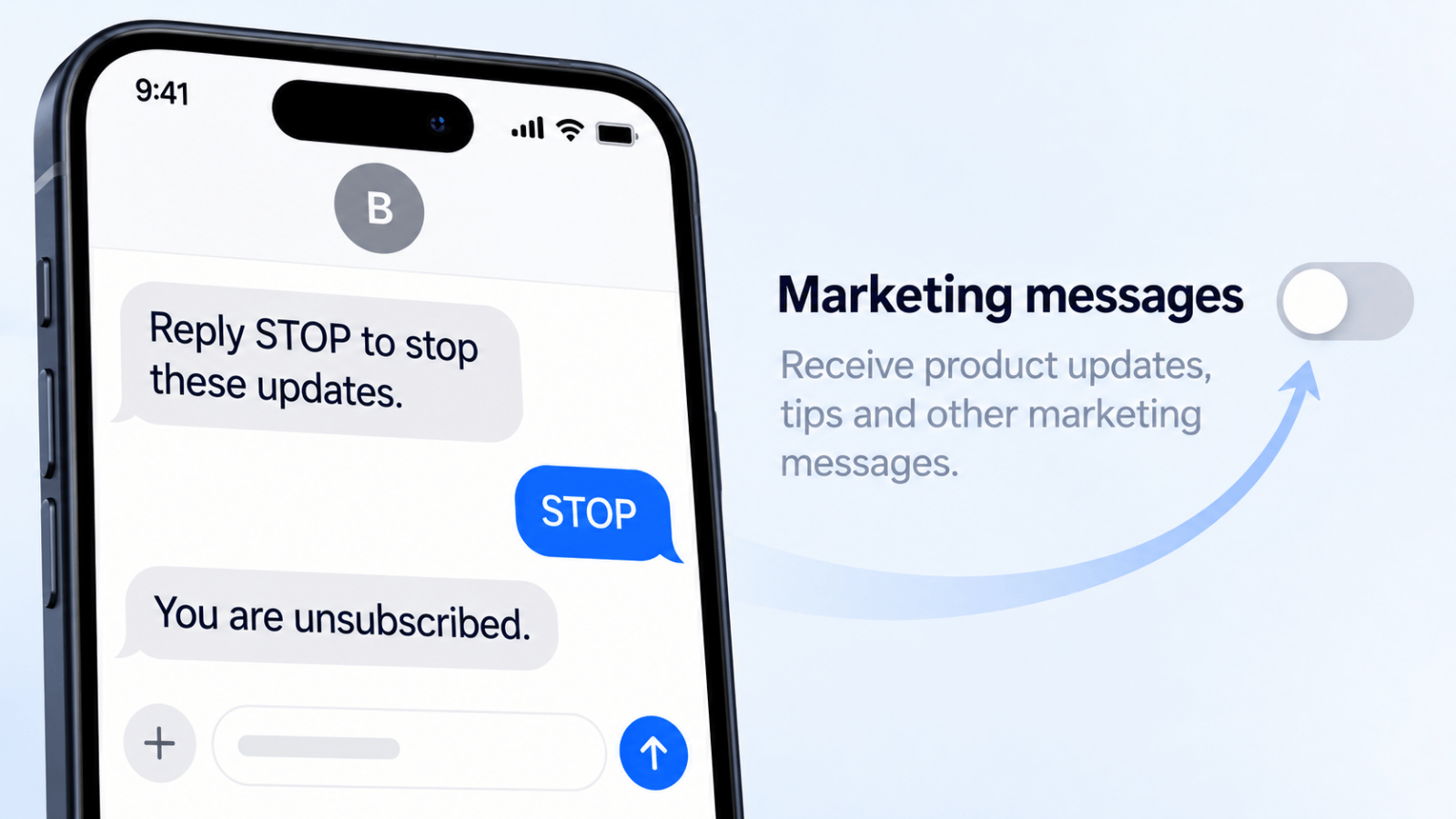
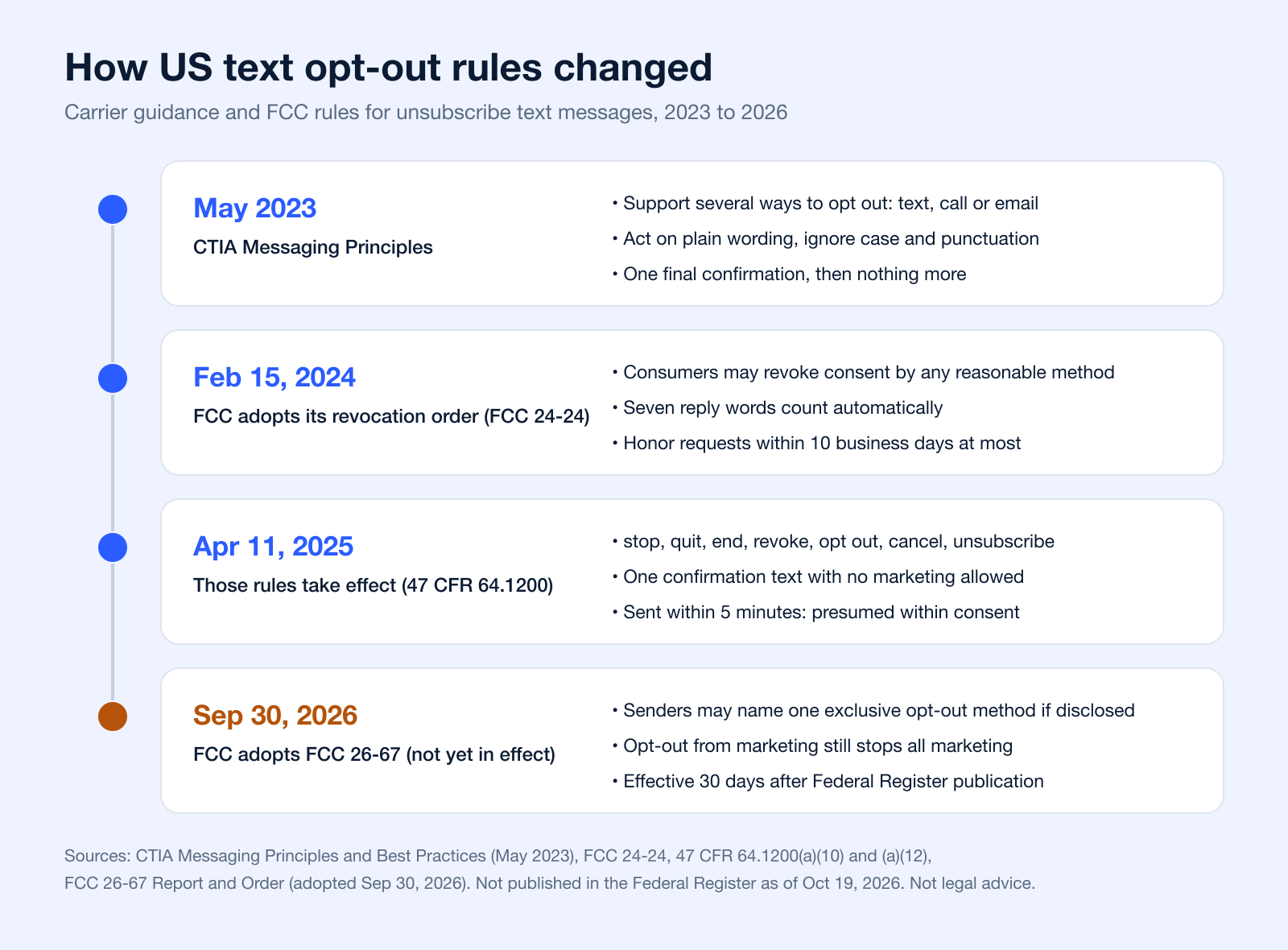
On April 11, 2025, FCC revocation-of-consent rules took effect in the U.S. (47 CFR 64.1200(a)(10)). A person can revoke consent to robocalls and autodialed texts by any reasonable method, and the sender must honor the request within a reasonable time, not more than 10 business days. Requests can arrive through text, email, phone, web forms, and other reasonable channels; a voicemail or email to the business creates a presumption that consent was revoked. A reply of STOP, QUIT, END, CANCEL, UNSUBSCRIBE, REVOKE, or OPT OUT counts automatically, and a reply in other words must be treated as a revocation "if a reasonable person would understand those words to have conveyed a request to revoke consent."
The operational shift
The FCC rule changes the question your team should ask. Instead of asking, “Did the customer text STOP?” ask, “Did this person communicate that they no longer consent to these marketing messages?”
That distinction affects intake, automation, staff training, and reporting. A support agent who receives “Please remove me from your texts” needs a reliable way to trigger suppression. An email reply saying “I don't want promotional messages anymore” shouldn't sit in a shared inbox while another campaign continues sending. A verbal request needs documentation, not dismissal because it didn't arrive through the messaging platform.
The rule also allows one confirmation text, as long as it only confirms the request and contains no marketing or promotional information. If it goes out within five minutes, it is presumed to fall within the person's prior consent; if it takes longer, the sender has to show the delay was reasonable (47 CFR 64.1200(a)(12)). That confirmation doesn't reopen the conversation, create an upsell opportunity, or justify another campaign message.
Production rule: Treat “STOP” as one detection signal, not as the definition of an opt-out.
Why carriers care
Carrier filtering responds to complaint patterns and unwanted traffic signals. A workflow that misses natural-language requests can generate continued messages after a customer has clearly objected. That creates avoidable complaints, damages trust, and can contribute to carrier limitations or blocking.
The CTIA Messaging Principles and Best Practices (May 2023, section 5.1.3) support letting consumers opt out at any time, offering multiple mechanisms (phone call, email, or text), sending one final confirmation per campaign, and sending nothing further after that confirmation. A system built around a single keyword may pass a basic demo while failing in the channels where real customers ask for help.
What changed in 2026
The rules moved again this year. These are the dated changes that matter for an unsubscribe workflow:
- February 15, 2024: the FCC adopted the revocation order (FCC 24-24) that created today's "any reasonable method" and 10 business day rules.
- April 11, 2025: most of those rules took effect. One part, which would have made a single opt-out stop every unrelated robocall and text from the same sender, was delayed by FCC waivers, most recently to January 31, 2027.
- September 30, 2026: the FCC adopted FCC 26-67 (news release). Senders may designate an exclusive opt-out method (a key press on a call, a reply with one of the seven standard words, or a website or phone number) if they disclose it clearly in each call or text; disclosing one word such as STOP is enough, but all seven still have to work. An opt-out from an informational text may be limited to that category of messages, while an opt-out from a marketing text still stops all marketing texts from that sender. The 10 business day maximum stays.
- Still open: FCC 26-67 also asks for comment on shortening the time to honor opt-outs, requiring two-way texting so replies can revoke consent, and a "revoke all" option. Its rule changes take effect 30 days after Federal Register publication, which had not happened as of October 19, 2026.
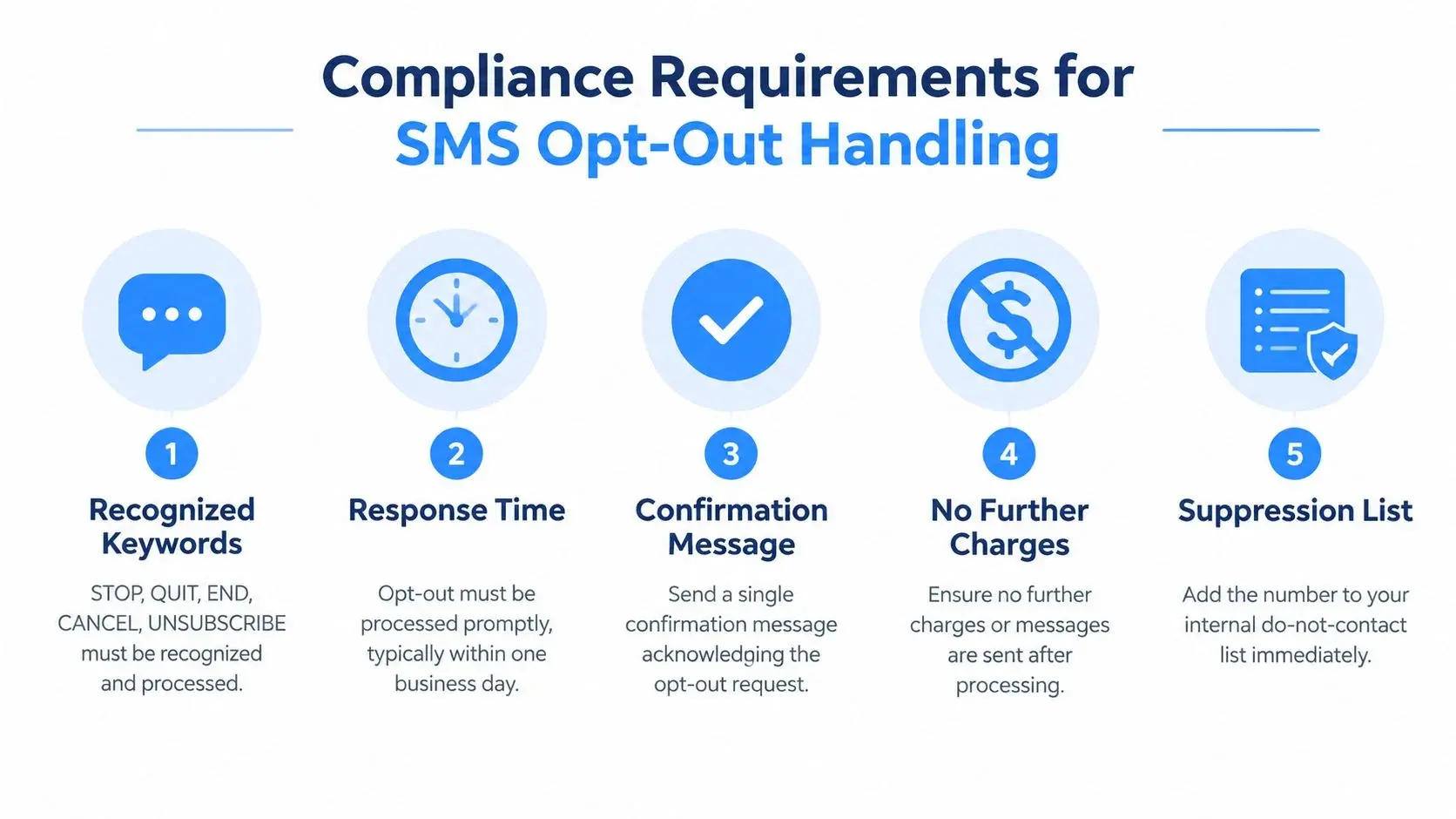
Compliance Requirements for SMS Opt-Out Handling
A dependable unsubscribe workflow has to perform several jobs in sequence. It must identify the request, stop promotional delivery, send a narrowly written confirmation when appropriate, update the central record, and prevent every connected campaign from reactivating the number.
Recognize the complete keyword set
Your inbound parser should recognize STOP, QUIT, END, CANCEL, UNSUBSCRIBE, REVOKE, and OPT OUT, the seven words the FCC rule names. It should handle capitalization differences and reasonable spacing, so “stop,” “STOP,” and “opt out” don't reach different outcomes. CTIA says the validity of an opt-out "should not be impacted by any de minimis variances" such as capitalization or punctuation, and that normal language like “please opt me out” should also be read and acted on.
Standard keywords are the easy part. Add plain-language detection for messages such as “please stop texting me” or “remove me from this list.” Route ambiguous messages to a trained reviewer, but don't design the system so that every non-keyword request waits for manual handling.
| Topic | What the rule or guidance says | Source |
|---|---|---|
| Standard reply words | stop, quit, end, revoke, opt out, cancel, unsubscribe count as a valid opt-out | 47 CFR 64.1200(a)(10) |
| Other wording | Treat it as an opt-out if a reasonable person would understand it as a request to stop | 47 CFR 64.1200(a)(10) |
| Deadline | Within a reasonable time, not more than 10 business days after receipt | 47 CFR 64.1200(a)(10) |
| Email or voicemail | A request sent to the business this way creates a presumption that consent was revoked | 47 CFR 64.1200(a)(11) |
| Confirmation text | One text that only confirms, no marketing; within five minutes is presumed fine | 47 CFR 64.1200(a)(12) |
| Numbers that cannot receive replies | Each text must say two-way texting is not available and give another way to opt out | 47 CFR 64.1200(a)(10) |
| Carrier guidance | Offer several opt-out methods, send one final confirmation per campaign, then nothing more | CTIA Messaging Principles 5.1.3 |
| Short codes | Programs should support the HELP and STOP commands | CTIA Short Code Monitoring Handbook v1.9 |
| Exclusive opt-out method | Allowed once FCC 26-67 takes effect, if disclosed in each call or text | FCC 26-67 |
Suppress first, confirm second
The safest sequence is to apply the suppression event immediately, then generate the confirmation. The FCC rule allows one confirmation text with no marketing, presumed to be within consent when it is sent within five minutes, and CTIA guidance says no further messages should follow that confirmation.
A suitable confirmation is brief and factual. It should acknowledge the request and state that the recipient won't receive further marketing texts from the relevant program. Don't add a coupon, product link, survey, or invitation to re-engage. Promotional language turns a compliance message into another marketing touch.
Two illustrative confirmations, with a placeholder brand name:
The second pattern comes from the FCC rule: when a person has agreed to several kinds of texts, the confirmation may ask whether the opt-out was meant to cover all of them, and the sender must stop every text that needs consent unless the person says otherwise (47 CFR 64.1200(a)(12)).
The Broadcast SMS compliance checklist can help teams review consent capture, sender identification, opt-out handling, and audit controls in one workflow. For property managers, the same discipline applies to apartment and resident text notifications, where residents may need to stop promotional alerts without losing clarity about service communications. The consent side of the same program is covered in this guide to opt-in text messages.
Maintain records and channel controls
Record the originating number, message or request text, timestamp, source channel, sender identity, and suppression status. Store enough information to show when the business received the request and when downstream systems stopped promotional sends.
Don't assume the network does this work for you. Some messaging providers process the standard keywords automatically: Twilio, for example, handles STOP, UNSUBSCRIBE, END, QUIT, STOPALL, REVOKE, OPTOUT, and CANCEL by default on long code numbers, and U.S. toll-free numbers always unsubscribe a person who replies STOP (Twilio docs). Short codes follow the CTIA Short Code Monitoring Handbook, which expects HELP and STOP support. Even when a provider blocks the number, your own records and other channels still need the update. Regardless of sender type, identify the business clearly in recurring messages and keep consent records connected to the contact record.
Use this audit checklist:
- Test every standard keyword: Confirm each keyword triggers the same suppression path.
- Test natural language: Submit a clear request that doesn't contain a standard keyword.
- Inspect the confirmation: Verify that only one non-promotional response is sent.
- Check every campaign: Confirm the number disappears from SMS, email, voice, and automation audiences.
- Review delivery logs: Make sure queued messages don't send after suppression.
- Preserve the event: Confirm the request, timestamp, channel, and action remain available for review.
The 10-business-day rule is a maximum processing window, not a target for your automation. In a high-volume program, immediate suppression is the practical standard because queued sends, vendor delays, and list exports can otherwise create messages after the request. The FCC has also asked for comment on shortening that window (FCC 26-67), so an automated, immediate process is the safer design.
Understanding Opt-Out Rates and What Drives Them
Opt-out rates tell you more than whether a campaign underperformed. They reveal whether subscribers understand the value of the program, whether your team sends too often, and whether timing fits the audience.
A 2021 cohort study of 428,242 adults at Kaiser Permanente Colorado, published in JAMA Network Open, found that 8,929 people, 2.5% of members receiving automated text messages, opted out of at least one text message program. Those were health system messages, not marketing, but the result shows that unsubscribe behavior can be measured across a large population and can materially reduce reachable contacts, even when the percentage looks modest in isolation. The study is available through the published cohort research.
Use benchmarks as warning signals
A practical operating threshold is to keep opt-out rates below 2%. Klaviyo's campaign benchmarks (page updated October 28, 2025) rate less than 0.5% as great, 0.6% to 1.4% as good, 1.5% to 1.9% as room for improvement, and 2.0% or higher as critical, and note that higher-than-average unsubscribe rates "may result in message limitations or blocking by the wireless carriers," according to Klaviyo's SMS opt-out benchmark guidance.
| Opt-Out Rate Range | Performance Level | Recommended Action | Source |
|---|---|---|---|
| Less than 0.5% | Great | Keep the cadence and content that earned it, while reviewing campaign-level variation. | Klaviyo |
| 0.6% to 1.4% | Good | Maintain the program, while reviewing campaign-level variation. | Klaviyo |
| 1.5% to 1.9% | Room for improvement (still below 2%) | Monitor every send and investigate unusual movement. | Klaviyo |
| 2.0% or higher | Critical | Pause the affected pattern, inspect cadence and content, and check for carrier impact. | Klaviyo |
Don't average away the problem. A healthy monthly result can hide one campaign with a sharp spike. Break reporting down by audience, message type, send time, acquisition source, and campaign owner. The useful question isn't merely whether the list is shrinking. It's which behavior caused people to leave.
Frequency and timing change the outcome
Independent 2024 research found that 56% of U.S. consumers would unsubscribe after receiving four or more texts or emails from the same company in 30 days. That finding, from GetApp's 2024 Advertising Preferences Survey (496 U.S. respondents, reported October 7, 2024 in GetApp's consumer unsubscribe research), points to cadence as a direct retention factor. A subscriber may like your offer and still leave because the program consumes too much attention.
Timing creates another risk. Figures about evening sends driving the highest unsubscribe rates circulate widely, but no primary source could be traced for them, so they don't justify a universal send-time rule. They do justify testing time-of-day by audience and treating evening outreach as a specific risk pattern rather than an assumption. For marketing texts, federal rules already bar telephone solicitations before 8 a.m. or after 9 p.m. at the recipient's location (47 CFR 64.1200(c)(1)), and this guide to send-time optimization covers how to test timing.
Reduce unnecessary sends before rewriting the opt-out copy. Segment audiences, suppress people who have already converted, coordinate promotional and reminder campaigns, and reserve urgent timing for messages that genuinely need it. A clear STOP instruction protects the customer's exit. Better cadence reduces the number of customers who feel forced to use it.
Automating Your Unsubscribe Workflow and Suppression Lists
Manual processing fails at exactly the wrong moment, usually after a campaign has already entered a queue or a customer service request has been routed to the wrong team. Automation should make the suppression event faster than the next outbound send.
Build the event path
Start with one canonical opt-out event in your customer data model. Every channel should write to that event, whether the request arrives by SMS, email, phone, web form, chatbot, or an employee's note.
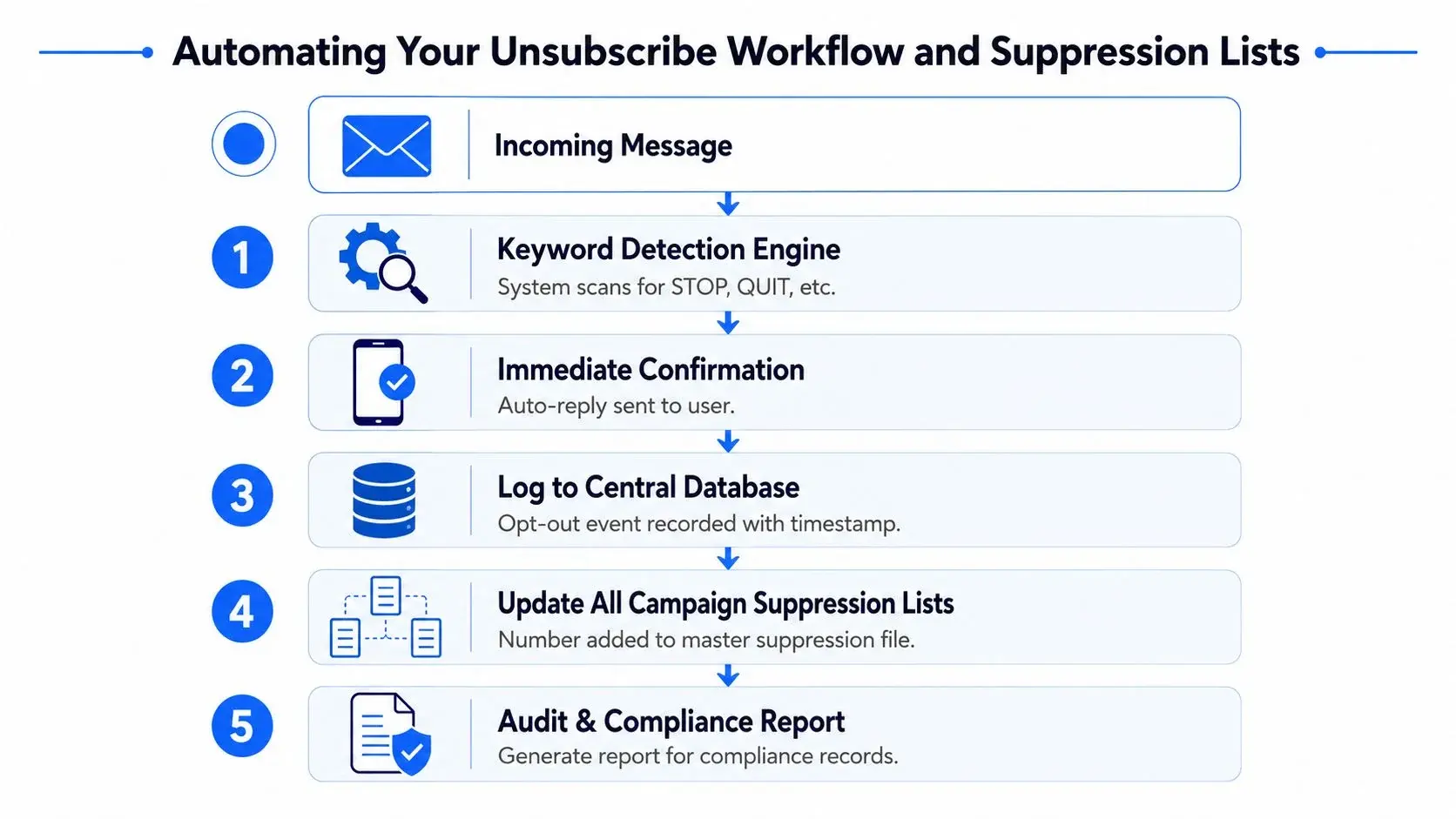
A production workflow should follow this path:
- Capture the incoming request. Store the phone number, sender ID, channel, message body, and timestamp.
- Normalize the input. Handle capitalization, spacing, punctuation, and common keyword variations.
- Classify intent. Match standard keywords and clear natural-language requests. Send uncertain cases to a review queue.
- Write the suppression event. Update the central contact record before any confirmation is attempted.
- Propagate the status. Push the suppression to SMS audiences, CRM segments, email lists, voice dialers, ringless voicemail queues, and vendor exports.
- Send one confirmation when allowed. Keep it non-promotional and ensure it's the final related text.
- Log the result. Record whether suppression succeeded, whether the confirmation was attempted, and whether delivery failed.
Connect systems instead of exporting lists
A daily spreadsheet export is too slow for a busy program and too easy to overwrite. Use webhooks or API calls to publish the suppression event to the systems that can send on the contact's behalf. If a platform can't receive real-time updates, create a controlled fallback that blocks the number at send time against the master suppression file.
A contact can belong to several segments, workflows, and vendor accounts. Your send logic must check suppression immediately before dispatch, not only when the campaign audience is first created. That second check catches numbers opted out after scheduling.
A tool such as an autoresponder for text messages can support automated replies, but the reply is only one part of the design. The suppression database and send-time enforcement determine whether the workflow stops future outreach.
Test failure paths deliberately
Test lowercase, mixed-case, misspelled-but-clear requests, multi-word phrases, and messages that include extra text. Then test an email or phone request and follow the event through every connected system.
Audit test: Schedule a message, trigger an opt-out, and verify that the scheduled send is blocked. A system that only removes the contact from the next campaign hasn't been tested far enough.
Test confirmation delivery failures separately. The customer's suppression should remain active even if the confirmation can't be delivered. Finally, review logs for duplicate confirmations, delayed timestamps, and vendor systems that continue to accept suppressed recipients.
Extending Opt-Out Compliance to Ringless Voicemail and Voice Campaigns
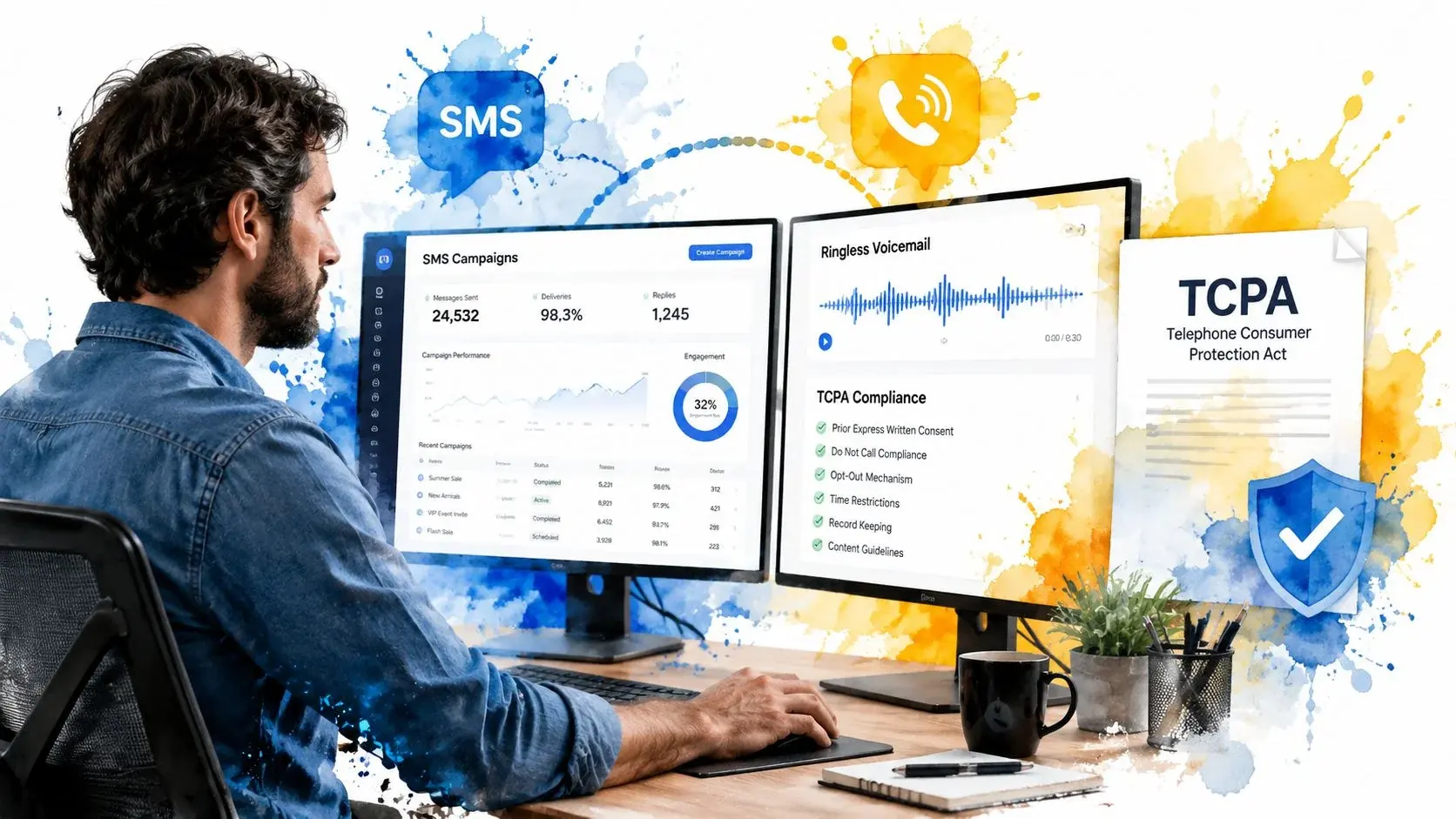
SMS, voice broadcasting, and ringless voicemail often sit in different tools, but customers experience them as one brand. If someone revokes consent through a text message and then receives a voicemail drop from the same business, the internal system has failed even if each channel has its own local opt-out feature.
The FCC has treated ringless voicemail to wireless phones as covered by the TCPA because it's considered a call made using an artificial or prerecorded voice. The FCC ruling on ringless voicemail (FCC 22-85, adopted November 14, 2022) ties delivery to consent requirements, so marketers shouldn't treat ringless voicemail as an unregulated workaround for SMS consent or suppression. The same opt-out rules apply to those calls; see this ringless voicemail compliance guide for the details.
Use one consent decision
A centralized consent record should answer three operational questions:
- Who revoked consent: Match the number to the correct customer record, including duplicate records and shared contact details.
- What must stop: Apply the event to SMS, voice broadcasts, ringless voicemail, and related promotional email workflows where the request covers the broader brand relationship.
- Which systems need the update: Push the status to internal platforms, agencies, lead providers, dialers, and scheduled campaign queues.
The exact scope can depend on the request and the communication relationship, so train reviewers to distinguish a request about one alert type from a clear request to stop the brand's marketing outreach. If the language is broad, don't narrow it artificially because a campaign database is organized by channel.
A unified suppression layer also improves operational clarity. Teams can see the original request, the channel that captured it, the systems updated, and any failed downstream synchronization. That record is more useful than separate “SMS unsubscribed” and “voice unsubscribed” flags that disagree.
For practical planning around this adjacent channel, ringless voicemail marketing should be evaluated alongside SMS rather than as a separate compliance project. Consent, sender identity, suppression, and campaign timing belong in the same outbound governance model.
Handling Edge Cases and Real-World Scenarios
A customer texts “stop” in lowercase, then sends “StOp” in a follow-up. Both should enter the same keyword path. Normalize case before matching, and strip harmless punctuation so the parser doesn't depend on how neatly someone types.
A clearer test is “Please stop texting me about promotions.” That message may not equal a standard keyword, but the intent is unambiguous. Suppress the marketing audience, log the original text, and avoid asking the customer to repeat the request using STOP.
Email and phone requests need the same treatment. The employee who receives the request should update the central record or submit it to a queue with an owner and timestamp. Don't rely on a note that lives only in a support ticket.
Short codes and toll-free numbers can have different carrier-level handling, so test each sender type independently. On U.S. toll-free numbers, for example, a STOP reply is blocked at the network level, and only START or UNSTOP fully undoes that block (Twilio docs). If the confirmation fails to deliver, keep suppression active and record the delivery failure. Never retry the confirmation as a promotional message.
A customer who later wants to re-subscribe should provide fresh consent through your approved opt-in path. Don't assume that a message such as “I changed my mind” automatically restores marketing permission. Also distinguish a request to stop one campaign from a broad request to stop the brand, then document the interpretation so another team doesn't reverse it accidentally.
Broadcast provides automated SMS, voice broadcasting, ringless voicemail, suppression management, scheduling, and integrations that help teams coordinate outbound communication across channels. Review your current keyword, natural-language, confirmation, and suppression tests, then visit Broadcast to evaluate how its tools fit your unsubscribe and consent workflow.
Unsubscribe Text Message FAQ
How do I unsubscribe from text messages?
Reply STOP to the business that sent the text; quit, end, revoke, opt out, cancel, and unsubscribe work too. The FCC's consumer guide says you may opt out of any robocall or robotext "at any time and in any reasonable manner" (FCC). For texts from unknown or suspicious numbers, the FCC advises not replying and forwarding the message to 7726 (SPAM) instead; these spam message examples show what to look for.
How long does a business have to stop texting after STOP?
No more than 10 business days from receipt under 47 CFR 64.1200(a)(10). Well-run programs suppress the number immediately, because scheduled campaigns can otherwise still go out.
Can a business text me after I reply STOP?
It may send one confirmation text that only confirms the opt-out and contains no marketing (47 CFR 64.1200(a)(12)). CTIA guidance says nothing more should follow that confirmation.
Does STOP have to be in capital letters?
No. CTIA says capitalization, punctuation, and other small variances should not affect whether an opt-out is valid, and the FCC rule covers other wording a reasonable person would read as a request to stop.
Does replying STOP unsubscribe me from every text from that company?
For marketing texts, yes: an opt-out from a marketing text covers all future marketing texts from that sender. For informational texts such as reminders or alerts, FCC 26-67 lets senders treat the opt-out as covering only that category once it takes effect. If you have agreed to several kinds of texts, the confirmation may ask you which ones to keep. This overview of TCPA compliance explains the wider rules.
Do I need "Reply STOP to opt out" in every text?
CTIA guidance says senders should state in the message how to opt out and use standardized STOP wording. Under FCC 26-67, a sender that makes reply words its only opt-out method must disclose that in each text; naming one word such as STOP is enough, as long as all seven standard words work.
How does someone resubscribe after texting STOP?
Collect fresh consent through your normal opt-in path rather than assuming a later message restores permission. On U.S. toll-free numbers, the person also has to reply START or UNSTOP to lift the network block (Twilio docs).