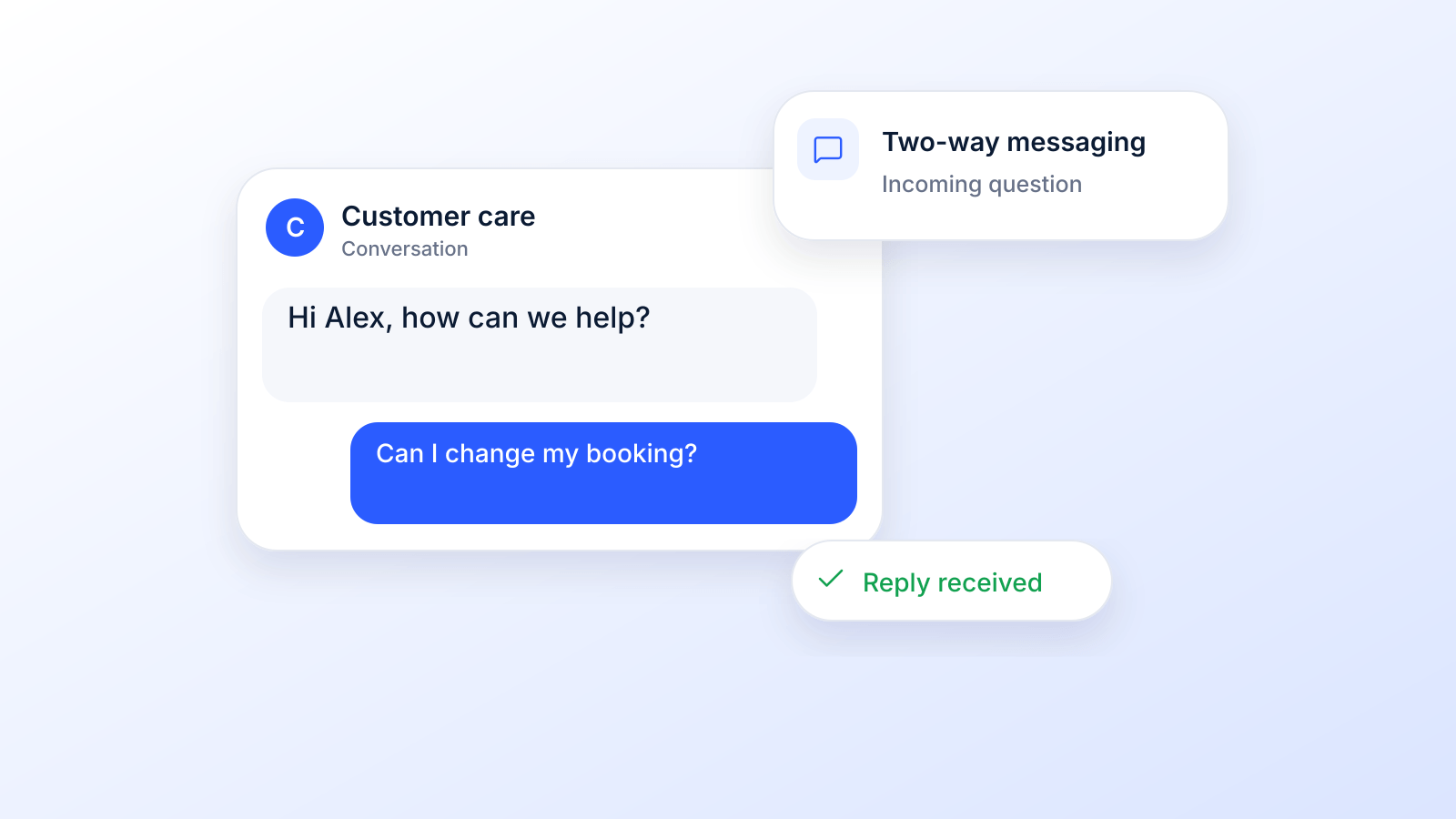
Let's be honest, SMS 2 way communication is just a fancy term for a text message conversation. It’s when a business and a customer can text back and forth, just like you would with a friend. This is a world away from those one-way alerts that just blast information at you. It’s a real dialogue.
What Is SMS 2 Way Communication and Why Does It Matter?
Think of it this way: a company using a megaphone to shout announcements at a crowd is using one-way SMS. It gets the word out, sure, but it’s completely impersonal. There's no room for a conversation.
Now, imagine that same company representative stepping down into the crowd to chat with people one-on-one. That's the magic of SMS 2 way communication. It turns a monologue into a genuine, engaging conversation.
This isn't just a minor feature update; it's a total shift in how you can connect with your audience. Instead of just getting a notification, your customers can now reply with questions, confirm their appointments, leave feedback, or even buy something right there in the text thread.
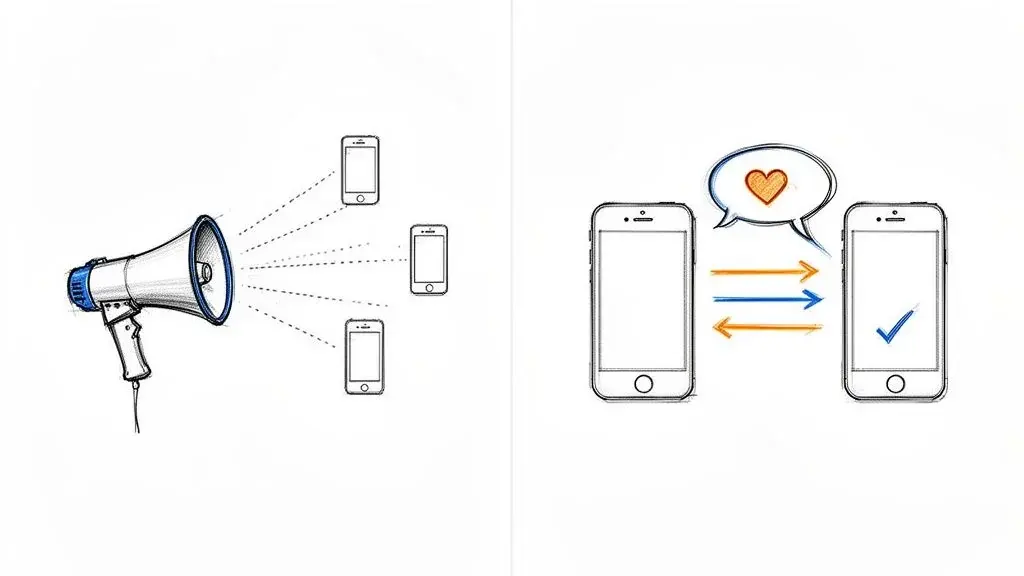
From Information Blasts to Real Conversations
Traditional one-way texting has its place. It’s great for quick alerts, like a flash sale announcement or a mass weather update. The problem is, it leaves the customer hanging with no easy way to respond. If they have a question, they have to hunt down another way to contact you, which just adds friction to their experience.
Two-way SMS knocks down that wall. It opens a direct line for instant back-and-forth, making every interaction feel more personal and human. This conversational style is exactly what people have come to expect: they want convenience and answers now, not later.
To help you see the difference clearly, here’s a quick breakdown:
One-Way Broadcast vs SMS 2 Way Conversation
| Feature | One-Way SMS (Broadcast) | SMS 2 Way (Conversational) |
|---|---|---|
| Communication Style | Monologue (Business to Customer) | Dialogue (Business ↔ Customer) |
| Primary Goal | Mass information delivery, alerts | Engagement, support, sales, feedback |
| Interaction Level | Low to none | High, interactive |
| Customer Experience | Impersonal, passive | Personal, engaging |
| Common Use Cases | Sale alerts, emergency notices, reminders | Appointment scheduling, customer service, surveys |
| Business Impact | Broad reach, little feedback | Answers, confirmations and feedback in the same thread |
| Sender you need | Any business sender, including alphanumeric IDs where they are allowed | A number that accepts replies: 10DLC, toll-free or short code (AWS) |
As you can see, moving from a broadcast model to a conversational one completely changes the dynamic, turning a simple notification tool into a powerful relationship-building channel.
The Growing Demand for Conversational Commerce
People are tired of being passive targets for marketing messages. They want to interact, ask questions, and get help on their own terms. That shift is what's behind the growth of conversational commerce: buying, booking and getting support inside a chat thread.
Text is already where people talk: Americans exchanged nearly 2.2 trillion SMS and MMS messages in 2024 (CTIA 2025 Annual Survey). In healthcare, a 2025 survey of 1,000 US patients by the messaging vendor Sinch found that 68% want two-way texting with their providers (Sinch). That is a clear signal of what customers want.
A two-way SMS system turns a customer's phone into a direct portal for support, sales, and feedback. It’s not just about sending messages; it's about building relationships, one text at a time.
The Broader Communication Ecosystem
But two-way SMS doesn't have to work in a silo. The real power comes when you integrate it with other channels. For example, you could send a ringless voicemail with a detailed offer, then immediately follow up with a text asking, "Any questions about the offer I just left you?" It delivers a detailed message without ringing the phone, followed by a convenient way to respond. One rule to know: since 2022 the FCC treats a ringless voicemail to a cell phone as a call that needs the recipient's consent (FCC).
This multi-channel approach makes sure your messages are not only received but also acted upon. By combining tools like SMS 2 way, voice broadcasting, and ringless voicemail, you can create a seamless communication strategy that meets customers where they are and drives incredible results.
How Two-Way SMS Works (and Which Numbers Can Receive Replies)
Under the hood, a two-way text is simple. You send from a business number; the customer replies like they would to anyone; the carriers route that reply back to the same number; and your messaging provider hands it to your software. With AWS, an incoming message is passed to a notification topic or a contact center for processing (AWS End User Messaging); with Twilio, your server receives a webhook and decides what to send back (Twilio docs). A messaging platform wraps this in an inbox, keyword auto-replies and opt-out handling.
The part that trips businesses up is the sender. Not every sender can receive a reply, and each one has its own approval step in the US:
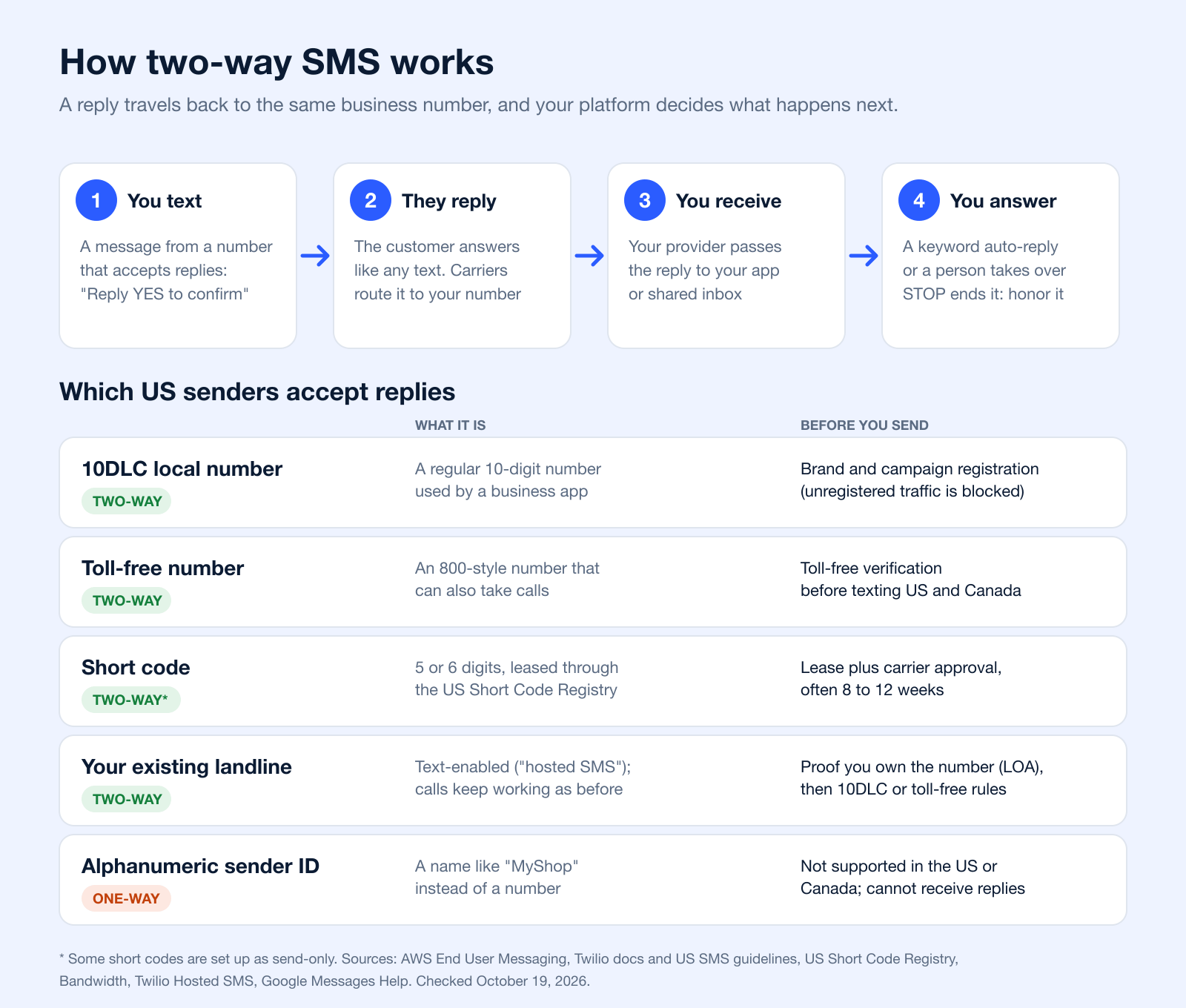
| Sender type | Can customers reply? | What you need first | Source |
|---|---|---|---|
| 10DLC (local 10-digit number) | Yes | Brand and campaign registration through The Campaign Registry; unregistered traffic has been blocked since February 1, 2025 | Twilio, Bandwidth |
| Toll-free number | Yes | Toll-free verification before sending to the US and Canada | Twilio |
| Short code (5 or 6 digits) | Yes, unless the program is set up as send-only | A lease from the US Short Code Registry ($500 a month random, $1,000 a month selected) plus carrier approval | US Short Code Registry, Google Messages Help |
| Your existing landline or VoIP number | Yes, once text-enabled | A signed letter of authorization proving you control the number; voice keeps working | Twilio Hosted SMS |
| Alphanumeric sender ID (a name) | No | Not supported by US or Canadian operators | Twilio US guidelines, AWS |
Two practical details: replies are not guaranteed to arrive in the order they were sent, so good software sorts them by timestamp (AWS), and a short code starts at about 100 messages per second on Twilio, more than a single long code (Twilio). For the full comparison, see our guide to short codes for SMS, and if you were hoping to text as your company name, read why the US does not allow alphanumeric senders.
Why Two-Way Texting Drives Such Insane Engagement
Sending an email can feel like dropping a note in a bottle into the ocean. You hope someone finds it, but you have no idea if they ever will. Sending a two-way text? That’s like tapping someone on the shoulder. It's immediate, personal, and you almost always get a reaction.
This is the fundamental difference that makes two-way SMS a powerhouse for engagement, not just another marketing channel. The numbers don't lie, and they show a massive performance gap that directly impacts your bottom line.
The Raw Power of SMS Performance
Texts get noticed. They land on the lock screen, next to messages from friends and family, instead of in a crowded inbox. And text is the channel Americans use at scale: nearly 2.2 trillion SMS and MMS messages in 2024 (CTIA). Emails, on the other hand, can sit unread in a cluttered inbox for hours, if they get opened at all.
That visibility is what makes replies likely. For any business that wants to actually talk with its customers, a channel people check constantly beats one they check once a day. The best way to know your own reply rate is to measure it: count replies per message sent on your own campaigns, since reply rates vary widely by audience and offer.
Two-way SMS is, by its very nature, a conversation starter. It’s not a one-way broadcast, and that simple fact is the secret sauce behind its wild engagement rates.
The Psychology: Why We Can't Ignore a Text
So what makes texting so darn effective? It really just comes down to human nature and how attached we are to our phones.
- Instant Gratification: That little buzz and push notification create a sense of urgency. We're wired to check our messages the second they come in, making SMS the quickest way to get someone's attention.
- A Personal Vibe: Texting just feels like a one-on-one chat. It's casual and direct, unlike a stuffy, formal email. That helps you build a much stronger and more genuine connection with people.
- Simple and Effortless: Replying to a text is easy. There's no login, no subject line, no formal signature. This completely frictionless experience makes people far more likely to respond right away.
This mix of instant access and a personal feel is what turns a simple message into a powerful tool for connection.
Turning All That Engagement into Real-World Results
High open and response rates are great vanity metrics, but what really matters is whether they lead to actual business results. This is where two-way SMS really delivers, turning simple conversations into conversions and customer action.
When you actively encourage people to reply, you can get results that are impossible with one-way blasts. A simple "Reply YES to confirm" text gives you a confirmed list for tomorrow and an early warning about who might not show up, so you can fill the gap. A quick follow-up message after a sale can solve a customer's problem in minutes, before it turns into a bad review.
You can even take it a step further by pairing two-way SMS with ringless voicemail. Imagine this: you drop a detailed update via a ringless voicemail, then immediately follow up with a text asking, "Any questions about the voicemail I just sent?" This combo grabs attention without ringing the phone and opens the door for an easy conversation. As with texts, get consent first (FCC).
Practical Use Cases Across Industries
Knowing what sms 2 way communication can do is one thing, but seeing it in action is where the magic really happens. The true value pops up when you move past the theory and see how a simple text exchange can solve a tricky problem, lock in a sale, or even improve a patient's health.
The best part about two-way messaging is how flexible it is. This isn't some high-tech tool just for giant corporations. It's a direct, effective channel that works just as well for small businesses, local healthcare clinics, and service providers. Let's dig into some real-world examples of how this tech gets results.
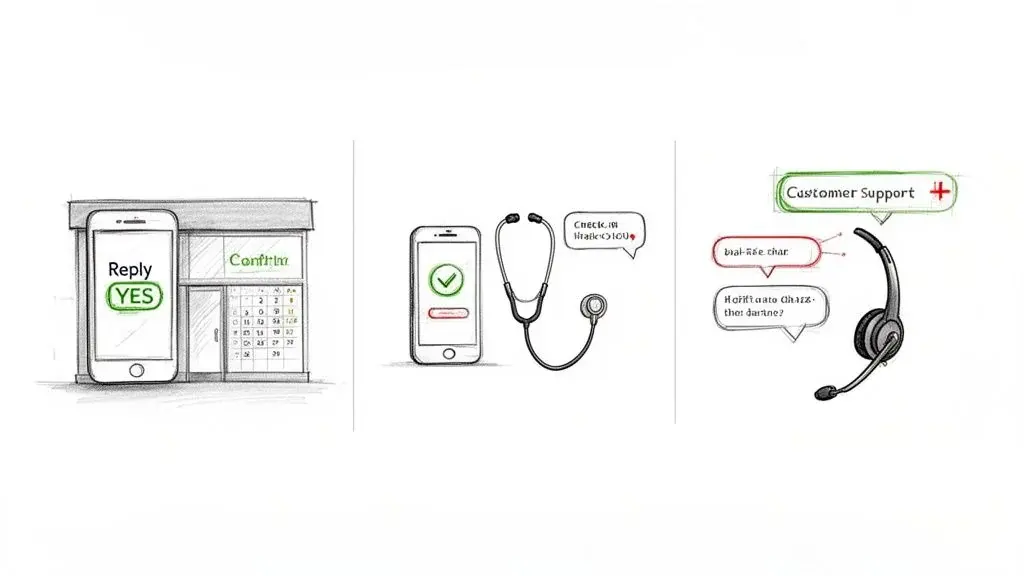
Driving Growth for Small and Mid-Sized Businesses
For a small business, every single customer interaction matters. Two-way SMS opens up a conversation that feels personal and immediate, helping you build real connections and streamline how you operate.
One of the biggest wins is with interactive appointment reminders. Sending a quick text can massively cut down on costly no-shows, which is a huge headache for service-based businesses like salons, mechanics, and consultants.
Example: Appointment Confirmation Flow
- Automated SMS: Hi [First Name], just a friendly reminder about your appointment with [Business Name] tomorrow at 2:00 PM. Please reply YES to confirm or RESCHEDULE to change.
- Customer Response: YES
- Automated Reply: Great, we've confirmed your appointment and look forward to seeing you!
That simple back-and-forth confirms the booking and opens a line for more questions if they have them, all without anyone needing to pick up the phone.
Beyond just reminders, sms 2 way completely changes the game for customer service. A customer can text a quick question about their order and get a helpful response in moments. That kind of real-time support stops frustration in its tracks and builds loyalty that lasts.
Here are a few other powerful ways SMBs can use it:
- Lead Qualification: Automate the first few questions you ask new leads. A real estate agent could text, "Thanks for your interest in 123 Main St! Are you looking for a 2 or 3 bedroom home?" This helps segment prospects right away.
- Feedback Collection: A day after a purchase, send a text asking for a quick rating. "How was your experience with us today? Reply with a number from 1-5."
- Promotional Conversations: Don't just send a dead-end blast. Invite people to reply. "Our flash sale ends tonight! Reply SAVE to get a special 25% off code."
Enhancing Patient Care in Healthcare
In healthcare, communication has to be timely, secure, and crystal clear. Two-way SMS can make the patient experience better while taking administrative load off clinic staff. On privacy, HHS allows providers to message patients electronically if they apply reasonable safeguards, such as limiting what the message says (HHS FAQ 570), and a texting vendor that handles patient information needs a business associate agreement (HHS). Texting itself is not "HIPAA compliant"; how you set it up is.
Post-procedure follow-ups are a perfect fit. A quick, automated text can check in on a patient's recovery, helping you catch potential problems early and showing them you genuinely care.
Example: Post-Procedure Check-In
- Automated SMS: Hi [Patient Name], this is Dr. Smith's office checking in after your procedure yesterday. Are you experiencing any unusual pain? Please reply YES or NO.
- Patient Response: YES
- Automated Alert & Reply: An internal alert goes straight to a nurse, while the patient gets an instant text back: Thank you for letting us know. A member of our clinical team will call you within the next 15 minutes to discuss this.
This proactive approach makes patients feel safer and gives them peace of mind.
By opening a direct line for patients to ask questions or report symptoms, healthcare providers can improve outcomes and build stronger, trust-based relationships. This turns communication from a simple reminder tool into a vital part of the care plan.
Here's how healthcare providers can put sms 2 way communication to work:
- Pre-Visit Instructions: Send crucial info right to the patient's phone. "Remember not to eat or drink after midnight before your appointment tomorrow. Reply with any questions."
- Medication Reminders: Help patients stick to their treatment plans with automated daily or weekly texts.
- Scheduling and Rescheduling: Let patients easily book or change appointments over text, which frees up your phone lines for more urgent calls.
Combining SMS with Ringless Voicemail
If you really want to make your outreach effective, you can layer two-way SMS with other channels like ringless voicemail. This lets you drop a more detailed message right into someone's voicemail without their phone ever ringing, which gives context without interrupting. Ringless voicemail needs the same consent as a prerecorded call (FCC), so only use it with people who agreed to hear from you.
Think about a dental clinic needing to remind patients to use their annual insurance benefits before they run out.
Example: Integrated Campaign Flow
- Ringless Voicemail Drop: A pre-recorded message is sent to patients: "Hi, this is a friendly reminder from City Dental. Your insurance benefits for the year are about to expire. We still have a few openings for cleanings. Give us a call or, even easier, just reply to the text message we're sending you right now."
- Immediate SMS Follow-Up: A text lands right after the voicemail: "Want to book one of the last spots to use your benefits? Just reply BOOK and we'll help you find a time."
This combination grabs attention on two fronts. It provides helpful context with voice and then offers a super simple way to take action via text. It’s a powerful approach for any business looking to drive a specific action without being disruptive.
How to Implement Your Two Way SMS Strategy
Jumping into an interactive, conversational approach with sms 2 way messaging is a lot easier than you might think. It's not about ripping out your whole communication plan and starting from scratch. Instead, think of it as laying a solid foundation and then adding some smart automation to handle the back-and-forth.
Let's walk through the key steps to get your first two-way SMS campaign off the ground, from picking the right phone number to creating automated conversations that actually connect with your audience. Getting this right from day one ensures your strategy is effective and, just as importantly, compliant.
Start with the Right Foundation
Before you can have a conversation, you need two things: a phone number and permission to text. These first steps are absolutely non-negotiable. They set the stage for everything else, protecting your business and building trust with your contacts from the get-go.
First up, you've got to pick a phone number. There are three main options, and each one serves a different purpose:
- 10DLC (10-Digit Long Code): The standard choice for business texting from a local number in the U.S. It looks just like a normal phone number, but before you send from a business app you must register your brand and campaign (Twilio). See our 10DLC compliance guide.
- Toll-Free Numbers: 800-style numbers that work well for customer support lines and national programs, and they can take voice calls too. They must pass toll-free verification before texting US and Canadian phones (Twilio).
- Short Codes: The memorable 5 or 6-digit numbers you see in big marketing campaigns (like "Text DEALS to 12345"). They are leased through the US Short Code Registry and need carrier approval, and they offer the highest throughput (Twilio lists 100 messages per second, Twilio).
Once you've got your number, the next critical step is getting opt-in consent. Carrier guidelines expect consent for every business text and express written consent for promotional ones (CTIA Messaging Principles), and federal rules require prior express written consent for many marketing texts (47 CFR 64.1200). In practice, people knowingly agree to get your texts, usually by texting a keyword to your number or ticking an unchecked box on a web form. More in our guide to express written consent.
Build Your Automated Conversations
With the groundwork laid, you can start building the automated workflows that are the engine of your sms 2 way strategy. This is where you transform a simple text line into a powerful tool that can qualify leads, confirm appointments, and answer common questions 24/7.
The heart of this automation is the keyword trigger. A keyword is just a specific word or phrase that, when someone texts it to your number, kicks off a pre-built sequence of actions or replies.
Think of a keyword as a conversational shortcut. It tells your system exactly what the person wants, letting you fire back an instant, relevant response without lifting a finger.
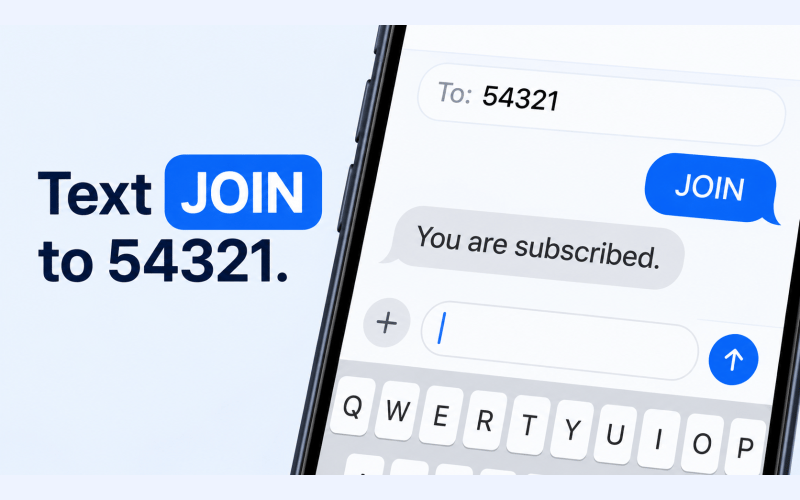
For instance, a real estate agent could tell prospects to "Text HOME to 12345" to get new property listings. That keyword instantly triggers an autoresponder that gets the ball rolling. From there, you can design a whole automated flow to gather more info. To go deeper on this, check out our guide on how to set up an auto SMS reply for more detailed examples and strategies.
Personalize and Segment for Better Engagement
Automation handles the first touch, but personalization is what makes it feel human. Using merge tags, like [FirstName] or [AppointmentTime], lets you pull customer data right into your messages. It's a small detail that turns a generic blast into a personal note.
Segmentation takes this a step further. By grouping your contacts based on their interests, what they've bought, or how they signed up, you can send laser-focused messages. A customer who texted "DEALS" wants to hear about promotions, while someone who texted "SUPPORT" needs help. Sending the right message to the right group makes a massive difference in engagement and keeps people from opting out. This targeted approach is the secret sauce to a successful two way SMS system.
Integrating SMS with Ringless Voicemail and Voice
While two-way SMS is a powerhouse on its own, its impact really shines when you pair it with other channels. Think of it like a band: the lead singer is great, but the sound is so much richer with a full ensemble. By layering interactive texting with tools like voice broadcasting and ringless voicemail, you create a deeper, more effective way to reach people without being annoying.
Picture this all-too-common scenario: a lead shows interest, you have a good chat, and then... crickets. Instead of chasing them with repeated phone calls, you could start with a gentle nudge: a ringless voicemail. It lands your message right in their voicemail inbox, letting them listen whenever they have a free moment. No pressure.
The Power of a Layered Approach
Immediately after that voicemail drops, an automated SMS can pop up on their screen. Something simple like, "Hi [FirstName], just left you a quick voicemail with more details. Any questions I can answer for you right here via text?"
This one-two punch is incredibly effective for a few reasons:
- It Reinforces the Message: Hearing your voice and then seeing your name in a text makes your message much harder to ignore and easier to remember.
- It Offers Convenience: You're giving them options. They can call you back, shoot you a quick text, or do nothing at all. It respects their time and preferences.
- It Boosts Engagement: That follow-up text is a super low-friction way to get a conversation going, turning someone who was just passively listening into an active participant.
To really get the most out of your SMS efforts, think about an integrated marketing approach where all your channels work together. This creates a smooth, cohesive experience that guides the customer from one touchpoint to the next.
What Is Ringless Voicemail?
So, what exactly is ringless voicemail? It’s a technology that lets you drop a pre-recorded audio message directly into someone's voicemail box without their phone ever ringing. It's subtle and works well for follow-ups or nurturing leads who aren't ready to buy. It is not a loophole, though: the FCC ruled in 2022 that ringless voicemail to cell phones is covered by the robocall rules and needs consent (FCC).
This simple three-step process gives you a bird's-eye view of how to get your basic SMS strategy off the ground.
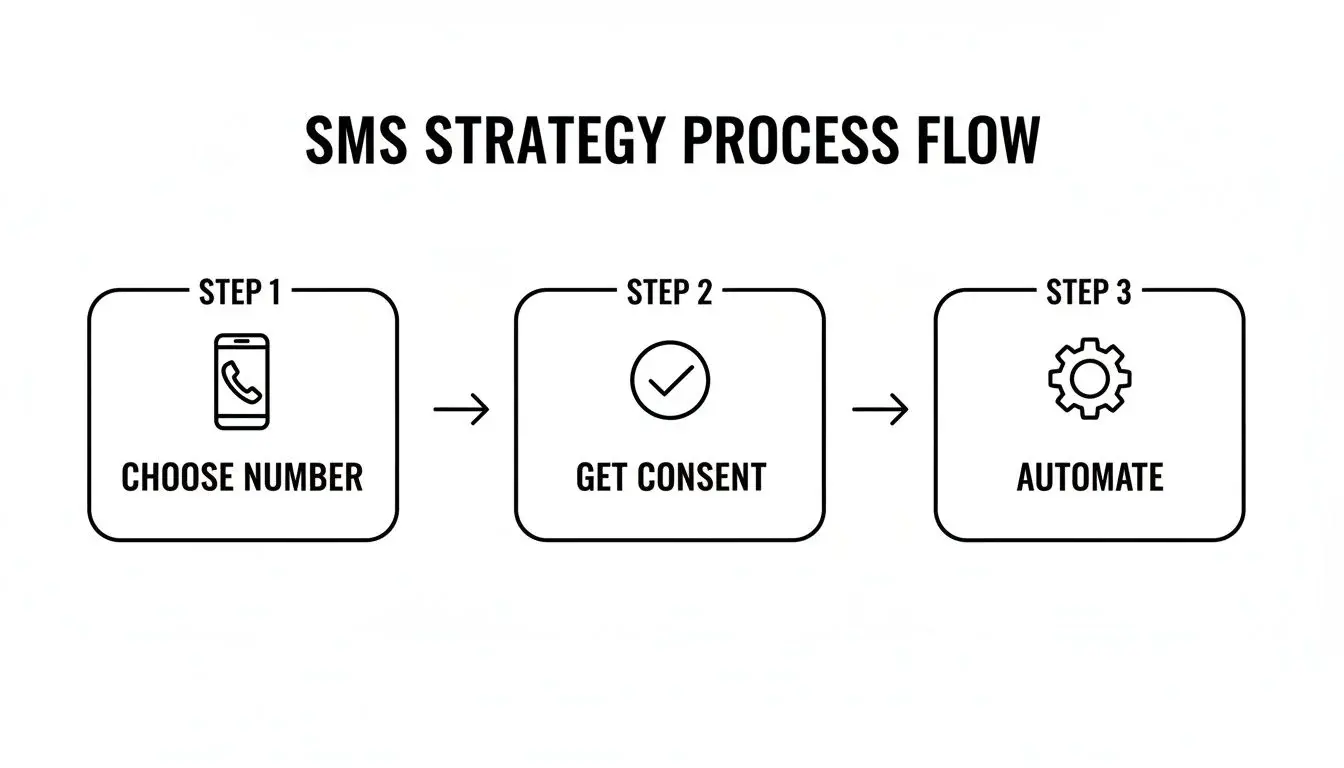
This visual breaks down the fundamentals: picking a number, getting consent, and setting up automation. These are the essential building blocks you need before you can start layering in other channels. By combining these core SMS principles with a tool like ringless voicemail, you can build out some seriously sophisticated and respectful communication flows.
By combining a personal, detailed message via ringless voicemail with the immediacy of two-way SMS, you create a powerful one-two punch that grabs attention and prompts a response.
This combination is perfect for all sorts of situations, from simple appointment reminders to rolling out special promotions. A healthcare clinic, for example, could drop a voicemail with detailed pre-op instructions and then send a follow-up text asking the patient to confirm they've listened and understood. This multi-channel flow makes sure nothing gets lost in translation.
Best Practices for Compliance and Message Deliverability
Getting your two-way SMS strategy off the ground is exciting, but real success comes down to two things: compliance and deliverability. Think of it this way: compliance is following the rules of the road to keep you out of trouble, and deliverability is making sure your messages actually get to where they're going. You absolutely need both.
Ignoring them is like building a house on a shaky foundation. It doesn't matter how great your messages are if they're illegal or get tossed into a spam filter before anyone sees them.
Navigating the Legal Landscape
In the U.S., the big one you need to know is the Telephone Consumer Protection Act (TCPA), and texts count as calls under it. FCC rules require prior express written consent for marketing texts sent with an autodialer (47 CFR 64.1200(a)(2)), and carriers expect express written consent for every promotional text, however it is sent (CTIA). Telemarketing texts are also limited to 8 a.m. to 9 p.m. in the recipient's time zone (47 CFR 64.1200(c)(1)). This is general information, not legal advice.
Just as critical is how you handle opt-outs. When someone replies with "STOP," "END," "UNSUBSCRIBE" or similar words, federal rules treat it as revoking consent, and you have at most 10 business days to honor it (47 CFR 64.1200(a)(10)). Good systems do it automatically and at once, with a single confirmation text. The FCC revised parts of the revocation rules on September 30, 2026 (FCC 26-67), so check the current rule. Getting this wrong can lead to lawsuits and tarnish your brand.
Getting clear consent upfront and offering an easy, instant way to opt out are the cornerstones of good SMS marketing. This isn't just about avoiding legal headaches; it's about building trust with your audience from day one.
Maximizing Message Deliverability
Okay, so you have permission. Now you have to make sure your texts actually get delivered. Mobile carriers have smart filtering systems designed to block junk messages. To stay on their good side, you need to get your business registered.
For businesses texting in the US from local numbers, this means completing A2P 10DLC (Application-to-Person 10-Digit Long Code) registration through The Campaign Registry. It tells carriers who you are and what you send; unregistered 10DLC traffic has been blocked across the industry since February 1, 2025 (Bandwidth). Toll-free numbers go through toll-free verification instead.
Here are a few other things to keep in mind to make sure your messages land:
- Number Validation: Keep your contact list clean. Regularly scrub it for invalid or disconnected phone numbers. Sending texts to dead numbers tanks your sender reputation.
- Avoid Spammy Content: Don't write like a spammer. That means no ALL CAPS, tons of weird symbols, or shady-looking shortened links. These are red flags for carrier filters.
- Manage Sending Frequency: Don't blast your contacts with message after message. A steady, respectful pace is key to keeping people engaged and your deliverability high.
Sticking to these principles is a must, and the audience is worth it: Americans exchanged nearly 2.2 trillion SMS and MMS messages in 2024 (CTIA). For a deeper dive into crafting campaigns that work, check out our guide on SMS marketing best practices.
Your Questions About Two-Way SMS, Answered
When you start looking into interactive texting for your business, a few practical questions always pop up. It's smart to get a handle on things like cost, how to manage messages, and the nitty-gritty of getting set up. Let's walk through some of the most common questions we hear about two-way SMS.
Is Two-Way SMS Too Expensive for a Small Business?
Not at all. In fact, it's often way more affordable than you'd think, especially when you stack it up against traditional advertising. Most platforms work on a pay-as-you-go model, so you only pay for the messages you send. This keeps your budget predictable and easy to manage.
You can start small with just one campaign and scale up as you see results. Between fewer missed appointments and faster answers to support questions, two-way SMS often pays for itself; track replies, confirmations and opt-outs to see your own return.
How Do I Handle a Ton of Incoming Text Messages?
This is a great question, and the good news is you don't have to glue yourself to your phone. Modern platforms are built to manage a high volume of texts without overwhelming you or your team. A lot of the heavy lifting can be done with simple automation.
For example, you can set up keyword-based replies to instantly answer common questions. For anything more complex, incoming messages can land in a shared team inbox where anyone available can jump in and respond. It's the perfect mix of smart automation and human touch, ensuring every customer gets a fast response without bogging down your workflow.
Can I Use My Existing Business Phone Number?
Yes, in most cases. You can "text-enable" an existing landline, toll-free or VoIP number (often called hosted SMS) so you can send and receive texts from the number customers already know, while calls keep working as before (Twilio Hosted SMS). You will need to prove you control the number with a signed letter of authorization, and then register it like any business number (10DLC or toll-free verification).
It’s a huge win for brand consistency. You don’t have to confuse people by advertising a separate number just for texting, which makes the whole experience feel seamless and professional.
What’s the Real Difference Between Two-Way SMS and a Chatbot?
Think of it like this: two-way SMS is the road, and a chatbot is a type of vehicle that can drive on that road.
Two-way SMS is the channel itself: the ability for you and your customer to have a conversation via text. At its simplest, this might use basic keyword automation (like "Reply YES to confirm"). But you can also integrate an AI-powered chatbot to handle more complex back-and-forth conversations over that same SMS channel.
The key thing, though, is that a real person can always step into the conversation. That's what builds genuine relationships and trust, and it's something a pure chatbot just can't replicate.
What Is a Two-Way SMS?
A business text the recipient can answer, with the reply going back to the business. The business sends from a number that accepts replies (10DLC, toll-free or short code), and its software routes each answer to an automated reply or a person (AWS). One-way SMS, by contrast, is a notification nobody is set up to read replies to.
Is SMS One Way or Two Way?
SMS itself is two-way: any phone can reply to a phone number. Whether a business text is two-way depends on the sender. Alphanumeric sender IDs (a brand name instead of a number) cannot receive replies and are not supported in the US (Twilio), and some short codes are configured as send-only, which is why Android may show "Can't reply to this short code" (Google Messages Help).
Is B2B Texting Legal?
Yes, but there is no blanket business-to-business exemption. The federal autodialer and prerecorded-message rules apply to any cell phone number, including a business contact's mobile (47 CFR 64.1200(a)(1)), and carriers expect consent for all business texts (CTIA). Get consent, identify your business and honor STOP the same way you would with consumers. This is general information, not legal advice.
Is P2P Texting Legal?
Person-to-person (P2P) texting, where a person sends each message by hand, is generally legal in the US. The Supreme Court held in 2021 that an "autodialer" must use a random or sequential number generator (Facebook v. Duguid), so many manually sent texts fall outside the autodialer rules. Other rules still apply: do-not-call and quiet-hour rules cover marketing texts (47 CFR 64.1200(c) and (e)), carriers expect consent (CTIA), and some states have their own laws. This is general information, not legal advice.
What Replaced vtext?
Verizon is shutting down its free email-to-text gateways (vtext.com and vzwpix.com), with completion expected by March 31, 2027, and points business senders to Verizon Enterprise Messaging (Verizon). AT&T ended its email-to-text service on June 17, 2025 (AT&T). For two-way business texting, a registered number on a messaging platform replaces both. See can you send text messages from email.
Ready to see what a real conversation can do for your business? Broadcast gives you the tools to build powerful SMS, ringless voicemail, and voice campaigns that get people to respond. Start your free trial today and discover just how easy it is to connect with your customers.